
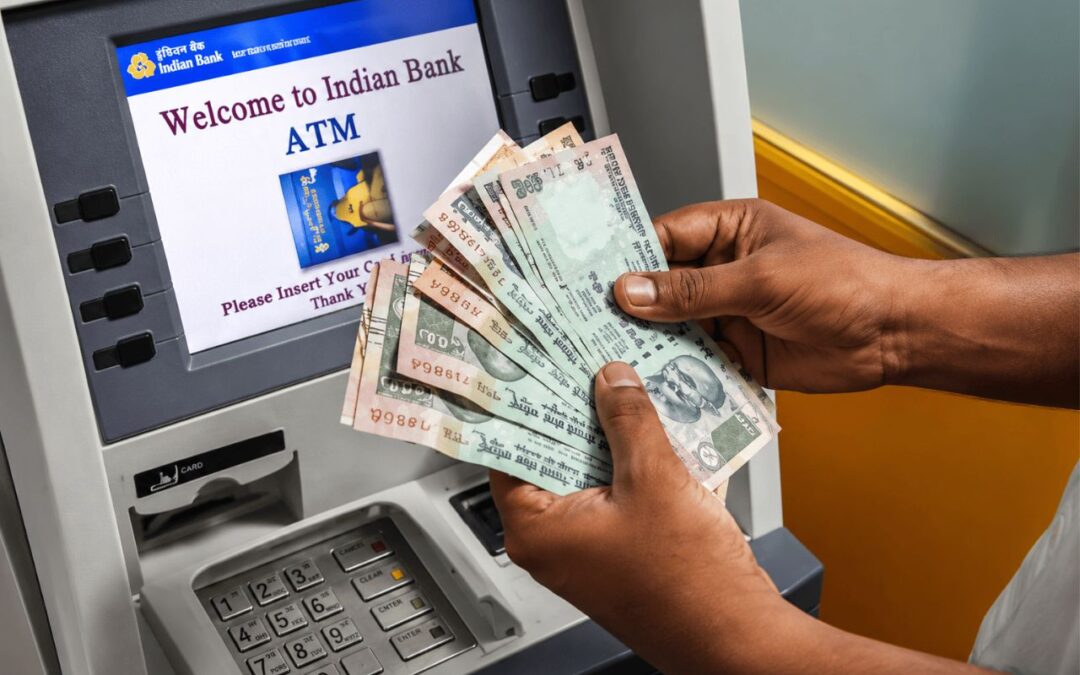
Synopsis: The Indian economy is currently running under a paradox, with ATMs running short of cash even though the circulation of the currency hits a record surge of 11.9%, ~₹42.8 lakh crore in FY26, but ATM operators are facing difficulty in getting enough cash to refill machines.
Walking up to the ATM only to notice it is out of cash, that’s a scenario which is increasingly becoming common across the country, especially in rural and semi-urban areas. But the main question is why is this actually happening, when the currency in circulation stood over approximately ~₹42.8 lakh crore as of May 2026, which is a YoY increase of ~12%, as of CEIC reports.
The CATMi Alert
The Indian Banks’ Association (IBA) has been informed by the Confederation of ATM industry (CATMi) that the ATM services across India might stumble because of the cash shortage, which will particularly impact the cash dependent regions such as, the rural and the semi-urban areas, for Direct Benefit Transfer (DBT) beneficiaries.
CATMi has brought to the notice that its members had faced difficulties in cash withdrawals for ATM replenishment, from bank branches and currency chests across many states since late December 2025, according to the reports.
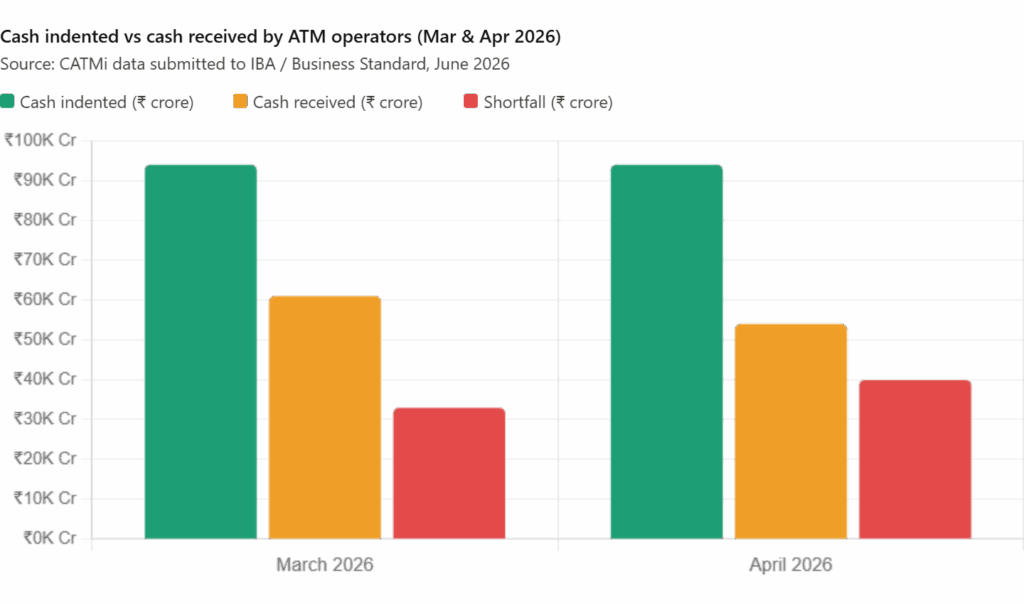
In March 2026, the cash intended was ₹94,000 crore, the cash received was ₹61,000 crore, and the shortfall was ₹33,000 crore, and for April 2026, the cash intended was ₹94,000 crore, the cash received was ₹54,000 crore and the shortfall was ₹40,000 crore, according to various sources.
Why is This Happening? Possible Reasons
- Interchange Fees: Transactions in which a person uses another bank’s ATM on the debit card, the bank related to the debit card pays that ATM’s owner a fee called interchange fee which is ₹19 for financial transactions and ₹7 for non-financial transactions. But the problem is, it costs ATM operators far more than the charges, hence becoming reasons for lesser frequency to replenish the machines.
- Rising Operating Costs: The increase in fuel prices, and the cash transportation costs for moving the money from a currency chest to an ATM has become significantly pricier. These are fixed operational costs and it exists regardless of how many people use the ATM.
- Falling Transaction Volumes: ATM transactions have seen a ~10.4% YoY crash due to the UPI adoption, and this decrease in withdrawals mean less fee income for the operators, further shrinking the revenue.
- More preference towards UPI: As more people pay digitally, this leads to fewer ATM withdrawals which impact the operators with low income fee, hence reducing the frequency of replenishing the machines. Also the surcharge of ₹23 + 18% GST after the free transaction limit, makes ATM usage more expensive for the end user, pushing people towards UPI, hence impacting the ATM economy further.
RBI’s Assurance
The RBI Governor Sanjay Malhotra, on June 5, 2026 assured that there is adequate existence of the currency stock and any shortages would be addressed promptly, according to the sources. But the structural problems flagged by the CATMi since late 2025, the interchange fee revision, the logistics cost, and the declining ATM economy still stands.
Written by Jahnavi