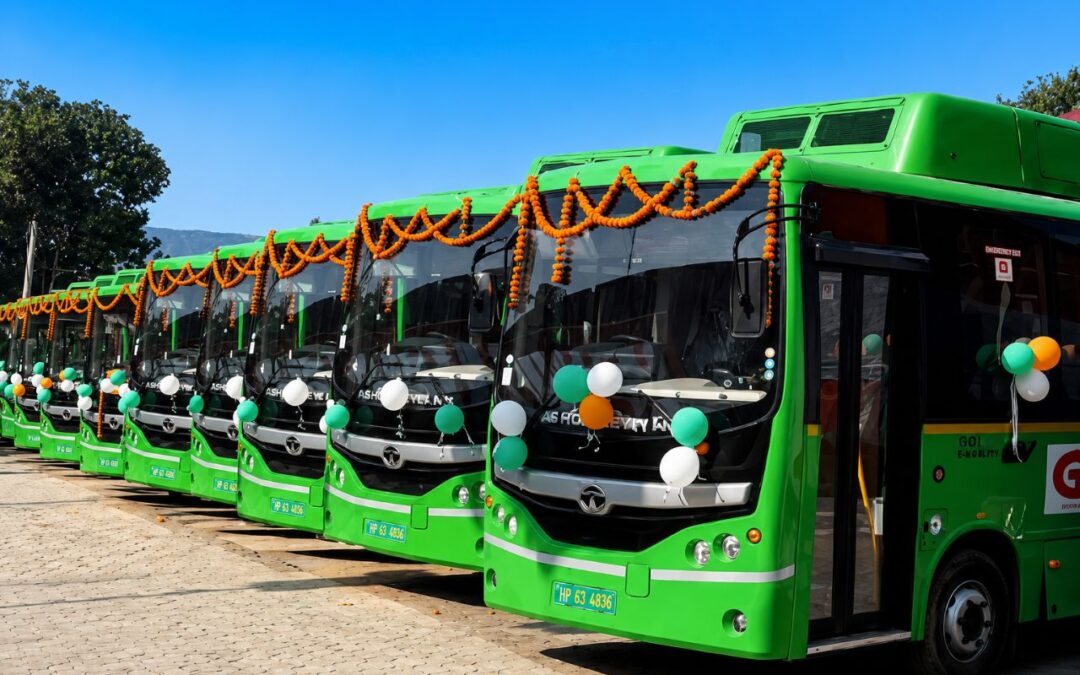
Synopsis: With 14,028 electric buses, the PM E-DRIVE Scheme is making India’s public transportation system a cleaner mode of transport. This article provides an overview on the main government initiatives, the allocation of cities and the benefits.
A cleaner public transport system in India is taking a new turn with the rapid deployment of electric buses (E-Buses) in the framework of the PM Electric Drive Revolution in Innovative Vehicle Enhancement (PM E-DRIVE) Scheme. The government is planning to provide thousands of e-buses, expand charging stations and promote local manufacturing of EVs to reduce pollution in the city, reduce fuel imports and make public transport eco-friendly. The project is anticipated to promote the use of EVs and bolster India’s status as a global hub for electric mobility.
PM E-DRIVE Scheme: An Overview
The Union Cabinet approved the PM Electric Drive Revolution in Innovative Vehicle Enhancement (PM E-DRIVE) Scheme on 11th September, 2024 to encourage electric mobility in India. The scheme is expected to be executed in the next three years with an outlay of ₹10,900 crore and will be built upon the existing scheme, FAME-II, which was launched by the government offering subsidies for electric vehicles, but with two additional strands, charging infrastructure and building the EV ecosystem.
Key objectives
- Increase EV uptake in various vehicle categories.
- Reduce fossil fuel usage and reduction of carbon emissions.
- Enhance air quality in urban areas by promoting cleaner transport.
- To increase the production at home and encourage Make in India initiative.
- Create an EV charging infrastructure across the country.
Vehicles covered:
The following are the categories that will be funded: Electric two-wheelers (e-2W), Electric three-wheelers (e-3W), Electric ambulances, Electric trucks and Electric buses (as the largest allocation), Public charging infrastructure / EV testing infrastructure. Though PM E-DRIVE addresses infrastructure development and public transport, it is a broader solution which will enable India to achieve clean mobility as compared to FAME-II that is more focused on electrifying private transport.
Electric Bus Rollout under PM E-DRIVE
As part of the government’s drive to decarbonise public transport, electric buses make up the bulk of the PM E-DRIVE Scheme. The scheme aims to provide 14,028 electric buses, and provide a dedicated allocation of ₹4,391 crore to roll out them in big cities in India.
The buses will be deployed in cities with a population of more than 10 lakh, and also in some special category areas, to enhance urban mobility and lower the air pollution and operational expenses of the state transport departments. PM E-DRIVE will increase India’s zero emission public transportation network considerably over the next two years with the procurement of one of the world’s largest electric bus programmes.
Cities benefiting from the Electric Bus Allocation
The initial part of PM E-DRIVE is in large urban centers with high public transport needs. The 14,028 electric buses approved have been the highest in the cities that have a large existing bus fleet, in order to speed up the process of transition to cleaner mobility.
Conclusion
The PM E-DRIVE Scheme is a noteworthy initiative in India to shift towards sustainable public transportation. The government is developing a full-fledged electric mobility ecosystem, with support in terms of 14,028 electric buses, installing charging stations, and boosting the production of electric vehicles in the country. Though it has its hurdles, the move is expected to help drive EV adoption, enhance air quality in the city and help India achieve its clean energy and Net Zero targets.