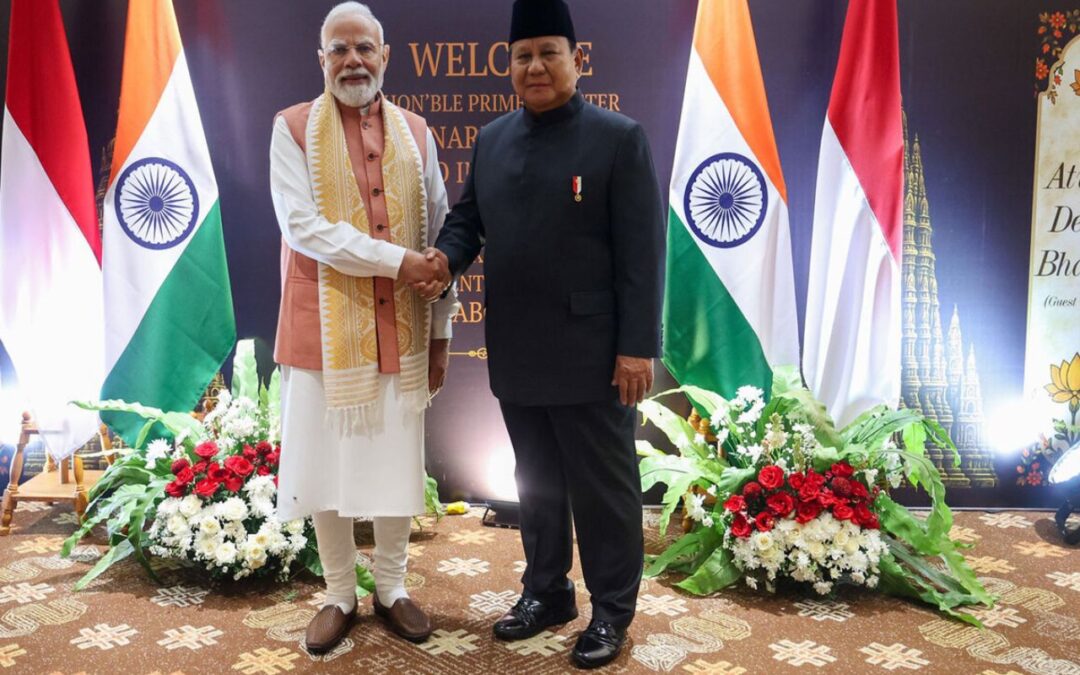
Synopsis: India-Indonesia has evolved from traditional trading to a strategic ally. This article covers the growth of bilateral trade, key exports and imports, major investments and infrastructure projects, defence operations and more.
India-Indonesia strategic partnership has emerged as one of the fastest-growing strategic partnerships in Asia, and bilateral trade has grown from US$4.3 billion in 2005 to US$38.84 billion in 2024-25. In addition to robust commodity and manufacturing trade, the two nations are also expanding their partnership in areas such as defence cooperation, infrastructure, energy, digital economy and maritime connectivity, with several new projects in the planning stage set to drive the next step in bilateral development.
India–Indonesia Trade at a Glance
This Bilateral trade expanded to US$38.84 billion in FY24-25, rising by more than 9-fold. India is the second largest trading partner of Indonesia in the ASEAN region and Indonesia is one of the top ASEAN trading partners of India. In recent years, bilateral trade has never dropped below US$35 billion. Indonesia has a trade surplus with India, with coal and palm oil being the main exports. The two nations are fostering more than just trade ties in the fields of defence, digital economy, renewable energy, health and maritime connectivity and infrastructure. Both governments are working towards deepening the economic integration and investment cooperation in the framework of the Comprehensive Strategic Partnership.
Mega India–Indonesia Investment & Infrastructure Projects
- Sabang Port Development (Indonesia): India has joined up on developing Sabang Port which is located strategically near the Strait of Malacca (through which 40% of global trade passes), or improving maritime connectivity, logistics and Indo-Pacific cooperation. The port is only about 100 miles (160 km) from India’s upcoming $9 billion Great Nicobar transshipment terminal.
- Andaman–Aceh Maritime Connectivity: Both nations are making efforts to further deepen the shipping connectivity between the Nicobar and Aceh Provinces of India and Indonesia for trade, tourism and cargo movement.
- RE Cooperation: Indian companies join hands with Indonesian companies for solar energy, biofuels and the green hydrogen value chain to support India’s and Indonesia’s clean energy goals.
- Digital & Fintech Partnerships: The two countries are pledging investments in digital payments, fintech, startups, AI & digital public infrastructure, offering technology companies opportunities.
- Defence manufacturing: India will sell the supersonic cruise BrahMos missiles to Indonesia for an estimated $630 million, in what is expected to be one of India’s biggest defence export deals and will be part of further defence-industrial cooperation between the two nations.
- Minerals & Manufacturing: Indonesia holds nearly 42% of the world’s nickel reserves. Cooperation is being discussed between both countries in the areas of nickel, battery technology, EV and critical minerals supply chains, with Indonesia having mineral resources and India manufacturing capacities.
India’s Top Exports to Indonesia
- Mineral fuels & refined petroleum products are India’s biggest export, making up a large part of bilateral trade.
- Automobiles and auto components: passenger cars, commercial vehicles and two-wheelers.
- Iron & steel products: Used in Manufacturing and infrastructure
- Supporting industrial and healthcare sectors in Indonesia with organic chemicals and pharmaceuticals.
- Boilers, electric equipment and machinery for manufacturing and energy.
- Agricultural produce such as rice, sugar, cereals, buffalo meat and tobacco.
- Textiles, cotton yarn and fabrics, plastics and rubber products.
- Other items exported from India include gems and jewellery, marine products and processed food.
India’s Top Imports from Indonesia
- Coal is the biggest export for Indonesia in India, accounting for significant amount of India’s thermal requirement and industrial use.
- Crude and refined palm oil make Indonesia India’s biggest source of edible oil imports.
- Natural rubber for tyre production or in industry.
- Mineral fuels, lignite and petroleum products to meet the energy requirements of India.
- Paper, pulp and wood products, catering to packaging, publishing and manufacturing industries.
- Non-ferrous metals, chemicals and industrial raw materials.
- Coffee, spices, cocoa and other agricultural products, enhancing export of food and beverages.
- Electronic components and machines, leading to growing industrial corporations.
Reasons behind the growing trade between India–Indonesia
- Strategic Partnership: Both countries have deepened cooperation in trade, defence, investment and maritime security fields and established a stable framework for long-term economic cooperation.
- Complementary Economies: India imports energy resources like coal and palm oil and exports petroleum products, automobiles, pharmaceuticals, and engineering products and bilateral trade is beneficial.
- Strategic Maritime Location: Indonesia is the gateway to the Strait of Malacca which handles almost 30% of the world’s maritime trade, making it an important stakeholder in India’s Indo-Pacific and maritime connectivity initiative.
- Growing defence corporation: seen with the proposed US$630 million defence cooperation deal on BrahMos missile and increasing cooperation in the naval and security area with India.
- Strong ASEAN Linkages: Indonesia is India’s second largest trade partner in ASEAN and plays a critical role in the supply chain of the region and in strengthening India’s economic presence in the region.
Conclusion
The value of India-Indonesia trade has increased over nine times, with robust commodity trade and increasing cooperation in the areas of defence, infrastructure and critical minerals. Given the strategic partnership between both countries, this partnership is expected to have a greater impact on the economic development of the Indo-Pacific region.