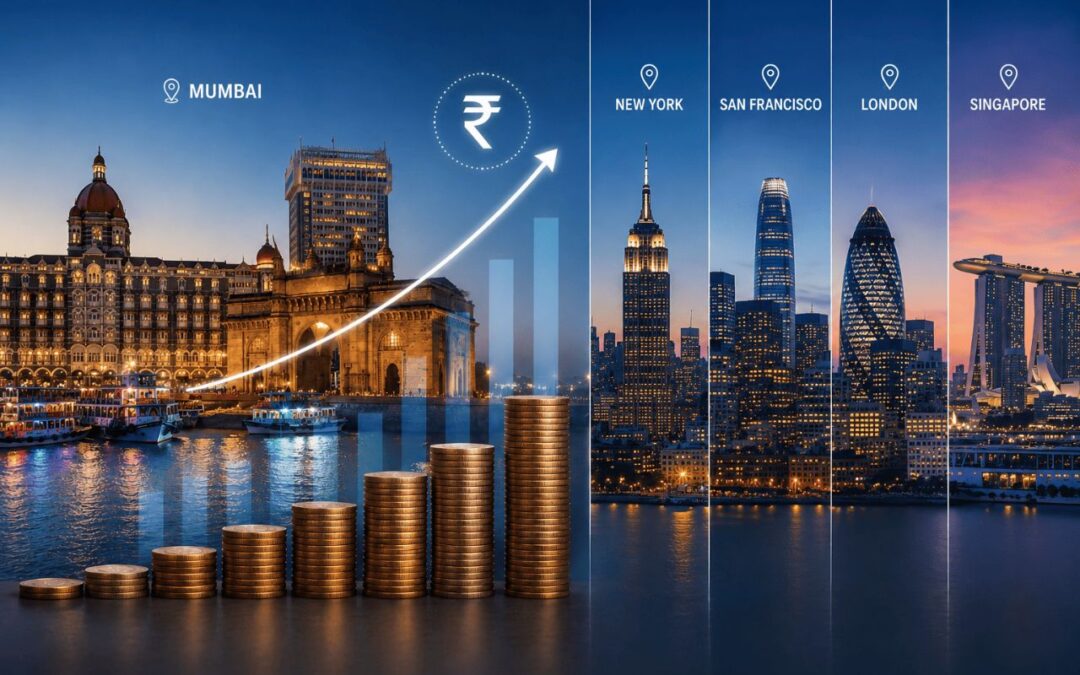
Synopsis: Mumbai has been transitioning into one of the world’s most expensive rental markets and rents on housing units are on par with other world-class cities such as Hong Kong, Singapore, and Los Angeles. This article examines the driving force of the mass exodus, the cost of renting in prime localities in the city, property prices and the issues arising from the widening affordability gap in the city.
The Mumbai rental market has progressed significantly, and even house rents are like some of the world’s most expensive cities. There is a high demand for rentals, shortage of homes, and property values that have risen very quickly in the city in the major residential and commercial areas. The trend exemplifies how the real estate market in Mumbai is evolving and how it is becoming a world city for real estate.
What is Causing Mumbai Rental Prices to Skyrocket?
- Demand for rental houses continues to be high in Mumbai as well: Mumbai is still a good choice for professionals, corporate executives, entrepreneurs and expatriates.
- Geographical constraints: The City has a fixed amount of land and is limited in terms of how much land it can build out horizontally to provide housing.
- low Floor Space Index (FSI): Mumbai has a relatively low FSI, which restricts the large-scale residential development as compared to many other cities around the world.
- Infrastructure and demand: Projects like Coastal Road, Metro expansion, Mumbai Trans Harbour Link have added to demand in a few residential corridors.
- Corporate leasing activity: Demand for corporate leasing of homes in premium areas has been strong.
- Property price growth: The increase in property prices has caused many home buyers to choose to rent, adding to the demand for rents.
- Supply-demand imbalance: There has been a lack of new housing supply to meet demand, causing increases in rent prices in important micro-markets.
Mumbai vs World’s costliest rental cities
Mumbai is now one of the world’s most expensive rental markets, and the average monthly rent is now similar to that of several global cities. Recent research has found that Hong Kong still stands on the top with an average rent of approximately ₹66,424 per month followed by Singapore at ₹62,905, Los Angeles at ₹61,847, Mumbai at ₹60,777 per month, compared to Tokyo at an average of ₹41,676.
The most remarkable aspect of Mumbai’s situation is its success at these rent levels with lower average household incomes than other major cities like Hong Kong, Singapore and Los Angeles. With a restricted housing supply, high population density and high demand for quality residential spaces, the city’s rent rates have reached global standards.
Malabar Hill
Malabar Hills is the most prestigious residential locality in Mumbai, occupied by industrialists, businessmen and UHNI. This exclusivity is reflected in the rents as well, with the price for renting out a 1 BHK apartment ranging in between ₹80,000 and ₹1.5 lakh per month, and the price of a spacious 2/3 BHK apartment ranging from ₹2.5 lakh to ₹8 lakh per month. Apartments which have a sea-facing view, penthouses and independent bungalows are often leasing for more than ₹10 lakh per month, some trophy properties are even renting for more than ₹50 lakh per month. The price of property in the locality ranges on an average from ₹65,000/- to above ₹1.5 lakh per sq ft.
Colaba
Situated at the southern tip of Mumbai, Colaba exudes heritage charm along with waterfront premium living. The rent for a 1 BHK apartment in the area is expected to be in the range of ₹70,000 to ₹1.4 lakh per month, and for a 2 BHK to 3 BHK apartment, likely to range from ₹1.5 lakh to ₹5 lakh per month. The rent for luxury apartments and independent homes in prime locations can easily go up to ₹10 lakh per month. The price range can typically be between ₹45,000 to ₹1,00,000 per sq.ft, depending on the building and its proximity to the seafront.
Worli Sea Face
Thanks to its magnificent sea views and close access to the business districts, Worli Sea Face has become one of Mumbai’s hottest luxury residential destinations. The price of a typical 1 BHK apartment is between ₹50,000 and ₹90lakh per month, while premium 2-3 BHK apartments come with a price tag of ₹1.5 lakh to ₹4 lakh. The monthly rental prices for luxury sea-facing homes, duplexes, and penthouses can start from ₹5 lakh and go up to ₹12 lakh and more. The overall price range of properties in the area is ₹40,000 to ₹70,000 per sq ft and even higher for marquee projects.
Also read: Top 7 Cities That Recorded the Highest Housing Sales in Q1 2026
Bandra West
Bandra West is also known as the ‘Queen of the Suburbs’ and is still a favorite among celebrities, entrepreneurs and senior corporate executives alike. The rentals of 1 BHK apartments range from ₹45,000 to ₹1 lakh, and 2 BHK to 3 BHK between ₹1.25 lakh and ₹4 lakh. Premium pockets can command luxury rents on the order of over ₹20 lakh per month for ultra luxury apartments, villas and heritage bungalows. The general price range of property is from ₹45,000 to ₹80,000 per sq ft.
Juhu
Juhu is one of the most sought-after housing markets of Mumbai and is home to lots of celebrity homes. The rent for a 1 BHK ranges between ₹40,000 to ₹90,000 per month, and 2–3 BHK ranges from ₹1.25 lakh to ₹4 lakh. The rent for premium villas, independent bungalows, and luxury homes can exceed ₹5 lakh per month. The price of property in the area varies from ₹40,000 to ₹65,000 per sq ft.
Vile Parle
Vile Parle is a combination of well-established residential areas, schools and excellent connectivity that makes it a favorite amongst families and professionals alike. The rent for 1 BHK apartment ranges from ₹30,000 to ₹60,000 per month, whereas the rent for 2 or 3 BHK apartments ranges from ₹70,000 to ₹2 lakh per month. The rent for larger independent houses and luxury homes can reach ₹8 lakh per month. The prices of the properties are generally between ₹25,000 and ₹50,000 per sq ft.
The FSI Factor: Is it really Supply?
- Mumbai has one of the severe constraints in the world with the sea surrounding the city from three sides, which restricts the city’s expansion.
- The regulations governing FSI are conservative, meaning that the amount of built up land that can be developed on a specific piece of land is limited.
- This is because a lower FSI means fewer houses can be built, even in highly demanded areas, and thus a long-term lack of housing.
- International cities like New York, Singapore and Hong Kong have adopted a more streamlined and effective way of developing the city, to create more space efficient cities and pack more people into an area.
- As more housing units are constructed, additional delays are added, factoring in the long redevelopment and approval process, especially in older areas of the city.
- This imbalance between supply and demand has directly influenced the increases in rents and property prices, particularly for the premium “micro-markets” where properties are increasingly at a premium.
- Rapid redevelopment approvals combined with an increase in housing supply are likely to lead to a rise in housing prices and rents in some parts of the city in the long-run, but this will be a more moderate pace than the effect of higher FSI.
Tenants and homebuyers will be Impacted
- Increasing cost of living: All income groups are feeling these costs more, as rents go up.
- Suburbanization: Many people are moving towards Thane, Navi Mumbai etc., where they can buy houses at a cheaper rate.
- Delayed homeownership: People are having to stay in rentals longer than buying due to high down payments and price hikes.
- Demand for smaller homes: There is an increasing demand for compact 1Bhk and studio apartments as people strive to keep their housing expenses in check.
- This income growth gap is continuing and growing, particularly for first time homebuyers due to affordability issues.
- More commute time: Many folks opt to live in a more distant location for affordability.
Outlook for Mumbai’s Rental Market
The Mumbai rental market is poised to see continued growth over the next few years due to several key factors. The steady demand for housing in Mumbai, robust infrastructure growth and limited supply in prime locations are expected to continue driving the rental market in the coming years. Demand is expected to outpace supply as new developments and redevelopment projects add inventory which will keep the short supply in premium micro-markets. Consequently, rents and property valuations are likely to stay high, further making Mumbai one of the world’s costliest housing markets.
Conclusion
The city’s impressive climb up the ranks of the world’s most expensive rental markets is indicative of a few special factors that are at play in the city; demand, land availability, and high real estate prices. From Malabar Hill to Colaba, from Bandra West to Juhu, both the rental and property prices are rising.
Written by Boyapati Sai Jasmitha