
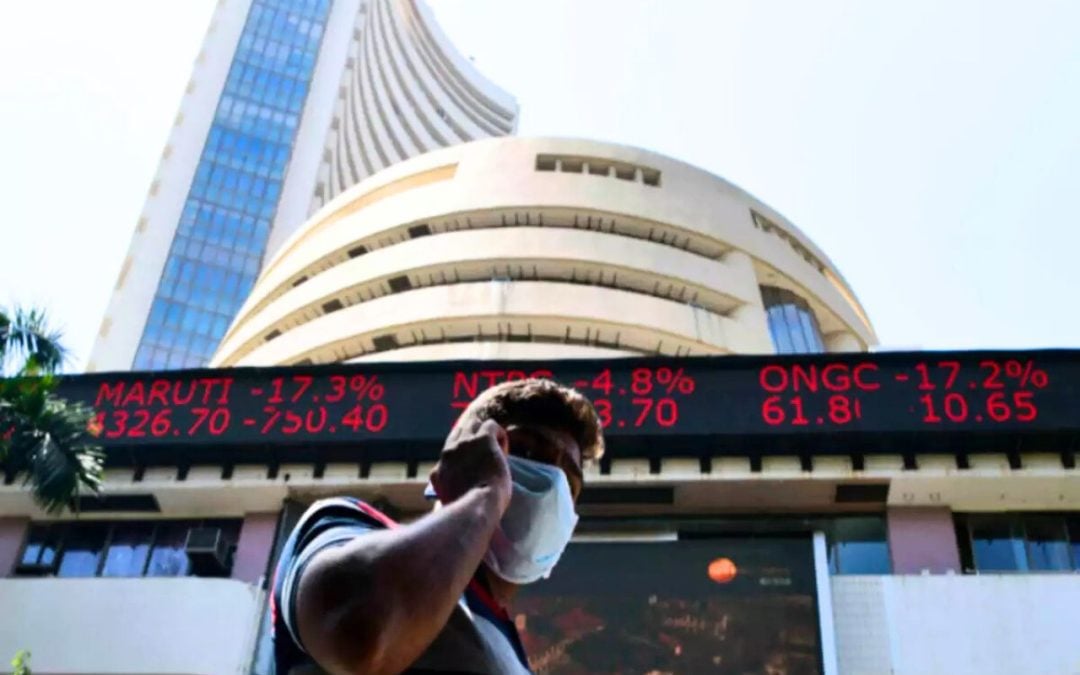
Synopsis: Shares of major IT companies including TCS, Infosys, HCLTech, Wipro, and Tech Mahindra declined sharply on Wednesday after a strong three-day rally. While concerns around artificial intelligence continue to weigh on sentiment, several leading brokerages believe the sector remains well-positioned for long-term growth.
Shares of India’s leading IT companies came under selling pressure on Wednesday, with stocks such as TCS, Infosys, HCLTech, Wipro, and Tech Mahindra falling between 2% and 7%.

The decline comes after a strong rally in the sector over the previous three trading sessions, during which the Nifty IT index gained more than 6%. Investors appeared to book profits following the recent surge, leading to broad-based weakness across IT counters.
Among the major losers, Tata Consultancy Services (TCS) fell nearly 8%, while Infosys declined around 4%. Tech Mahindra slipped about 5%, HCL Tech lost over 3%, and Wipro was down nearly 2% during the trading session.

Why Are IT Stocks Under Pressure?
The recent volatility in IT stocks is largely linked to growing concerns about the impact of artificial intelligence on the traditional IT services business model. Investor worries intensified after AI company Anthropic introduced new capabilities for its Claude AI platform, which can automate tasks across areas such as legal services, sales, marketing, and data analysis. This sparked fresh debate about whether AI could reduce the need for certain technology services offered by outsourcing companies.
However, several leading brokerages and analysts believe these concerns may be overstated, arguing that AI could create new opportunities for IT service providers rather than replace them.

What Are Brokerages Saying?
Global brokerage CLSA believes that AI is changing the way software and technology services are priced, with companies increasingly shifting from traditional seat-based pricing models to usage-based or consumption-based models.
Despite this transition, CLSA noted that earnings estimates and management guidance across the IT sector remain relatively stable. The brokerage expects companies with strong partnerships in cloud, software, and AI ecosystems to continue benefiting from growing demand for implementation and engineering services.
According to CLSA, AI is more likely to enhance many software systems rather than completely replace them, especially in areas where accuracy and reliability are critical.

Why Did IT Stocks Fall After Rallying Sharply?
The sharp correction in IT stocks on Wednesday appears to be driven primarily by profit booking after a strong rally, combined with fresh global macroeconomic concerns that weighed on investor sentiment.
The sector had witnessed a powerful rebound on Tuesday, with the Nifty IT index surging more than 4%. The rally was triggered by comments from Nvidia CEO Jensen Huang during the COMPUTEX 2026 event in Taipei.
Huang pushed back against concerns that artificial intelligence could make software companies obsolete. Instead, he highlighted that AI is likely to increase demand for enterprise software, technology services, and digital transformation projects, calling it an “incredible time to be a software company.”
His remarks helped shift market sentiment from viewing AI as a threat to seeing it as a growth opportunity. As a result, major IT stocks such as TCS, Infosys, HCLTech, Tech Mahindra, and Wipro witnessed strong buying interest, helping the Nifty IT index record one of its best single-day performances in recent months.
However, after the sharp rally, investors chose to lock in profits on Wednesday, leading to broad-based selling across the sector. The Nifty IT index gave up a significant portion of the previous session’s gains, with several frontline stocks falling between 2% and 8%.
The correction was further amplified by a series of global macroeconomic concerns. Stronger-than-expected US labour market data reinforced expectations that the US Federal Reserve may keep interest rates elevated for longer. Higher interest rates generally pressure technology stocks as they reduce the attractiveness of future earnings growth.
At the same time, renewed geopolitical tensions between the United States and Iran pushed Brent crude oil prices closer to the $96 – $97 per barrel range, raising concerns about inflation and its potential impact on global economic growth.
Adding to the pressure, the Indian rupee weakened toward the ₹95-per-dollar mark, contributing to broader market uncertainty. As a result, Wednesday’s sell-off appears to be more of a profit-booking and macro-driven correction rather than a reaction to any major deterioration in the fundamentals of Indian IT companies.
BofA: IT Companies Have Adapted Before
Analysts at BofA Securities also remain optimistic about the sector’s ability to evolve.
They believe Indian IT companies have successfully adapted to major technology shifts in the past and possess the financial strength, management expertise, and business flexibility needed to adjust to the AI-driven landscape.
While acknowledging that AI could bring significant changes, BofA believes the sector has the capability to transform its business models and remain relevant in the years ahead.
Nuvama Sees No Major Threat From GenAI
Domestic brokerage Nuvama Institutional Equities has pushed back strongly against the idea that generative AI poses an existential threat to Indian IT services companies.
The brokerage argues that enterprises will continue to require technology partners to integrate AI tools into complex legacy systems, manage large-scale deployments, and ensure business continuity. Nuvama believes companies will continue relying on IT service providers for critical technology operations, even as AI adoption accelerates.
Enterprise AI Could Create New Opportunities
Choice Institutional Equities highlighted that growing enterprise adoption of AI could actually increase technology spending rather than reduce it. The brokerage noted that improving sentiment in global software companies, strong deal pipelines, healthy order books, and expectations of increased discretionary spending are supporting the sector’s outlook. In addition, a relatively weaker rupee could further benefit export-oriented Indian IT companies by improving revenue realization from overseas markets.
Technical Outlook Remains Positive
Technical indicators suggest that the Nifty IT index may continue to show strength despite the recent pullback. The index has recently broken above an “Inverted Head and Shoulders” pattern, a chart formation that is often associated with a shift from a downtrend to an uptrend. The breakout was supported by strong buying interest in recent sessions, indicating improving momentum in the sector.
Based on this breakout, the Nifty IT index could potentially move towards the 32,300–32,500 range in the near term, which suggests further upside from current levels if buying interest continues.
FIIs Continue to Reduce Exposure
Despite the positive views from brokerages, foreign institutional investors (FIIs) remain cautious. Many global investors are still evaluating the long-term impact of AI on the software services industry. As a result, FIIs have continued to reduce their exposure to the sector. During 2025 alone, foreign investors reportedly sold IT stocks worth nearly ₹74,700 crore.
The Bottom Line
While concerns around artificial intelligence continue to create short-term volatility in IT stocks, most brokerages believe the sector is facing transformation rather than disruption.
Strong balance sheets, growing enterprise AI opportunities, healthy order books, and the ability to adapt to technological change remain key strengths for India’s leading IT companies. Although near-term fluctuations may continue, analysts largely remain constructive on the sector’s long-term growth prospects.
Disclaimer: The views and investment tips expressed by investment experts/broking houses/rating agencies on tradebrains.in are their own, and not that of the website or its management. Investing in equities poses a risk of financial losses. Investors must therefore exercise due caution while investing or trading in stocks. Trade Brains Technologies Private Limited or the author are not liable for any losses caused as a result of the decision based on this article. Please consult your investment advisor before investing.