
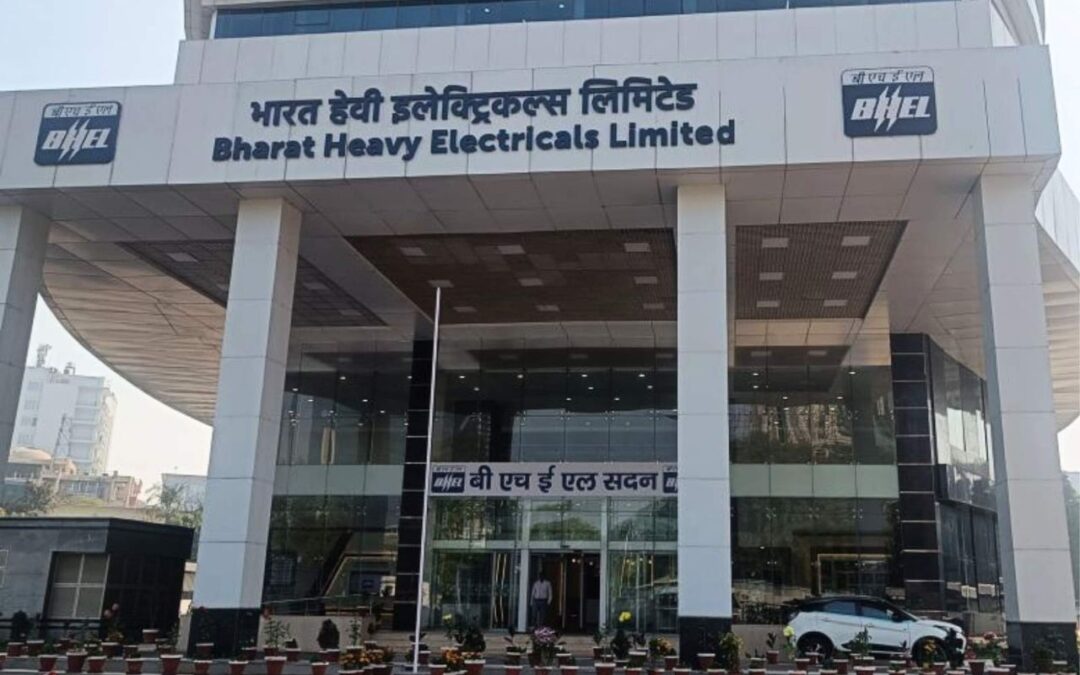
Synopsis:- The engineering giant finds itself at the center of a rare brokerage divide, with Nuvama raising its target price to ₹530 on a margin-recovery thesis, even as Kotak, JPMorgan, Macquarie, and CLSA maintain bearish or “sell” calls, arguing that the recent rally has run well ahead of the underlying earnings quality.
Shares of the state-owned engineering company have rallied sharply over the past few months, but the move has split the Street. While one brokerage sees a genuine execution-led turnaround finally taking shape after years of margin pain, three others believe the stock is now pricing in a best-case scenario that ignores a slowing order pipeline and one-off supports flattering recent profitability.
With a market capitalization of Rs. 146,908 crore, the shares of Bharat Heavy Electricals Limited were trading at Rs. 422 per share, with a 52-week range of Rs. 446.60 to Rs. 205, and they are trading at a P/E of approximately 61x.

Nuvama: The Bullish Outlier
Nuvama has raised its price target on BHEL to ₹530 from ₹450 earlier, the second-highest target on the Street, with an upside of 26 percent from the current level, arguing that the company’s margin recovery is now underway, with the latest 6.5% EBITDA margin reflecting genuinely improved execution rather than accounting support.
With legacy low-margin thermal projects largely worked through, the brokerage expects an execution ramp-up through FY27 to drive both profitability and cash flows. Nuvama pencils in a revenue CAGR of 26% and an EPS CAGR of 76% over FY26-28 and has revalued the stock at 38 times estimated FY28 EPS, up from 32 times earlier, reflecting greater confidence in the earnings trajectory.

Kotak: Margin Gains Look Borrowed, Not Earned
Kotak Institutional Equities carries a “sell” rating with a target of ₹150, implying steep downside of 64 percent from current levels. The brokerage’s core argument is that operating leverage benefits are being meaningfully amplified by provisional writebacks rather than structural cost improvement.
It flags that the three drivers behind recent margin gains business per employee, cost per employee, and provision cost or writeback are all likely to peak or reverse over FY27-29. Kotak values BHEL at 12 times one-year forward EPS, adjusted for what it calls transient supports such as provision reversals and forex support.

JPMorgan: A Good Exit, Not An Entry
JPMorgan maintains an “underweight” rating with a target of ₹220, which is a downside of 48 percent from curren. While it acknowledges that the first quarter showed improved execution and margins, the brokerage views the sharp outperformance as a good exit opportunity in a deeply cyclical name, with the best of the thermal power plant ordering cycle likely behind it.
JPMorgan expects order inflows to decline by as much as 12% year-on-year in FY27 and believes the current stock price already more than factors in the company’s long-term profit potential.
Macquarie: Momentum Acknowledged, Sustainability Questioned
Macquarie has raised its target to ₹315 from ₹250, which is a downside of 25 percent from current, levelswhile maintaining its “neutral” rating on the stock. It notes that new orders doubled over Q1FY26, improving revenue visibility further, and that execution and margins have both improved. However, it remains cautious on whether this pace of performance can be sustained, warning that unless a sustained pick-up in execution is seen, higher receivables remain a challenge for profitability.

CLSA: Rally Built On Weak Foundations
CLSA also retains an “underperform” rating with a target of ₹306, which is a downside of 27 percent from current levels, pointing to what it calls “average” quality of growth. The brokerage notes that Q1FY27 revenue grew 40% year-on-year with EBITDA margin at 6.5%, but flags that margin expansion was aided by 723 basis points lower other expenses and non-cash provisions, along with forex gains. Furthermore, 56% of the expansion was led by lower other expenses, while 45% of PAT came from other income rather than core operations.
CLSA attributes the recent rally to a short squeeze and the broader energy-security theme, calling valuations expensive at 40 times FY28 PE, and warns that order inflow has already peaked in the financial year 2025. It also notes that rising competition from Chinese suppliers, L&T, and Thermax in the core thermal equipment segment could challenge BHEL’s market dominance.
Business Overview
BHEL closed FY26 with consolidated sales of ₹33,782 crore and net profit of ₹1,600 crore, alongside an operating margin of 8%, up from a margin of 5% and net profit of ₹534 crore in FY25. The June 2026 quarter alone delivered sales of ₹7,698 crore and net profit of ₹377 crore, marking a sharp turnaround from the year-ago June 2025 quarter, when the company posted sales of ₹5,487 crore and a net loss of ₹456 crore. Operating profit for the quarter came in at ₹504 crore, translating to an operating margin of 7%, compared to a negative margin of 10% in the same quarter last year.
The company’s outstanding order book stands at ₹260,255 crore, dominated by power at 81%, with meaningful diversification into non-thermal segments including transportation (~₹15,000 crore), transmission (~₹14,000 crore), nuclear (~₹12,000 crore), coal gasification (~₹8,000 crore), and defence (~₹7,000 crore).
Conclusion
The divergence in brokerage views ultimately comes down to one question: is BHEL’s margin improvement structural or borrowed from one-off supports? Nuvama is betting on the former, while Kotak, JPMorgan, and CLSA collectively argue that the current rally has outpaced the underlying earnings quality. For investors, the wide spread between price targets makes this a name to track closely as FY27 execution data starts to settle the debate.
Disclaimer: The views and investment tips expressed by investment experts/broking houses/rating agencies on tradebrains.in are their own, and not that of the website or its management. Investing in equities poses a risk of financial losses. Investors must therefore exercise due caution while investing or trading in stocks. Trade Brains Technologies Private Limited or the author are not liable for any losses caused as a result of the decision based on this article. Please consult your investment advisor before investing.