Synopsis: A wheel manufacturer backed by two steel majors is steadily shifting its product mix toward higher-margin categories while building a fresh growth lever in aluminium components, supported by strong Q1 numbers, capacity additions, and a diversified customer base across auto segments.
The auto ancillary company, recognized for its expertise in wheel manufacturing, has made a promising beginning to the new financial year. This positive momentum reinforces its strategic transition towards higher-margin products, reflecting a commitment to enhancing profitability and adapting to market demands while diversifying its offerings to capture new growth opportunities.
With a market capitalization of Rs. 4,255 crore, the shares of Steel Strip Wheels Limited were trading at Rs. 271 per share, with a 52-week range of Rs. 283 to Rs. 169, and they are trading at a P/E of approximately 19x.

Premium Product Mix Gaining Ground
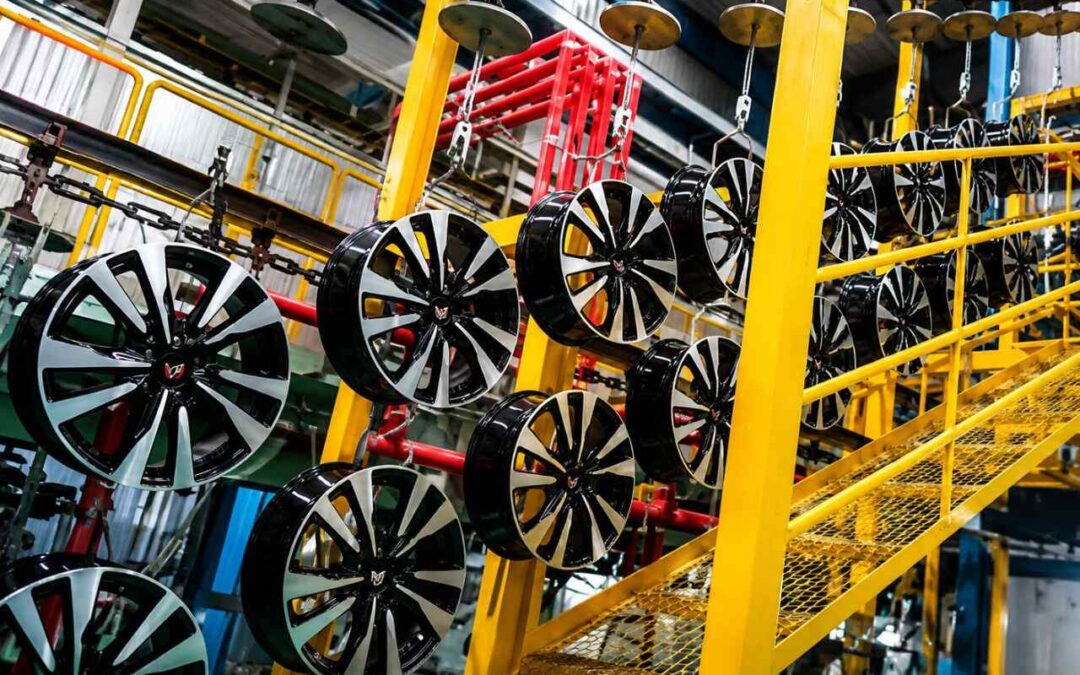
The company’s revenue engine is gradually tilting toward higher-margin products. In the June quarter, alloy wheels brought in ₹532.9 crore, making up 35% of revenue, while steel wheels remained the larger contributor at ₹953.8 crore, or 63%. That steady climb in alloy’s share isn’t accidental; alloy wheels typically fetch better realizations and margins than their steel counterparts, and the company has been actively working to grow this segment’s weight in the overall pie.
A New Growth Avenue Opens Up in Aluminium
Beyond wheels, the company is now building out an aluminum knuckles business, and the early numbers suggest this could become a meaningful third leg over time. The segment generated ₹23 crore in the first quarter on sales of roughly 0.80 lakh units, and the company is expanding capacity from 5 lakh units to 11 lakh units, more than doubling its production potential. Knuckles are used in vehicle suspension systems, and getting a foothold here opens up a new customer relationship separate from the wheel business, giving the company another lever to pull for growth.

Capacity Additions to Keep Pace With Demand
On the manufacturing front, the company currently runs a steel wheel capacity of 20 million units and an alloy wheel capacity of 5 million units. The alloy wheel capacity is set to rise to 6.2 million units during the course of this financial year, positioning the company to capture more of the demand shift toward alloy wheels rather than being capacity-constrained. This expansion also aligns with broader industry trends, where alloy wheel demand is expected to outpace steel wheel demand in the coming years
Customer Base Spans the Auto Industry
One of the more reassuring aspects of the business is the breadth of its customer relationships and its strong leadership across multiple vehicle categories. The company commands a 39% market share in passenger vehicle steel wheels, 53% in medium and heavy commercial vehicles (MHCVs), 43% in tractors, 35% in off-the-road (OTR) vehicles, and 39% in the two- and three-wheeler segment.

It supplies leading OEMs including Maruti Suzuki, Hyundai, Tata Motors, Mahindra, Kia, Honda, BMW, Volkswagen, Renault, Jaguar Land Rover, Ashok Leyland, JCB, Escorts, Sonalika, New Holland, and Suzuki Scooters. This diversified presence across passenger vehicles, commercial vehicles, tractors, OTR equipment, and two-wheelers reduces dependence on any single automaker or segment, helping the company maintain relatively stable demand through industry cycles.
Financial Snapshot
The June quarter reflected healthy operating performance. On a consolidated basis, the company reported revenue from operations of ₹1,509.82 crore, up 27.2% YoY, while profit before tax (including the share of profit from its associate) rose 53.0% YoY to ₹93.48 crore from ₹61.13 crore in the year-ago quarter.
Consolidated profit after tax stood at ₹69.45 crore, up 47.0% from ₹47.24 crore in Q1 FY26, while basic EPS improved to ₹4.42 from ₹3.01. These gains were supported by improved operating performance and contributions from subsidiary AMW Autocomponent Ltd. and associate Clean Max Astria Pvt. Ltd.
Management attributed the growth primarily to strong domestic demand. Export revenue stood at ₹127 crore, compared with ₹160 crore in the corresponding quarter last year. However, the company noted that overseas demand began improving in June as tariff-related disruptions eased, providing a potential tailwind for exports in the coming quarters.
Looking beyond a single quarter, the company has delivered a revenue CAGR of around 20% and a PAT CAGR of around 27% over the past six years, indicating that earnings have consistently grown faster than revenue as the product mix has shifted towards higher-value products.
Strategically, the company also has the backing of two established steel industry players. Tata Steel holds a 6.9% stake, while Nippon Steel Corporation (formerly Sumitomo Metal Industries) holds 5.4%. These aren’t just passive shareholdings; the relationships have historically supported the company with supply chain flexibility and access to newer manufacturing technology, which matters as the business now pushes into aluminum-based products that require different process expertise than traditional steel wheel manufacturing.
Conclusion:
Steel Strips Wheels appears to be executing a deliberate two-pronged strategy steadily shifting its revenue mix toward higher-margin alloy wheels while building an entirely new growth avenue in aluminum knuckles. Backed by strong strategic partnerships and a diversified, blue-chip customer base spanning passenger vehicles, commercial vehicles, and beyond, the company looks well-positioned to capture the industry’s shift toward premium, lightweight components in the years ahead.
Disclaimer: The views and investment tips expressed by investment experts/broking houses/rating agencies on tradebrains.in are their own, and not that of the website or its management. Investing in equities poses a risk of financial losses. Investors must therefore exercise due caution while investing or trading in stocks. Trade Brains Technologies Private Limited or the author are not liable for any losses caused as a result of the decision based on this article. Please consult your investment advisor before investing.