
Synopsis: One of India’s fast-growing transformer manufacturers closed FY26 with revenue of ₹1,851.5 crore, up 48.8% YoY; EBITDA of ₹344.4 crore (+77.9%); and PAT of ₹201.8 crore (+70.1%). Supported by a ₹2,493 crore order book and a nearly debt-free balance sheet, the company is advancing into higher-voltage transformer segments to drive its next growth phase.
A strong order pipeline, expanding manufacturing capacity, and a strategic shift toward higher-voltage transformers are driving the next phase of growth for this transformer maker. With a strengthened balance sheet, improving margins, and growing participation in the EHV segment, the company is positioning itself to capitalize on India’s accelerating power transmission and infrastructure expansion.

FY26 Financial Performance
Atlanta Electricals: On a consolidated basis, revenue from operations for FY26 stood at Rs.1,851.5 crore, up 48.8% year-on-year from Rs.1,244 crore in FY25, comfortably beating the company’s own 40% growth target. EBITDA came in at Rs.344.4 crore, expanding 77.9% with margins widening 300 basis points to 18.6% from 15.6% in FY25. Profit after tax rose 70.1% to Rs.201.8 crore.
Q4 FY26 was equally emphatic. Quarterly revenue hit Rs.747.6 crore, up 81.7% year-on-year and 58.5% sequentially, while EBITDA nearly doubled to Rs.149.6 crore, with margins touching 20%. PAT for the quarter stood at Rs.102.2 crore, up 128.9% from Rs.44.7 crore in Q4 FY25.

The company also booked Rs.2,507 crore in fresh orders during the year, closing FY26 with an unexecuted order book of Rs.2,493 crore, providing strong revenue visibility heading into FY27.
Management attributed the margin expansion to three drivers: operating leverage from higher volumes, a richer product mix tilting toward the 220 kV segment, which now constitutes nearly 52% of revenue, and improved procurement efficiency on key input materials.

The Vadod Engine
Atlanta Electricals much of FY26’s outperformance traces back to Unit 4 at Vadod, which commenced production in July 2025 and contributed approximately Rs.495 crore in revenue in just seven months of operation. Running at 39% of its 30,000 MVA nameplate capacity in its first partial year, the facility dispatched roughly 15 transformers per month in each of FY26’s final three months. Management expects Vadod utilisation to reach 65% in FY27, scaling to 100% in FY28, as 400 kV production begins to contribute meaningfully.
Across all five manufacturing units, Atlanta produced 22,943 MVAs in FY26, a significant step-up reflecting the full-year benefit of expanded capacity. The Vadod payback story is equally striking: the company invested approximately Rs. 200 crore in the facility, and based on the current revenue trajectory, management expects full payback in three to four years, well ahead of the industry norm of five to seven years.
The EHV Pivot
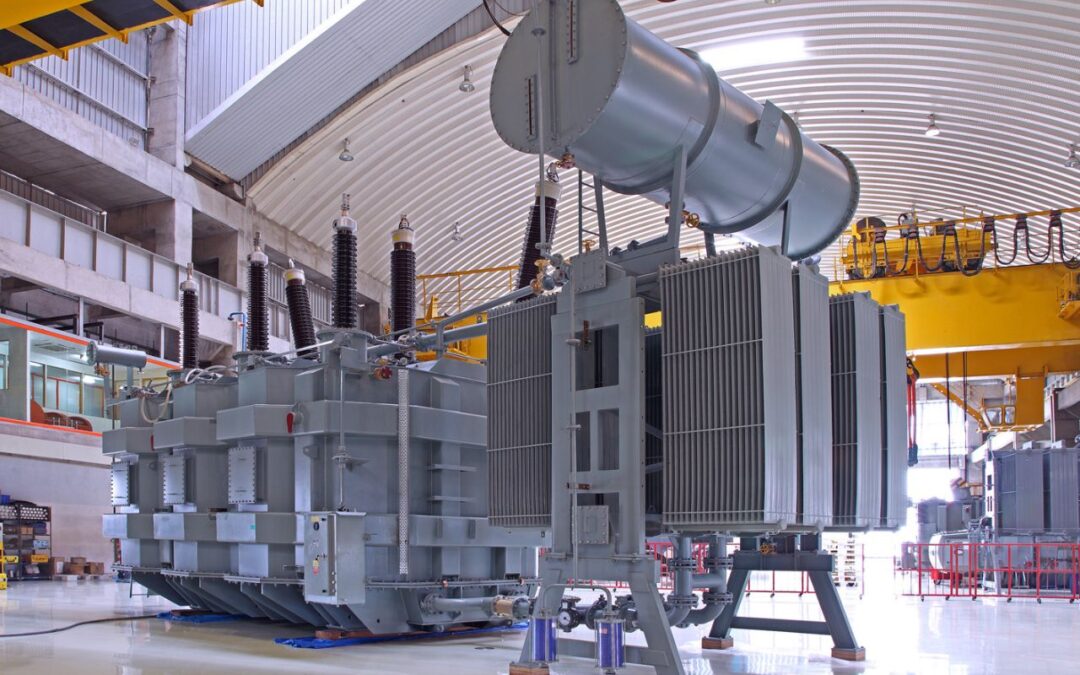
The single biggest operational milestone of Atlanta Electricals in FY26 was PGCIL approval on 2nd April 2026 for manufacturing transformers up to 400 kV at Vadod, achieved within two years of groundbreaking, which management described as among the fastest construction-to-approval timelines in India’s transformer industry. The company also secured its first 400 kV order during the year.

For FY27, the strategic priorities are clear. Vadod will focus on prototyping a 400 kV class transformer, while the Atlanta Trafo facility at Ankhi targets a 765 kV prototype. Management expects successful EHV prototyping to unlock substantially larger order pipelines over the next 12–18 months, given that EHV orders carry execution lead times of 18–24 months and command around 200 basis points higher margins than the 220 kV class.
New Capacity, New Verticals
Two capex programs are underway for FY27. Unit 6, a dedicated Inverter Duty Transformer facility adjacent to Vadod, at a capex of approximately Rs. 65 crore, will add 5,000 MVA of capacity focused on renewable energy, BESS, and EV charging applications. Separately, a Rs.170–180 crore investment in robotic tank and radiator manufacturing will strengthen supply-chain control and export-grade quality, with benefits expected to flow through from FY28.
Both programs are being funded through internal accruals. The company’s operating cash flow for FY26 stood at Rs.184 crore, with bank facilities enhanced from Rs.910 crore to Rs.1,320 crore during the year. CRISIL has reaffirmed long-term ratings at A Stable and short-term at A1.
On the export front, the first sizeable international order was received in FY26. Management has outlined a target of scaling exports to 15% of total revenue over the next three years, with physical presence planned in select geographies.
Verdict
Atlanta Electricals enters FY27 with a strong order book of ₹2,493 crore, a nearly debt-free balance sheet, ongoing expansion projects, and new opportunities in the EHV segment following PGCIL approval. The key question over the next year is whether these developments can translate into larger and higher-value orders. For investors, the focus is on whether FY26 was the company’s best year yet or the beginning of a new phase of growth.
Disclaimer: The views and investment tips expressed by investment experts/broking houses/rating agencies on tradebrains.in are their own, and not that of the website or its management. Investing in equities poses a risk of financial losses. Investors must therefore exercise due caution while investing or trading in stocks. Trade Brains Technologies Private Limited or the author are not liable for any losses caused as a result of the decision based on this article. Please consult your investment advisor before investing.