
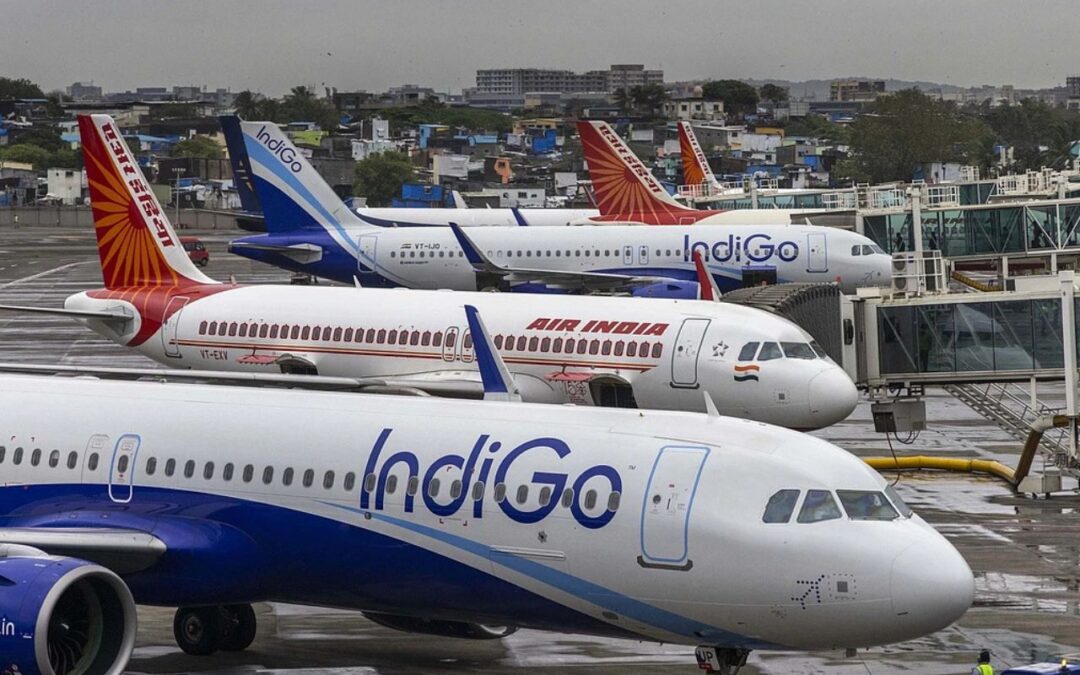
Synopsis: The Union Cabinet has approved a 10,000 crore ATF Price Stabilisation Fund to shield Indian airlines from a 135% surge in jet fuel prices triggered by the West Asia crisis. The 36-month revolving fund provides interest-free advances to OMCs, allowing them to supply Aviation Turbine Fuel at capped prices with IndiGo, SpiceJet, GMR Airports, and India’s major oil marketing companies expected to benefit.
The Union Cabinet, chaired by Prime Minister Narendra Modi, has approved a one-time 10,000 crore ATF Price Stabilisation Fund, marking one of the largest government interventions in the Indian aviation sector in recent years. The measure aims to cushion domestic airlines from the unprecedented surge in Aviation Turbine Fuel (ATF) prices triggered by the ongoing geopolitical tensions in West Asia.

The fuel shock has been severe. International ATF prices have climbed from approximately 60.50 per litre in March 2026 to 142 per litre in May 2026, representing a staggering 135% increase in less than two months. Since fuel typically accounts for 40–60% of an airline’s operating expenses, the sudden spike posed a significant threat to profitability across the sector.
The situation has been further aggravated by Pakistan’s continued closure of its airspace to Indian carriers. Airlines operating flights to Europe, North America, and Central Asia have been forced to take longer routes, increasing fuel consumption and operational costs. The government noted that the combined impact of elevated fuel prices and longer flight paths has contributed to higher ticket prices, reduced international travel demand, and service rationalisation on some overseas routes.

How the Stabilisation Fund Works
Under the approved framework, the government will provide interest-free advances to the country’s major Oil Marketing Companies (OMCs), including Indian Oil Corporation, Bharat Petroleum Corporation, and Hindustan Petroleum Corporation. These funds will compensate OMCs whenever the import parity price of ATF rises above a government-defined benchmark level.
This mechanism allows OMCs to continue supplying aviation fuel to airlines at stabilised rates without bearing the entire burden of elevated global fuel prices. Airlines participating in the scheme will be required to procure ATF exclusively from these OMCs under a formal agreement for the duration of the program.

Government sources indicate the benchmark ATF price for domestic operations under the scheme has been set at approximately 75.6 per litre. Compared with the peak market price of 142 per litre recorded in May 2026, the mechanism effectively provides participating airlines with a substantial fuel-cost buffer during periods of extreme volatility. The stabilisation framework is designed to prevent sudden spikes in operating expenses while preserving pricing stability across the aviation sector.
The scheme will remain operational for up to 36 months, subject to annual review, or until the full 10,000 crore advance is recovered. Importantly, the structure has been designed as a revolving fund. When international fuel prices decline, the differential support provided earlier will be recovered and returned to the Consolidated Fund of India, reducing the long-term fiscal burden on the government.
A monitoring committee comprising representatives from the Ministries of Civil Aviation, Petroleum and Natural Gas, and the Department of Expenditure will oversee implementation and periodic reviews of the scheme.

Companies That Could Benefit
India’s aviation ecosystem stands to benefit across multiple segments from the stabilisation initiative.
- InterGlobe Aviation (IndiGo) is expected to be the largest direct beneficiary due to its dominant position in the domestic market and its status as the country’s largest consumer of ATF. Lower fuel-cost volatility could significantly improve earnings visibility and margin stability.
- SpiceJet may also gain from the policy as stable fuel prices reduce working capital pressures and support operational planning during its ongoing financial recovery phase.
- Airport operators such as GMR Airports Infrastructure could see indirect benefits if airlines are able to avoid passing the full impact of fuel inflation to passengers. More affordable fares could help preserve passenger traffic growth, which remains a key driver of airport revenues.
Meanwhile, Indian Oil Corporation, Bharat Petroleum, and Hindustan Petroleum receive government compensation for supplying ATF below prevailing import parity prices, reducing the financial strain associated with maintaining fuel supplies during periods of extreme volatility.
The structure is equally important for the OMCs themselves. By providing interest-free advances to cover the gap between market-linked ATF prices and the stabilised benchmark, the government helps prevent significant under-recoveries and potential cash-flow stress. The arrangement allows OMCs to continue supplying fuel without materially affecting their marketing margins while ensuring uninterrupted fuel availability for airlines.
The broader civil aviation ecosystem will also see structural stabilization. While upstream oil producers remain tied to international crude benchmarks, a healthier downstream aviation market ensures that the domestic supply chain faces fewer defaults and enjoys highly predictable, high-volume fuel off-take agreements over the next three fiscal years.
Market and Earnings Outlook
For investors, the most significant impact is likely to be on IndiGo. As India’s largest airline, the carrier consumes the highest volume of aviation fuel in the country. Analysts estimate that every 10% increase in ATF prices can affect IndiGo’s annual EBITDA by roughly 600 – 800 crore. The stabilisation mechanism therefore provides meaningful protection against earnings volatility and improves visibility for FY27.
SpiceJet could also experience meaningful relief as predictable fuel costs reduce cash flow uncertainty and lower the risk of operational disruptions. For airport operators, the benefit is more indirect but equally important. If airlines can maintain competitive ticket pricing instead of fully passing fuel costs to passengers, travel demand is likely to remain more resilient, supporting airport traffic and associated commercial revenues.
Beyond corporate profitability, the policy has broader economic implications. The aviation sector supports millions of direct and indirect jobs across airlines, airports, logistics, tourism, and hospitality. By preventing a sharp escalation in airfares, policymakers aim to preserve travel demand, support business activity, and reduce the risk of transportation-driven inflation spilling over into the wider economy.
The initiative also represents a notable policy shift for India. Unlike traditional ad-hoc industry support measures, the ATF Price Stabilisation Fund has been structured as a revolving mechanism that seeks to balance industry relief with fiscal discipline. The framework bears similarities to energy-price shielding measures adopted in several global markets during recent commodity-price shocks, while remaining tailored to India’s aviation sector.
The government’s decision comes at a critical time for the aviation sector. While airlines have demonstrated strong post-pandemic demand recovery, the sharp escalation in fuel costs threatened to undermine profitability across the industry. By introducing a temporary price stabilisation mechanism, policymakers aim to preserve airline viability, support passenger affordability, and maintain momentum in India’s rapidly expanding aviation market.
With air travel demand expected to continue growing over the coming years, the effectiveness of this 10,000 crore support mechanism could play a crucial role in determining how well Indian airlines navigate one of the most challenging fuel-cost environments in recent history.
Disclaimer: The views and investment tips expressed by investment experts/broking houses/rating agencies on tradebrains.in are their own, and not that of the website or its management. Investing in equities poses a risk of financial losses. Investors must therefore exercise due caution while investing or trading in stocks. Trade Brains Technologies Private Limited or the author are not liable for any losses caused as a result of the decision based on this article. Please consult your investment advisor before investing.