Synopsis: Vedant Fashions Limited reported a healthy Q1 FY27 performance with revenue rising 7.2 percent year-on-year and net profit increasing 14.7 percent. The company continued to expand its retail footprint while delivering higher margins, supported by healthy same-store sales growth and sustained demand across India’s organized wedding and celebration wear market.
Shares of Vedant Fashions Limited are likely to remain in focus after the company announced its financial results for the quarter ended June 2026, reporting steady revenue growth, improved profitability and continued expansion of its retail network. The company’s performance was driven by healthy demand across its flagship brands and disciplined cost management despite a relatively softer wedding season during the quarter.

Vedant Fashions Limited has a total market capitalization of approximately Rs. 9881 crore. The company’s shares were trading at Rs. 401.45 apiece on the stock exchange. The stock has declined 4.73 percent over the last five trading sessions and declined 2.55 percent over the past month. It touched a 52-week high of Rs. 804 and a 52-week low of Rs. 329.20.
Q1 FY27 Financial Performance
According to the company’s investor presentation, revenue from operations increased 7.2 percent year-on-year to Rs. 301.4 crore in Q1 FY27 from Rs. 281.2 crore in the corresponding quarter last year. EBITDA increased 10.8 percent to Rs. 134.5 crore, while net profit rose 14.7 percent to Rs. 80.6 crore from Rs. 70.3 crore reported in Q1 FY26.

The company’s profitability improved further during the quarter, with the EBITDA margin expanding to 44.6 percent from 43.2 percent, while the PAT margin increased to 26.7 percent from 25 percent. Although the gross margin moderated marginally to 65.7 percent from 66.9 percent, Vedant Fashions continued to maintain one of the highest operating margins in the Indian apparel industry.
The company also delivered encouraging operational performance during the quarter. Retail sales grew 3.4 percent year-on-year, while domestic same-store sales growth (SSSG) stood at 3.8 percent. Positive same-store sales growth indicates that existing stores generated higher sales compared to the previous year, reflecting healthy customer demand rather than growth driven solely by new store openings. This demonstrates the continued strength of the Manyavar and Mohey brands despite a relatively normalised wedding season.

Expansion Strategy Remains on Track
Vedant Fashions continued to strengthen its retail presence across India and overseas. As of June 2026, the company operated 501 Exclusive Brand Outlets (EBOs) across 205 cities, along with 136 Shop-in-Shop outlets spread across 103 cities. Internationally, the company operates 14 stores across nine global cities, catering to the growing Indian diaspora.
The company also added approximately 15,100 sq. ft. of retail space during the quarter, reflecting management’s continued focus on expanding its distribution network while maintaining an asset-light franchise-led business model.
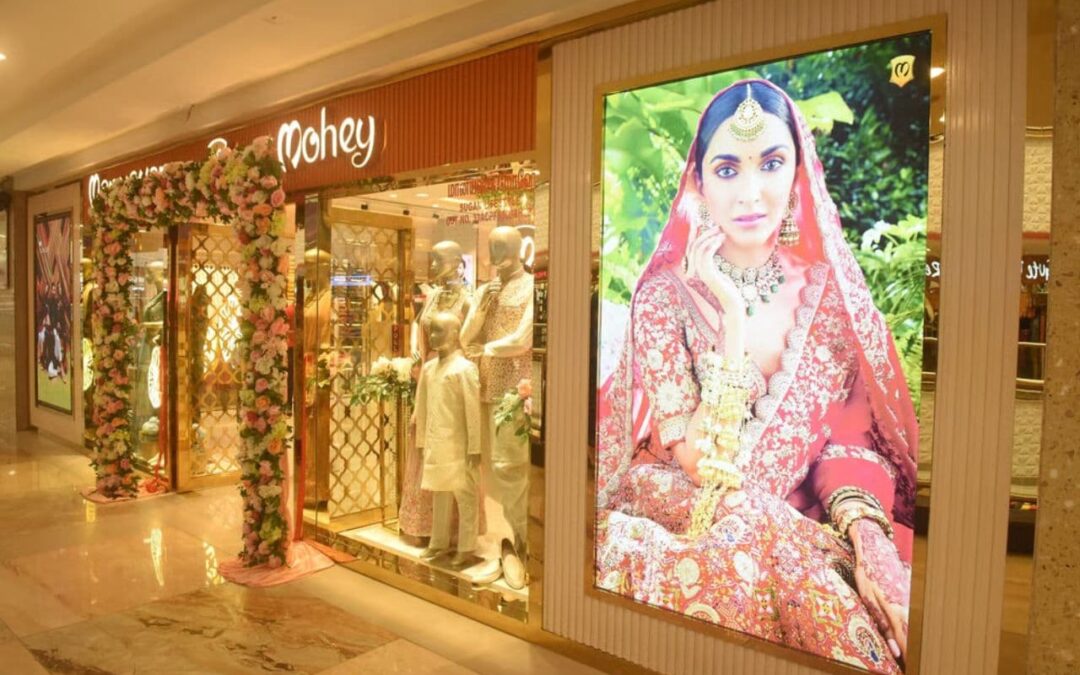
While Manyavar continues to dominate the men’s wedding wear segment, the company is increasingly focusing on expanding its other brands. Mohey has emerged as one of India’s leading women’s celebration wear brands, while Twamev caters to premium luxury ethnic wear customers. The company has also strengthened its presence in South India through Mebaz and serves value-conscious consumers through Diwas.

This diversified portfolio enables Vedant Fashions to cater to the entire family for weddings and festive occasions while increasing customer spending through cross-selling opportunities.
Operational Strength and Business Model
One of Vedant Fashions’ biggest competitive advantages remains its asset-light franchise model. Unlike many apparel retailers, the company expands largely through franchise-operated stores, allowing it to scale its retail footprint without significant capital expenditure.
The company also follows a premium pricing strategy with limited discounting, helping preserve brand value and maintain industry-leading profitability. Technology-driven inventory management, AI-based demand forecasting and an efficient replenishment system further improve inventory turnover and reduce markdown risks.
Industry Outlook
India’s organized ethnic and celebration wear market continues to benefit from rising disposable incomes, increasing wedding expenditure and growing consumer preference for branded apparel. The wedding industry remains one of the largest discretionary spending categories in India, while festive demand and premiumisation continue to support long-term growth for organized players.
With increasing urbanisation, expanding retail penetration into Tier-II and Tier-III cities and growing international demand from the Indian diaspora, branded ethnic wear companies are expected to continue gaining market share from the largely unorganized segment.
Vedant Fashions Limited caters to the Indian celebration wear market through a diversified portfolio of brands including Manyavar, Mohey, Twamev, Diwas and Mebaz. The company offers a one-stop destination for wedding and festive apparel for men, women and children across multiple price segments and is the market leader in branded Indian wedding and celebration wear, operating one of the largest retail networks in the country.
Disclaimer: The views and investment tips expressed by investment experts/broking houses/rating agencies on tradebrains.in are their own and not that of the website or its management. Investing in equities poses a risk of financial losses. Investors must therefore exercise due caution while investing or trading in stocks. Trade Brains Technologies Private Limited or the author are not liable for any losses arising from decisions based on this article. Please consult your investment advisor before investing.