
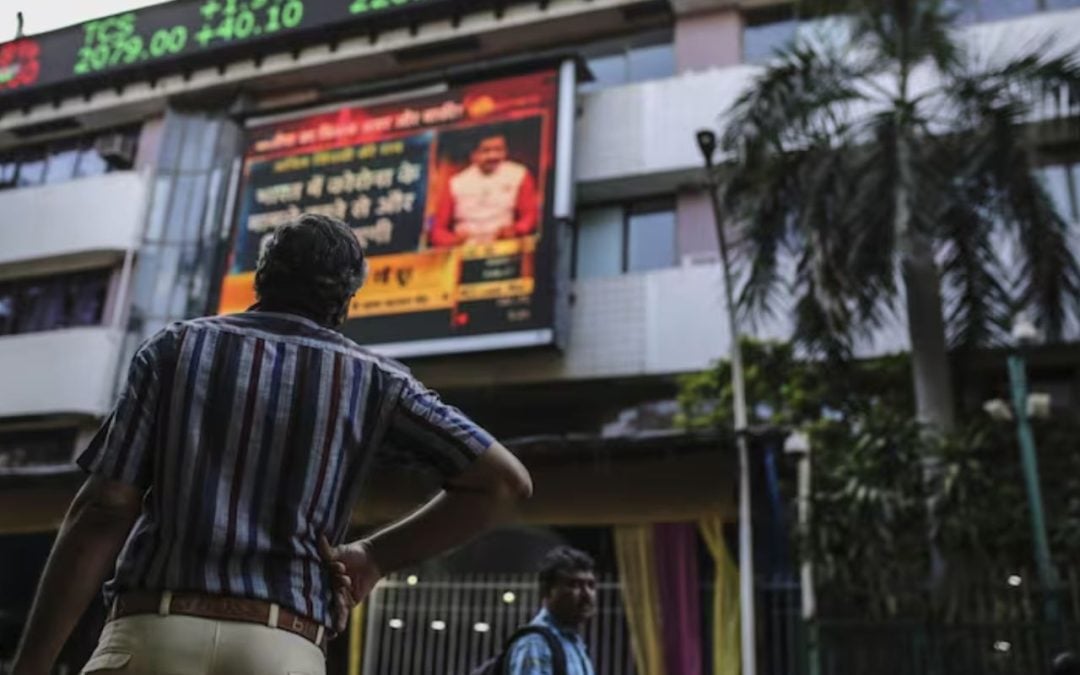
Synopsis: The rapid growth of crypto derivatives is creating a new destination for speculative trading capital. With higher leverage, round-the-clock markets and evolving regulatory frameworks, cryptocurrencies are increasingly attracting active traders. While equities remain dominant for long-term investing, the rise of crypto raises questions about its potential impact on traditional brokerage businesses.
India’s investment landscape is undergoing another phase of transformation. While equities continue to remain the preferred avenue for long-term wealth creation, the emergence of new digital asset classes is gradually changing trading behaviour, particularly among younger and more active traders.

Advancements in technology, easier market access and the increasing appetite for leveraged products have led to the rise of alternative trading ecosystems globally. Against this backdrop, cryptocurrencies have emerged as a rapidly growing segment, raising important questions about their implications on traditional financial intermediaries.
The Slowdown in Active Equity Market Participation
The Indian equity broking industry saw one of the biggest booms in retail participation not often seen anywhere in the world in post-pandemic times. The number of accounts held by investors at the NSE shot up from about 5.5 crore in March 2020 to more than 24 crore by November 2025, showing an almost four-fold jump in only five years.

This has happened due to digital account opening, zero brokerages, high financial literacy, and good market performance in post-pandemic times. The participation boom has been so huge that retail investors have overtaken foreign portfolio investors to own Indian stocks, thereby marking a paradigm shift in India’s capital markets.
However, this growth has started slowing down in the last one year. As per NSE, the active investor accounts fell by roughly 35 lakh in FY26, dropping from 4.92 crore in FY25 to about 4.57-4.58 crore in FY26, marking the first annual fall in active investors in three years. There has been almost a 7% fall in active investors on a yearly basis, with major discount brokers like Zerodha, Angel One and Upstox making up for a large proportion of the fall.

Client additions too have significantly eased compared to the frenzied pace seen post the pandemic. In June 2026, India registered more than 25 lakh new demat accounts, the highest monthly addition in over four months, attributable to the uptick in benchmark indices.
However, the current momentum has been lagging behind past peaks where new additions regularly crossed 30 lakh accounts per month. While the story of retail investors’ participation in equity markets seems robust in the long run, it now appears that equity brokers might be moving into a period where client retention and engagement will play a bigger role than client acquisitions. Some industry analysts continue to see potential for the Indian investor universe to touch 40 crore accounts in the coming decade.
Crypto Derivatives Trading Volumes Hit New Highs
The cryptocurrency market globally has been developing into a derivatives-based ecosystem. According to CoinGlass’ market report of Q1 2026, the total volume of crypto trading for Q1 2026 was about $20.57 trillion, out of which around $18.63 trillion, that is, more than 90%, was derived from derivatives trading, whereas the remaining amount, that is, $1.94 trillion, resulted from spot trading.

This indicates that the derivative trading volume was nearly 9.6 times more compared to the spot trading volume. The average daily volume of crypto derivatives trading in the quarter was around $209 billion, higher compared to other certain conventional markets.
This can also be observed from exchange level statistics. Binance alone handled a trading volume of derivatives worth around $4.9 trillion in Q1 2026, making up about 35% of the total derivatives trading on the world’s largest crypto derivative exchanges. On the other hand, perpetual futures have continued to remain popular within the crypto ecosystem, taking up about 75-80% of the total crypto trading activities worldwide.
The magnitude of these markets has grown so big that major macro events have led to record-breaking liquidations, with CoinGlass statistics indicating about $19 billion in liquidations within one day of the October 2025 crypto market chaos.
There is also a consistent rise in crypto participation in India amid the uncertainty of regulation. One of the leading cryptocurrency exchange platforms of India, CoinDCX, recorded a number of 22.28 million users as of May 2026, up from 21.82 million users in February 2026. Delta Exchange, the crypto derivatives trading platform registered with the FIU of India, has established itself as an important platform for Indian traders with INR settlement and 24/7 market access and has reported daily trading volumes exceeding $2 billion, underlining the growing popularity of leveraged crypto derivatives among traders.
Although the actual number of India-specific crypto derivatives volumes is hard to predict as a significant share of Indian traders trade on offshore exchanges, there is an evident rise in the participation and global dominance of derivatives, signaling crypto as a competing destination for trading funds.
What Is Driving India’s Growing Crypto Craze?
The first and foremost reason behind the exponential growth in crypto trading is the much higher leverage that traders get. With SEBI tightening its F&O regulations and margin rules, traders get leverage of 5x or less in Indian intraday markets. On the other hand, major cryptocurrency platforms give leverage between 20x and 125x, sometimes more.
Traders are able to create large positions in crypto with a small amount of capital because of the high leverage, which is what attracts them to it. The next big thing about crypto trading is its 24×7 trading period. While the Indian stock market opens for around six hours on a regular weekday basis, cryptocurrencies are available for trading all the time through the year, even on weekends and public holidays.
Moreover, crypto platforms also have an added advantage in terms of offering various types of trading instruments, including perpetuals, daily expiries, weekly expiries, and option contracts, as compared to traditional markets. This has been further supplemented by the comparatively less stringent regulations. Although cryptocurrency trading in India is taxed at 30% profits and 1% TDS, there is currently no regulatory body similar to SEBI that regulates trading operations in the market.
The exchanges currently work with anti-money laundering rules and FIU requirements. High volatility combined with low barriers of entry has made crypto a viable option for many active traders, more so after the introduction of stricter regulations in the derivatives segment of Indian equities markets.
Nithin Kamath’s Warning on India’s Crypto Shift
As pointed out by the founder and CEO of Zerodha, Nithin Kamath, the sudden increase in trading activities in cryptos can be attributed to the absence of regulatory clarity in this market along with the availability of high leverage in crypto derivatives.
He explained that over the past few years, many F&O traders have shifted to crypto markets since the derivative markets in equities have become more regulated due to stricter margining requirements and reduced leverage. On the other hand, cryptos provide as high as 100 times to 200 times leverage for the traders.
Thus, cryptocurrencies are increasingly attracting speculative traders due to the availability of significantly higher leverage. Moreover, derivatives already account for over 80% of trading volumes on Indian stock exchanges, indicating investors’ preference for leveraged products. Amid tighter regulations in equity F&O, crypto derivatives are emerging as an alternative platform for speculative trading.
How Are Indian Regulators Viewing Crypto Trading?
Even though there has been significant growth in the crypto market in recent times, at the same time India has no separate regulator for cryptocurrencies. At present crypto assets are not considered securities or fiat currencies, and hence crypto trading platforms are neither regulated by SEBI nor RBI.
Currently, in order to conduct operations in India, cryptocurrency exchanges need to register themselves with FIU-IND according to anti-money laundering regulations and follow certain KYC and transaction reporting guidelines. Leading cryptocurrency exchanges like Binance, CoinDCX and KuCoin have registered themselves with FIU.
RBI has always taken a very cautious approach, citing financial stability and investor protection risks, whereas SEBI is reported to be considering an approach where different regulators can regulate different components of the crypto ecosystem.
However, the Indian government has levied a 30% tax on crypto gains and 1% TDS on crypto transactions, which makes India one of the highest taxed crypto markets in the world. Thus, currently crypto trading in India is legal but not regulated from the point of view of market regulation, with chances of a regulatory structure being formed in the coming years.
Are Crypto Platforms Emerging as Competitors to Stock Brokers?
The increase in the use of cryptos might eventually start putting pressure on equity brokers, at least among those who are very active and engage in speculation. In contrast to typical brokers that mainly generate revenues via equities and F&O, the increasing popularity of crypto exchanges is being driven by users who prefer higher trading freedom.
At the same time, it is unclear if this trend will become long-lasting. Cryptos are much more volatile and are driven almost entirely by sentiments. Moreover, regulatory uncertainty remains a key risk for the sector.
Any kind of interference from policymakers, such as new regulation, restrictions on leverage, increased taxes, or establishment of a regulator, might affect crypto trading volumes substantially. Hence, even if cryptos attract some speculative money, it is still too early to say if they are capable of disrupting the future of traditional equity brokers. Instead, this is an emerging alternative trading environment, not a replacement of the traditional capital market system.
What Lies Ahead for India’s Investment Landscape?
The biggest development to watch will be the emergence of a clearer regulatory framework for cryptocurrencies in India. Policymakers, including the Parliamentary Standing Committee on Finance, have recently held discussions with the RBI and other stakeholders regarding the future of virtual digital assets, indicating that regulatory clarity may gradually emerge over the coming months. However, no final framework has been announced yet.
Another key area to monitor is the appointment of a dedicated regulator. Currently, crypto exchanges are only monitored under anti-money laundering regulations through FIU registration, but future regulations could potentially involve SEBI if certain crypto assets are treated as securities, while the RBI may continue to oversee financial stability concerns. Market participants also expect stricter norms around investor protection, disclosures and compliance requirements as the industry matures.
Finally, leverage norms could also come under scrutiny. Given the extremely high leverage available on crypto platforms compared to traditional markets, regulators may consider imposing limits similar to those in India’s equity derivatives market. While a formal regulatory framework could improve investor confidence and attract institutional participation, any aggressive stance, including tighter leverage restrictions or stricter compliance requirements, could significantly impact trading volumes and speculative activity in the near term.
Disclaimer: The views and investment tips expressed by investment experts/broking houses/rating agencies on tradebrains.in are their own, and not that of the website or its management. Investing in equities poses a risk of financial losses. Investors must therefore exercise due caution while investing or trading in stocks. Trade Brains Technologies Private Limited or the author are not liable for any losses caused as a result of the decision based on this article. Please consult your investment advisor before investing.