
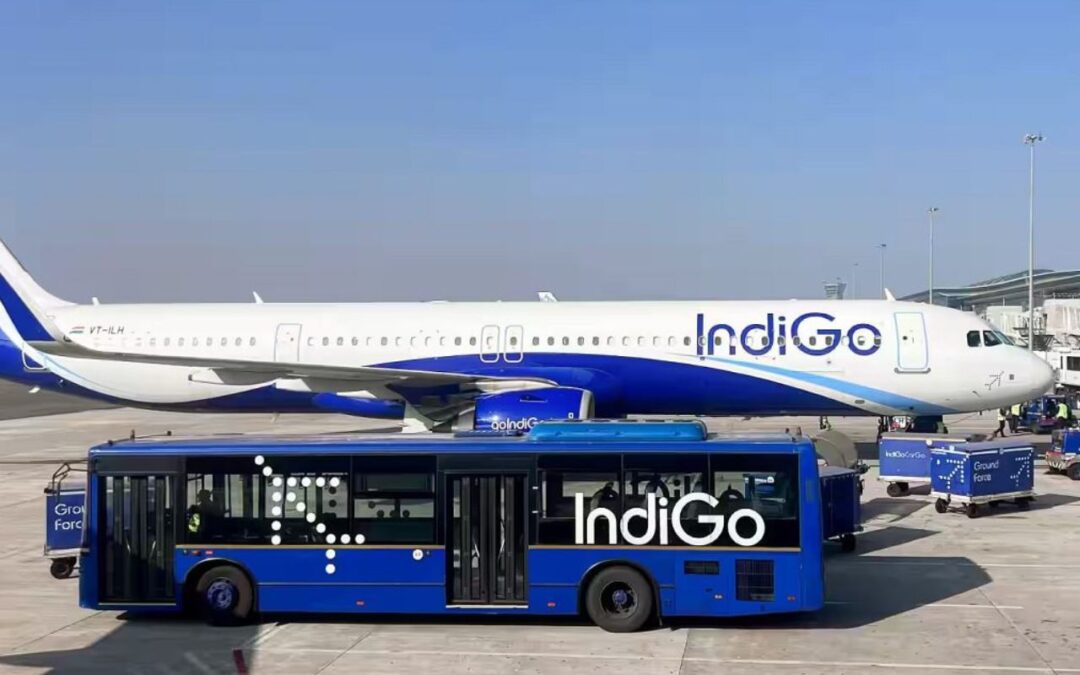
Synopsis: SpiceJet and IndiGo are showing opposite stock trends due to differences in financial strength and operational performance. While SpiceJet struggles with debt, grounded aircraft, liquidity issues, and market share pressure, IndiGo benefits from lower fuel costs, strong passenger demand, market leadership, and positive investor sentiment, driving its 25% monthly rally.
India’s aviation sector is witnessing a sharp divergence in investor sentiment. While InterGlobe Aviation Limited, which operates IndiGo, has delivered a strong stock rally in recent weeks, SpiceJet’s stock has struggled to keep pace with its industry counterpart.

In this article, let’s look at why SpiceJet’s stock is falling behind while IndiGo shares have jumped 25% in a month. The contrasting market movements have raised questions among investors about the factors influencing sentiment around both airline stocks and what this divergence indicates about the aviation sector’s current outlook.
Price Action
With a market capitalization of Rs. 2,08,524.39 crores in the day’s trade, the shares of Interglobe Aviation Ltd jumped upto 0.36 percent, making a high of Rs. 5,428.45 per share compared to its previous closing price of Rs. 5,408.65 per share. The shares of the company have rallied 24 percent in the last month.

With a market capitalization of Rs. 1,768.75 crores in the day’s trade, the shares of Spicejet Ltd jumped upto 1.3 percent, making a high of Rs. 11.89 per share compared to its previous closing price of Rs. 11.73 per share. The shares of the company have declined 3.3 percent in the last month.
What Happened
The Indian aviation sector is witnessing a sharp divergence between two major airlines. While InterGlobe Aviation Limited, which operates IndiGo, has delivered a strong rally of over 25% in a month, SpiceJet has continued to struggle with declining investor confidence and a sharp fall in its stock price.

SpiceJet shares have experienced significant underperformance, while IndiGo has benefited from several factors and delivered strong gains in recent days. This contrasting performance highlights how investors are rewarding operational efficiency, strong execution, and financial stability in the aviation sector.
Why is SpiceJet’s stock lagging?
Fleet Grounding and Reduced Operations
One of the biggest challenges for SpiceJet has been its limited operational capacity. A significant number of aircraft remained grounded due to maintenance issues, lease disputes, and spare-part shortages. The reduced fleet size affected flight operations, forced route cuts, and weakened revenue generation. Lower capacity utilisation increased pressure on the airline’s finances and reduced investor confidence.
Rising Debt and Liquidity Challenges
SpiceJet has been dealing with high debt levels, unpaid dues, and financial obligations to aircraft lessors and vendors. Legal disputes and payment delays created uncertainty about the airline’s ability to maintain operations smoothly. Investors became concerned about future funding requirements, possible equity dilution, and the company’s ability to return to sustainable profitability.

Falling Market Share and Competitive Pressure
India’s aviation market has become increasingly competitive, with IndiGo maintaining a dominant position through its large fleet, extensive network, and operational efficiency. SpiceJet’s declining flight frequency and limited expansion reduced its market share, making investors question its ability to compete effectively in the long run.
High Costs and External Pressure
Airlines are highly sensitive to fuel prices, and higher aviation turbine fuel (ATF) costs have historically impacted profitability. Global geopolitical tensions and crude oil volatility increased uncertainty across the aviation sector. For a financially stressed airline like SpiceJet, rising operating costs created additional pressure on margins and delayed recovery prospects.
Why IndiGo Shares Surged 25% in a Month?
Lower Crude Oil Prices Boost Profit Outlook
The decline in global crude oil prices became a major positive factor for IndiGo. Since fuel is one of the largest expenses for airlines, lower ATF prices improve operating margins and increase expectations of stronger earnings. This encouraged investors to buy the stock and upgrade their outlook.
Strong Market Leadership and Passenger Growth
IndiGo continues to maintain its position as India’s largest airline by market share. Its extensive domestic and international network, strong fleet expansion plans, and consistent passenger demand have supported investor confidence. The airline is viewed as a key beneficiary of India’s growing aviation market.
Positive Brokerage Views and Expansion Plans
Brokerages have remained optimistic about IndiGo’s long-term growth potential, citing its strong balance sheet, operational efficiency, and expansion strategy. Expectations of capacity growth and improved profitability have supported the recent rally in the stock.
Improving Industry Conditions
A more stable geopolitical environment and better travel demand outlook have improved sentiment toward aviation stocks. Investors expect IndiGo to benefit the most from favourable industry trends due to its scale and financial strength.
Conclusion
The contrasting performance of SpiceJet and IndiGo reflects the importance of financial stability, operational efficiency, and market leadership in the aviation sector. SpiceJet continues to face challenges related to debt, fleet limitations, and liquidity concerns, which have weighed heavily on its stock performance. Meanwhile, IndiGo’s strong fundamentals, dominant market position, and improving cost environment have driven investor optimism.
While both companies operate in the same industry, the market is currently rewarding IndiGo’s growth visibility and penalising SpiceJet’s financial uncertainty. The future performance of both stocks will depend on how effectively they manage costs, expand capacity, and adapt to changing aviation conditions.
Disclaimer: The views and investment tips expressed by investment experts/broking houses/rating agencies on tradebrains.in are their own, and not that of the website or its management. Investing in equities poses a risk of financial losses. Investors must therefore exercise due caution while investing or trading in stocks. Trade Brains Technologies Private Limited or the author are not liable for any losses caused as a result of the decision based on this article. Please consult your investment advisor before investing.