
Synopsis: Institutional investors have significantly raised their stake in a leading infrastructure company this quarter, even as promoter holding declined. The move comes against a backdrop of strong five-year profit growth and an ambitious capacity expansion roadmap through 2030.
A private-sector infrastructure operator has recorded a sharp rise in institutional buying over the past quarter, even as promoter holding slipped below 74% for the first time in several years. Behind this ownership shift lies a profit growth record that has quietly outpaced most peers in the space.

Ownership patterns often reveal more than headline numbers. When both foreign and domestic institutions raise their stakes in the same quarter, it usually points to growing conviction in a company’s earnings path. That is precisely what has played out through the June 2026 quarter for one of India’s leading private port and logistics players, backed by a five-year profit growth track record that stands out even in a crowded infrastructure space.
With a market capitalisation of Rs. 80,501 Crores, shares of JSW Infrastructure Ltd. closed at Rs.344.55 per share, i.e.1.12% below its previous closing price of Rs.348.45. It has a P/E ratio of 52.48.

Institutional Buying Picks Up Pace in Q1FY27
Shareholding data for the quarter ended June 2026 shows a marked change in ownership structure. Promoter holding, which had stayed steady at 83.61% through the previous three quarters, dropped to 73.93%. On the other side, FII holding rose from 6.92% to 10.71%, while DII holding jumped from 2.43% to 9.19% in the same period, a sharp move from the fairly muted levels seen through most of FY26.
This kind of simultaneous rise in both FII and DII stakes, alongside a fall in promoter holding, typically points to a stake sale or offer-for-sale route rather than open-market selling by promoters, with institutions stepping in to absorb the supply. The number of shareholders has also stayed above 4.4 lakh through the year, suggesting steady retail participation even as the ownership mix shifted.

Five-Year Profit CAGR Crosses 40%
The company’s compounded profit growth over five years stands at 41%, well ahead of its compounded sales growth of 27% over the same period. The three-year profit CAGR is a healthier 29% against 19% sales growth, though the TTM figures show a moderation, with profit growth of 10% against sales growth of 20%. This gap between longer-term and near-term profit growth suggests margins have normalised somewhat after a period of sharp expansion, even as the topline continues to scale.
Strong FY26 Performance Backs the Growth Story
JSW Infra’s FY26 numbers help explain the institutional interest. Consolidated revenue from operations came in at ₹5,361 crore, up 20% year-on-year, while operating EBITDA rose 15% to ₹2,604 crore. Adjusted PAT for the year stood at ₹1,644 crore, up 12% over FY25. Total cargo handled touched 122 MT, a 4% rise over the previous year, with third-party cargo now making up 48% of the total mix, up from 25% five years ago.
The balance sheet has also strengthened considerably. Net debt to operating EBITDA improved to 1.19x from 4.42x in FY21, and the company holds investment-grade ratings from both Fitch and S&P Global. Management guidance for FY28 points to consolidated revenue of ₹10,800 crore and EBITDA of ₹5,000 crore, implying a two-year CAGR of 42% and 39% respectively from FY26 levels.

Capacity Expansion Underway Across Multiple Sites
A big part of the growth story rests on ongoing project execution. Work is progressing on several fronts, including the V.O. Chidambaranar Port terminal in Tuticorin, where foundation and piling work is fully complete and interim operations have already handled over 4 MT of cargo in FY26.
The Kolkata Container Terminal, with a concession signed in September 2025, is expected to begin interim operations shortly, while brownfield expansion at the Dharamtar and Jaigarh ports, together adding 36 mtpa of capacity, is targeted for completion by March 2027. Greenfield projects at Jatadhar Port in Odisha and Keni Port in Karnataka are also moving ahead, with pile foundation work at Jatadhar already 80% complete.
Roadmap to 400 MTPA by 2030
JSW Infrastructure has laid out a clear roadmap to nearly 120% growth in its overall port capacity by FY30, taking it from the current 183 mtpa to 400 mtpa. This growth is expected to come from a mix of brownfield expansions at existing ports, new greenfield developments such as Murbe Port in Maharashtra and a greenfield port in Oman, and continued participation in government privatisation bids.
Alongside the ports business, the logistics arm is being scaled up through investments in rail rakes and inland container depots, with a target of ₹8,000 crore in revenue by FY30, giving the company two distinct growth engines to lean on over the next few years.
About the Company
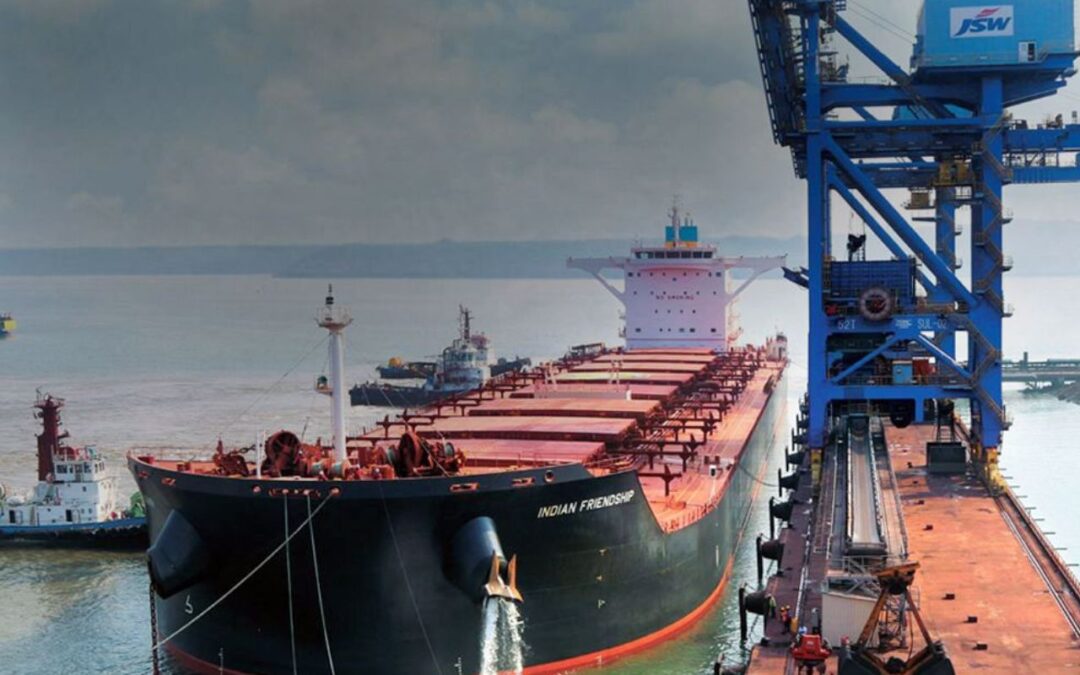
JSW Infrastructure is India’s second-largest private port operator, with an operational capacity of 183 mtpa spread across the west and east coasts, alongside a presence in the UAE and Oman. It is part of the JSW Group, a diversified conglomerate with a turnover of over $23 billion. The company is targeting port capacity of 400 mtpa by 2030, alongside a fast-scaling logistics arm built around its Navkar Corp acquisition.
Disclaimer: The views and investment tips expressed by investment experts/broking houses/rating agencies on tradebrains.in are their own, and not that of the website or its management. Investing in equities poses a risk of financial losses. Investors must therefore exercise due caution while investing or trading in stocks. Trade Brains Technologies Private Limited or the author are not liable for any losses caused as a result of the decision based on this article. Please consult your investment advisor before investing.