Synopsis: Behind every online order lies a hidden winner. As India’s digital shopping habit deepens, the companies moving goods from warehouse to doorstep are quietly building a growth story of their own.
Everyone talks about online shopping platforms when discussing India’s e-commerce boom. But there’s a bigger story working in the background. Someone has to pick up that order, store it, move it across the country and drop it at your door. That job belongs to logistics companies, and they’re becoming just as important to this story as the platforms themselves.

And the change over the last ten years has been huge, honestly bigger than most people realise. Back then, online shopping meant buying a phone or a pair of jeans. Now people order vegetables, medicines, skincare, even furniture, stuff nobody thought they’d buy without seeing it first. Cheaper smartphones, cheap data, UPI, better roads, it all added up. What’s interesting is this growth isn’t coming from Mumbai or Delhi anymore. Smaller towns are catching up fast, and if anything, that’s where most of the future growth is going to come from.
Everyone gives credit to Amazon and Flipkart, and fair enough, they built this market. But the companies quietly storing, sorting and moving all this stuff around might actually be sitting on the better deal. Every extra order online means one more parcel that needs handling, more shelf space, one more truck on the road somewhere. And it’s not just private companies pushing this along, either. With that backdrop, here are five listed logistics companies worth keeping an eye on.

Delhivery
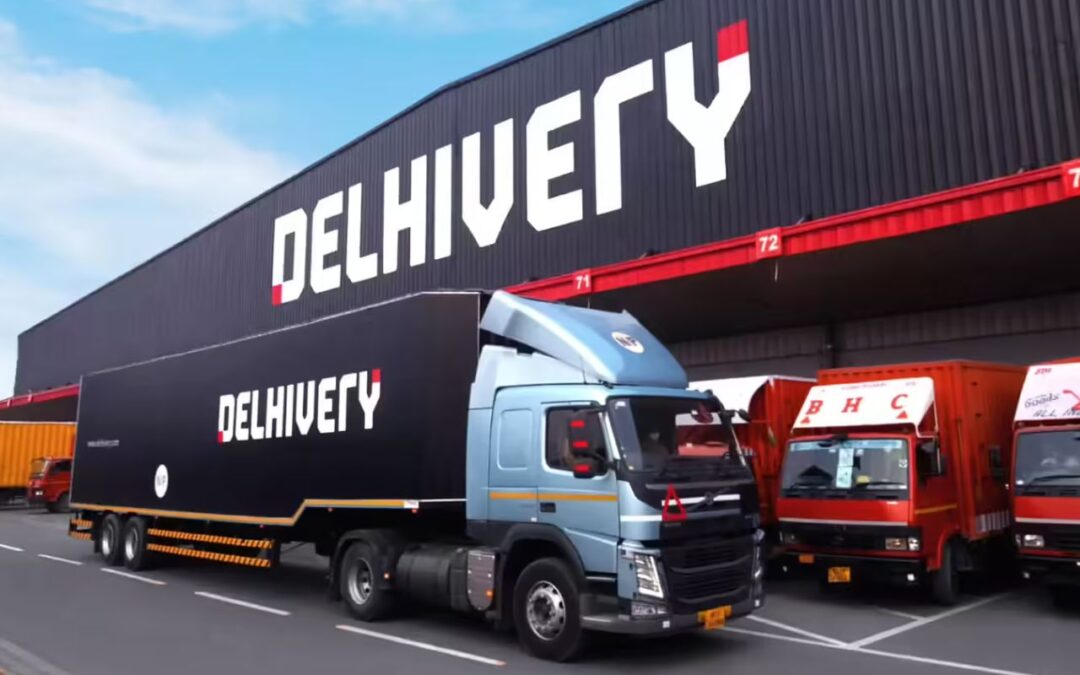
If there’s one name already known in this space, it’s probably Delhivery. It’s built one of the biggest logistics networks in the country, and it’s not doing just one thing either, it handles parcel delivery, warehousing, freight, the whole chain. A lot of e-commerce brands and D2C companies simply rely on Delhivery to get their stuff moving rather than dealing with five different vendors.
That’s really the point here. As more people order online, Delhivery doesn’t just get more parcels to deliver, it also becomes the obvious choice for brands who’d rather hand off their entire logistics headache to one company. That kind of stickiness is hard to replace once a brand is plugged in. With a market cap of Rs.37,966 Crores, the shares of Delhivery closed at Rs.507 in Friday’s trading session.

Blue Dart Express
Blue Dart has built its whole identity around one thing, getting things there on time. That used to be a nice-to-have. Now, thanks to how spoiled customers have gotten with fast delivery, it’s basically expected. Blue Dart’s air and ground network is exactly what makes that kind of speed possible.
What’s worth noting is that Blue Dart isn’t just riding on e-commerce alone. It also works with healthcare, banking and manufacturing clients, so there’s a bit of a cushion there. E-commerce is the growth story, but it’s not the only leg the business stands on. With a market cap of Rs.11,508 Crores, the shares of Blue Dart closed at Rs.4,850 in Friday’s trading session.
Mahindra Logistics
Calling Mahindra Logistics just a transport company doesn’t really do it justice. It runs warehouses, manages inventory, operates fulfilment centres, handles last-mile delivery, basically the whole back-end that a brand would otherwise have to build itself.

And that’s exactly where the opportunity lies. More and more brands are figuring out it’s cheaper and easier to hand this stuff off to someone who already knows what they’re doing, rather than building warehouses and hiring delivery staff themselves. As D2C brands and organised retail keep growing, that outsourcing trend should keep working in Mahindra Logistics’ favour. With a market cap of Rs.3,914 Crores, the shares of Mahindra Logistics closed at Rs.394.5 in Friday’s trading session.
Gateway Distriparks
Gateway Distriparks is a bit of an odd one out on this list. It’s not delivering anything to your doorstep. What it actually does is move containers around, through rail-linked depots, freight stations, multimodal transport, the less glamorous but equally necessary side of logistics.
It matters more than people realise, though. As e-commerce firms expand their warehousing and manufacturers need bulk goods moved across the country, someone has to handle that heavy lifting. Its rail-focused setup also lines up nicely with the government’s push to move freight off roads and onto rail, which should help bring costs down over time. With a market cap of Rs.3,085 Crores, the shares of Gateway Distriparks closed at Rs.61.76 in Friday’s trading session.
Transport Corporation of India (TCI)
TCI has been around long enough to have seen a few different eras of India’s logistics business, and that experience shows in how wide its footprint is, road transport, multimodal logistics, warehousing, even coastal shipping.
That range is really the strength here. TCI isn’t tied to just one industry or one type of client, so when businesses want a single reliable partner instead of juggling separate vendors for transport, storage and distribution, TCI’s broad setup makes it an easy pick. With a market cap of Rs.7,183 Crores, the shares of Transport Corporation of India closed at Rs.936 in Friday’s trading session.
The bigger picture
India’s e-commerce market still has a long way to go compared to more developed economies, and that’s really the whole point. Rising incomes, cheaper data, changing habits, none of that looks like it’s slowing down. Retailers keep pouring money into faster deliveries and bigger warehouses just to keep up with what customers now expect, and that spending doesn’t stop at the platform level, it flows straight into the logistics companies supporting it all.
Warehousing, freight movement, supply chain management, these are the unseen gears keeping India’s digital shopping engine running. As more people shop online and businesses expand their reach into smaller towns, the logistics companies enabling all of it could end up being some of the biggest long-term beneficiaries of this shift. For investors, it’s a way to ride India’s e-commerce growth story without having to bet on which shopping app wins the race.
Disclaimer: The views and investment tips expressed by investment experts/broking houses/rating agencies on tradebrains.in are their own, and not that of the website or its management. Investing in equities poses a risk of financial losses. Investors must therefore exercise due caution while investing or trading in stocks. Trade Brains Technologies Private Limited or the author are not liable for any losses caused as a result of the decision based on this article. Please consult your investment advisor before investing.