
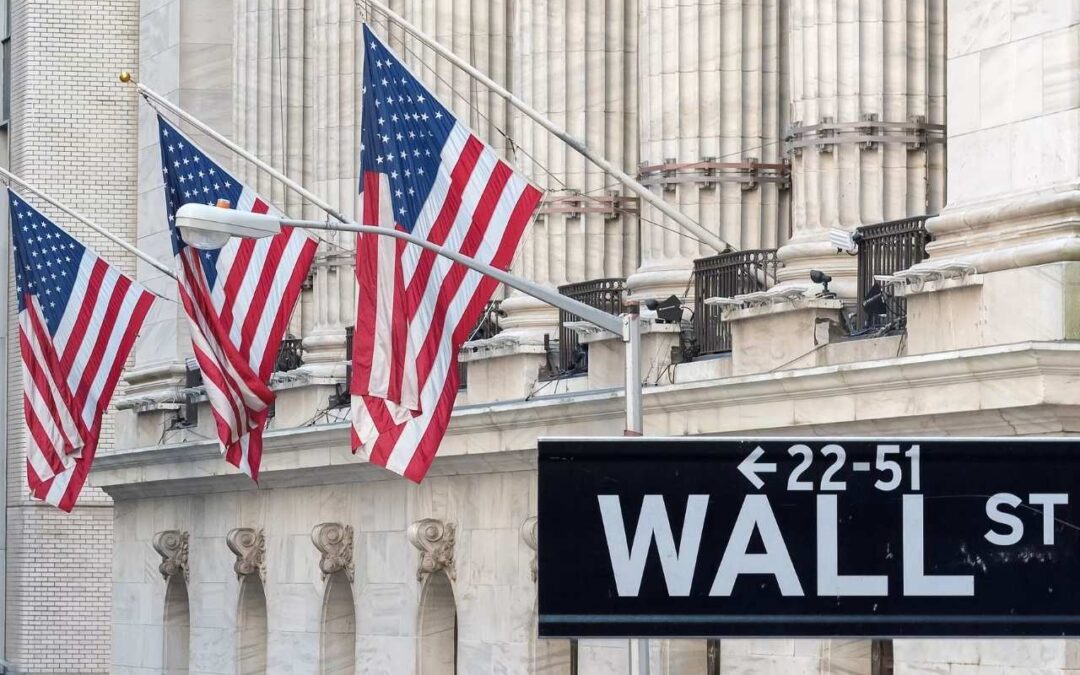
Synopsis: AI stocks have become highly volatile as investors question rich valuations, massive spending and how quickly companies can turn AI investments into profits. The weakness has hit AI and data centre shares hardest. But is the sell-off now beginning to spread more widely across Wall Street?
Artificial intelligence has remained one of the strongest themes in the US stock market, but the trade has become far less stable. AI chipmakers, cloud companies and data-centre businesses are now seeing sharp rallies followed by sudden declines. The technology itself may still be expanding, but investors are becoming more careful about valuations, spending and the time required to earn a return from AI investments.

Why Are AI Stocks Swinging So Sharply?
A major reason is that expectations have become extremely high. When investors expect a company to deliver exceptional growth, merely reporting good results may not be enough. Any slowdown in sales, weaker guidance or rise in costs can trigger heavy selling.
The Philadelphia Semiconductor Index has fallen more than 11 percent from its June 2026 record high, even though it remains up around 80 percent in 2026. This shows how quickly investors can shift between excitement and fear. According to Reuters, funds tracking US semiconductor stocks also recorded around $11 billion of outflows in the week ended June 24, after receiving roughly $12 billion of inflows during the previous two weeks.

Is The AI Spending Boom Becoming A Risk?
Large technology companies are spending heavily on chips, servers, data centres, power and networking equipment. Global cloud and AI infrastructure capital expenditure could approach $1.5 trillion by 2027, representing an estimated year-on-year rise of 40-50 percent, according to a BofA Securities note.
Supporters believe this spending will create stronger productivity, new products and higher profits. The concern is that companies may take years to generate enough revenue from these investments. According to Bank of America, the Magnificent Seven hyperscalers have already spent about $234 billion on capital expenditure this year, while investors are increasingly watching the pressure on their free cash flow.

This creates a difficult market. Strong AI demand benefits chipmakers and data-centre suppliers, but the companies purchasing that infrastructure must prove that the spending will eventually deliver attractive returns.
Is The Weakness Spreading Beyond Technology?
AI stocks are more closely connected to the Nasdaq than the Dow because the Nasdaq-100 is heavily weighted towards technology and growth companies. The Dow Jones Industrial Average, meanwhile, is a price-weighted index containing 30 large US blue-chip companies from several sectors.
Investors can compare Nasdaq futures with the Dow Jones futures chart to understand whether selling is concentrated in technology or spreading across Wall Street. If Nasdaq futures fall sharply while Dow futures remain relatively stable, investors may be moving money into financial, healthcare, industrial or consumer stocks rather than leaving the US market entirely.

A clear example came on June 23. The semiconductor index fell 7.9 percent and the Nasdaq Composite dropped 2.21 percent, while the S&P 500 declined 1.44 percent. The Dow fell only 0.09 percent. That gap suggested that the selling pressure was much heavier in technology and AI-linked shares than in the broader group of blue-chip companies.
What Could Decide The Next Move?
The next direction of AI stocks will depend mainly on earnings, capital-spending guidance and evidence that AI services are producing real revenue. Interest rates will also matter because expensive growth stocks can come under pressure when bond yields rise.
Investors will closely watch whether semiconductor earnings continue growing fast enough to justify current expectations. Profits for companies in the S&P 1500 semiconductor and equipment industry are expected to more than double in 2026, but profit growth is forecast to slow to 46.1 percent in 2027.
The AI opportunity may therefore remain strong even while AI stocks stay volatile. The key question is no longer whether companies will spend on AI. It is whether the profits created by that spending can rise quickly enough to support stock prices. If the answer disappoints, volatility could continue and eventually spread further across Wall Street.
Disclaimer: The views and investment tips expressed by investment experts/broking houses/rating agencies on tradebrains.in are their own, and not that of the website or its management. Investing in equities poses a risk of financial losses. Investors must therefore exercise due caution while investing or trading in stocks. Trade Brains Technologies Private Limited or the author are not liable for any losses caused as a result of the decision based on this article. Please consult your investment advisor before investing.