
For decades, the marketing industry has been held hostage by the limitations of stock photography. We have all seen them: the overly enthusiastic corporate team high-fiving in a glass conference room, the woman laughing alone with salad, the generic “tech handshake” with blue circuit board overlays.
These images are safe, accessible, and utterly forgettable.
In a digital landscape saturated with content, “safe” is the new risky. Brands that rely on generic visuals blend into the background noise. But a seismic shift is occurring. Generative AI is not just offering a cheaper alternative to stock photos; it is fundamentally rewriting the strategy of visual storytelling. We are moving from an era of searching for the right image to conjuring it.
The Problem with “Good Enough”
The reliance on stock photography was born out of necessity. Custom photoshoots are expensive and logistically complex. Small to medium-sized businesses simply didn’t have the budget to hire a photographer, scout locations, and hire models for every blog post or Instagram update.
The compromise was stock sites. But this convenience came at a cost: brand dilution. When your competitor uses the same hero image on their landing page as you do, your unique value proposition evaporates.
AI eliminates this compromise. It allows for “bespoke scale.” You can now create imagery that is hyper-specific to your brand’s color palette, tone, and narrative without the five-figure production budget.
From Search to Synthesis
The shift to AI visual strategy requires a change in mindset. Instead of asking, “What exists?” we now ask, “What do we need?”
If your brand story involves a futuristic eco-city run by solarpunk baristas, you don’t need to hope a photographer has shot that specific concept. You generate it. This creative freedom allows brands to be far more metaphorical and imaginative in their visual communication.
However, the early days of AI art were chaotic. Inconsistent styles and “hallucinated” details made it hard to build a cohesive brand identity. This is where the next generation of tools is changing the game.
The Power of Image-to-Image Technology
The biggest hurdle for marketers using AI has been consistency. Text prompts can be unpredictable. You might get a great result once, but try to generate a similar image for a different campaign, and the AI gives you something completely different.
This is why Image-to-Image technology is the most critical feature for modern visual strategy.
Image-to-Image allows you to use an existing asset—a sketch, a product photo, or a specific brand visual—as a structural blueprint. The AI keeps the composition and core elements but reimagines the style or context. This ensures that your “cyberpunk barista” looks like the same character across ten different posts, maintaining brand recognition.
Navigating the AI landscape can feel like a part-time job. You might use Midjourney for artsy shots, another tool for realistic people, and a third for video. This fragmentation kills efficiency.
This is where Pollo AI enters the conversation as a comprehensive solution. It positions itself not just as a tool, but as an all-in-one agency in your pocket.
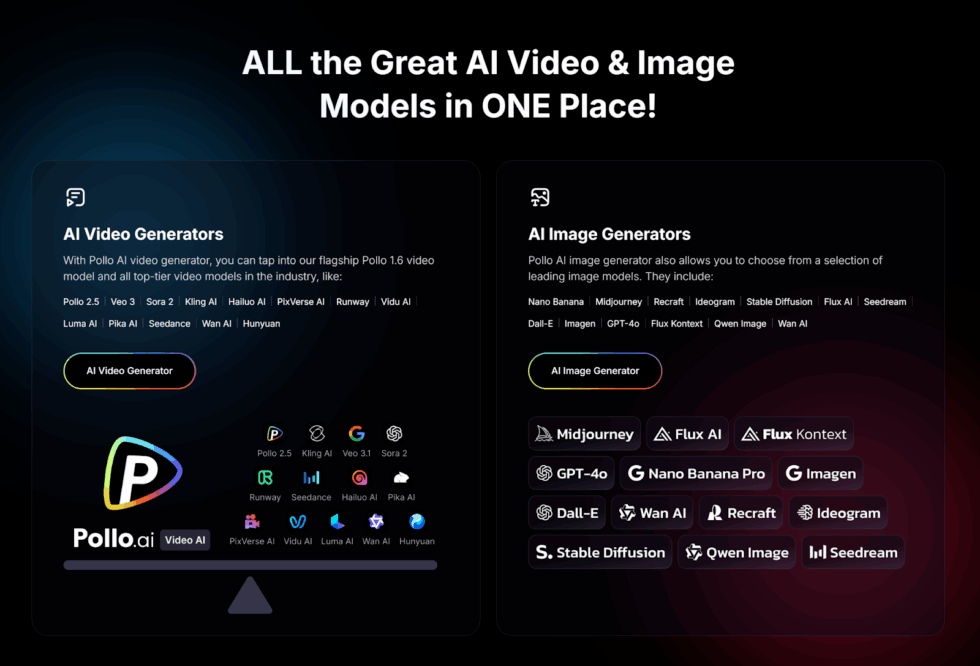
Pollo AI stands out because it aggregates multiple top-tier generative models—including NanoBanana for stylized image and Kling for video generation—under one roof. You don’t need five subscriptions; you just need one platform.
Why Pollo AI Fits the New Strategy:
- Mastering Consistency: Pollo AI Image to Image feature is robust and user-friendly. It allows marketers to take a rough concept or a brand asset and generate high-fidelity variations that stay on-brand.
- Beyond Static Images: The future of content is motion. Pollo AI bridges the gap by allowing you to generate both AI images and high-quality videos.
- One-Click Viral Potential: The bottleneck in video marketing is usually editing. Pollo AI allows for the one-click generation of viral-ready short videos. It removes the need for manual splicing or timeline management, making it perfect for TikTok and Reels strategies.
- Mobile-First Workflow: Marketing happens on the go. With the Pollo AI app, you can generate these assets from your phone, turning a commute into a productive creative session.
The Human Element in an AI World
Does the end of stock photos mean the end of human creativity? Far from it.
The role of the creative director is becoming more important, not less. AI is a tool that requires direction. It needs a human to understand the audience, to understand cultural nuance, and to curate the output.
We are moving away from the technical drudgery of finding content and moving toward the strategic joy of creating it. The brands that win in this new era won’t be the ones with the biggest stock photo subscriptions, but the ones with the wildest imaginations and the best tools to realize them.
The era of the “generic corporate handshake” is over. The era of limitless visual storytelling has just begun.
