
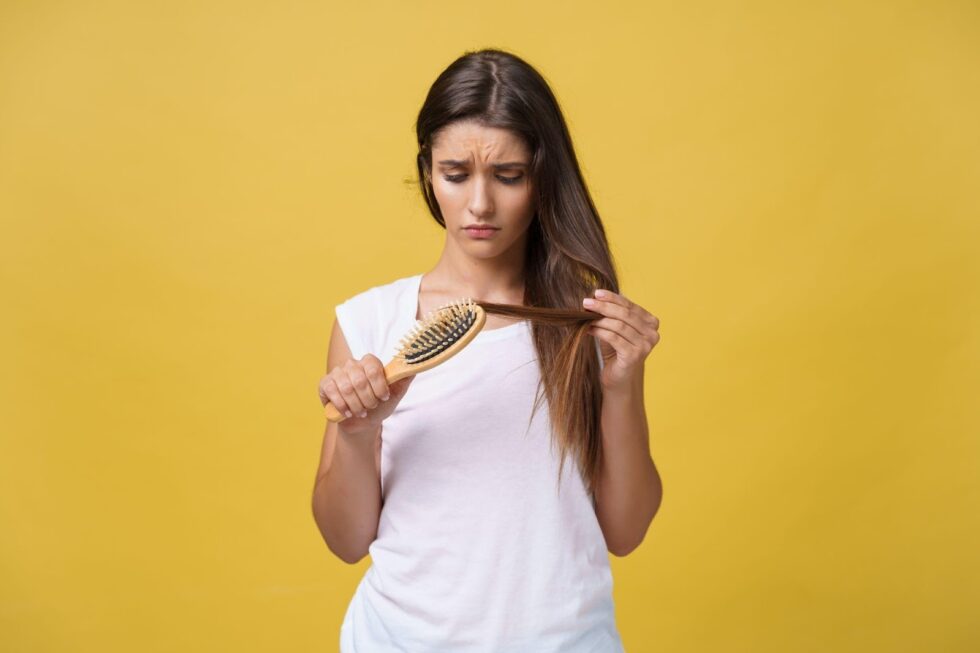
Most women notice it gradually — a few extra strands on the pillow, more hair caught in the drain, a ponytail that feels thinner than it used to. It’s easy to brush off at first. But when it keeps happening day after day, it stops feeling normal. Hair fall in women is far more common than most people realize, and yet it’s also one of the most misunderstood hair concerns out there.
Why Hair Fall in Women Is Different from Men
When people talk about hair loss, the conversation almost always defaults to men. But women experience it too — just differently. Men tend to lose hair in a predictable pattern, starting at the temples or crown. Women usually experience diffuse thinning, meaning the hair thins all over rather than in one specific spot. The overall volume reduces, the parting widens, and the hairline may recede slightly — but rarely in the dramatic way it does for men.
This difference matters because it changes how we look at the causes. Women’s hair fall is rarely about one single thing. It’s usually a combination of hormonal shifts, nutritional gaps, lifestyle stress, and sometimes underlying health conditions — all happening at the same time.
Hormones Play a Bigger Role Than Most Women Expect
Hormonal changes are one of the most significant drivers of hair loss in women, and they happen across multiple life stages.
- During pregnancy, estrogen levels are high, which actually keeps more hair in the growth phase. But after delivery, those levels drop sharply — and that’s when many women experience sudden, heavy shedding. This is called postpartum hair loss.
- Around perimenopause and menopause, falling estrogen and progesterone levels can tip the balance toward androgens (male hormones), which can shrink hair follicles over time.
- Conditions like PCOS (Polycystic Ovary Syndrome) raise androgen levels in women, which directly contributes to hair thinning, particularly around the crown and hairline.
- Thyroid imbalance — whether an overactive or underactive thyroid — disrupts the normal hair growth cycle, often causing diffuse shedding across the scalp.
The tricky part is that hormonal issues don’t always show up with obvious symptoms. Hair fall might be the first visible sign of something shifting internally.
Nutritional Deficiencies That Quietly Trigger Hair Loss
Hair follicles are among the most metabolically active structures in the body. They need a steady supply of nutrients to keep producing hair. When that supply is interrupted, the follicles slow down or stop working properly.
- Iron deficiency is one of the most common culprits in women, especially those with heavy periods. Low ferritin (stored iron) affects the follicle’s ability to sustain hair growth.
- Protein is the building block of hair. Diets that are too low in protein — even temporarily — can push follicles into a resting phase.
- Vitamin D, Zinc, and B12 deficiencies are frequently overlooked but consistently show up in women experiencing significant hair fall.
The problem is that these deficiencies often don’t cause any other noticeable symptoms for a long time. Hair fall can be the first alert your body sends.
Stress, Sleep, and the Cycle Nobody Talks About
Chronic stress has a direct, documented impact on hair. When the body is under prolonged stress — physical or emotional — it can push a large number of hair follicles into a resting phase simultaneously. A few months later, that hair sheds all at once. This is called telogen effluvium, and it’s more common in women than most people realize.
Poor sleep compounds the problem. The body does a significant amount of cellular repair during sleep, including at the follicle level. Consistently poor sleep disrupts hormones like cortisol and melatonin, both of which influence hair growth cycles.
Why Finding the Root Cause Matters More Than the Product You Use
This is where most women get stuck. Hair fall is treated like a cosmetic problem, so the response is usually to switch shampoos, try a new serum, or load up on supplements. But if the underlying cause is a hormonal imbalance, an iron deficiency, or unmanaged stress — no topical product is going to make a meaningful difference.
Some approaches, like Traya, are built around identifying the root cause first before recommending any treatment — which is why personalized, diagnosis-led approaches tend to work better than generic ones.
Final Thoughts
Hair fall in women is rarely just a hair problem. It’s usually a signal — from your hormones, your gut, your stress levels, or your nutritional status. Understanding what’s actually driving it is the most important step. Once you know the real cause, the path forward becomes much clearer. And in most cases, with the right support and consistency, hair health can genuinely improve.
