
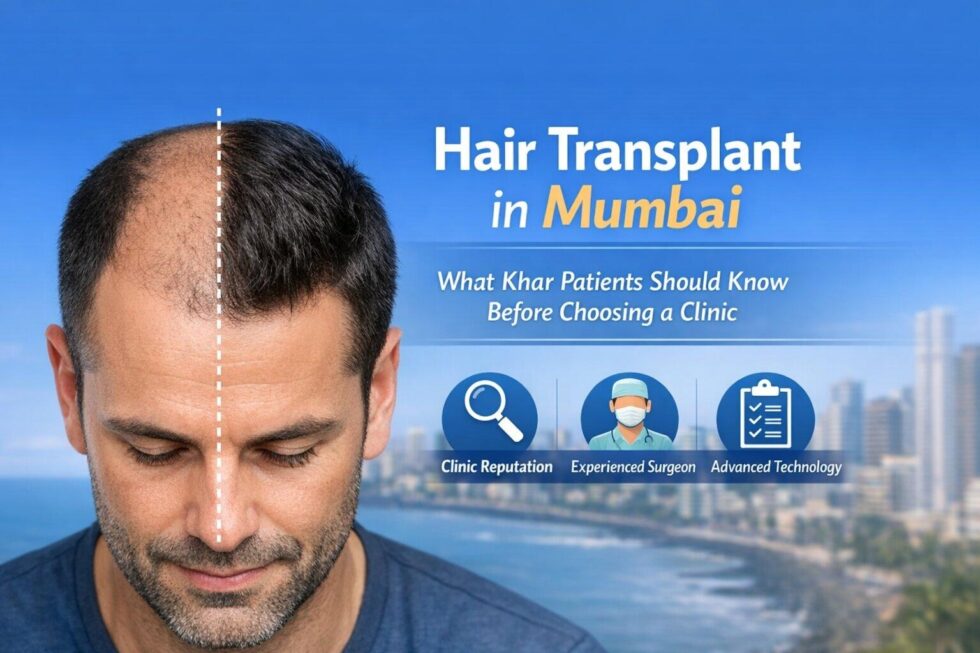
Many people living in Khar and the surrounding areas of Mumbai have been asking the same question lately: how do I know which hair transplant clinic is actually right for me? The internet is full of options, prices vary widely, and every clinic seems to make bold promises.
Before making a decision this significant — one that involves a surgical procedure and affects how you look and feel — it helps to understand the basics clearly. This article is meant to give you that foundation.
Understanding Why Hair Loss Happens in the First Place
Before any transplant is considered, it is worth understanding what is actually happening beneath the scalp.
Hair loss in most people is driven by a condition called androgenetic alopecia, commonly known as male or female pattern baldness. In this condition, hair follicles gradually become sensitive to a hormone called DHT (dihydrotestosterone). Over time, this sensitivity causes follicles to shrink, produce thinner hair, and eventually stop producing hair altogether.
Other contributing factors can include:
- Nutritional deficiencies, particularly iron, zinc, and biotin
- Chronic stress affecting the hair growth cycle
- Thyroid imbalances or hormonal changes
- Scalp conditions such as seborrheic dermatitis
- Post-illness hair loss, which is often temporary
A hair transplant does not address these underlying causes. It works by relocating follicles that are genetically resistant to DHT — usually from the back and sides of the scalp — into areas where hair has been lost. This is why treating or ruling out reversible causes matters before moving forward with surgery.
How a Hair Transplant Actually Works
There are two primary techniques used today: FUT (Follicular Unit Transplantation) and FUE (Follicular Unit Extraction).
In FUT, a thin strip of scalp is removed from the donor area, and individual follicular units are dissected from it and implanted into the recipient area. FUE, by contrast, involves extracting individual follicular units directly from the scalp using small circular punches, without removing a strip.
Both methods transplant living follicles from one part of your scalp to another. These follicles are then expected to go through a natural growth cycle in their new location. The transplanted hairs usually shed within the first few weeks — this is normal and expected. New growth typically begins around three to four months after the procedure, with more visible results appearing between six and twelve months.
The overall outcome depends heavily on the quality of the donor area, the skill of the surgical team, and how well the scalp responds post-procedure.
What Khar Residents Should Look for in a Clinic
Mumbai has dozens of clinics offering hair transplants, and Khar’s location makes several of them easily accessible. But accessibility should not be the primary factor in choosing where to have this done.
When evaluating a clinic, consider the following:
- Whether the clinic conducts a proper scalp and blood work evaluation before recommending surgery
- The qualifications and experience of the doctor performing the extraction and implantation
- Whether the clinic offers non-surgical options alongside transplant services, not just one-size-fits-all solutions
- Transparency around realistic outcomes, timelines, and limitations
- Post-procedure care and follow-up support
Be cautious of clinics that offer very low price quotes without a consultation, promise specific density numbers, or discourage second opinions.
Realistic Expectations and Limitations
A hair transplant can produce meaningful, natural-looking results for the right candidate. However, it is not a solution for everyone, and outcomes are never completely uniform.
People with very limited donor hair, active scalp conditions, or ongoing and progressive hair loss may not be ideal candidates at a given point in time. In such cases, non-surgical approaches — including PRP therapy, low-level laser therapy, or medication — may be recommended first, either alone or to support transplant results.
Clinics like Kibo Clinics focus on evaluating the underlying cause of hair loss before recommending any treatment plan, recognising that the right approach varies from person to person and that surgery is not always the first or only answer.
Final Thoughts
Choosing a hair transplant clinic in Mumbai is a decision that deserves careful thought. Understanding how the procedure works, what causes hair loss, and what realistic results look like will help you ask better questions and make a more informed choice. A responsible clinic will welcome those questions — and take the time to answer them properly.
