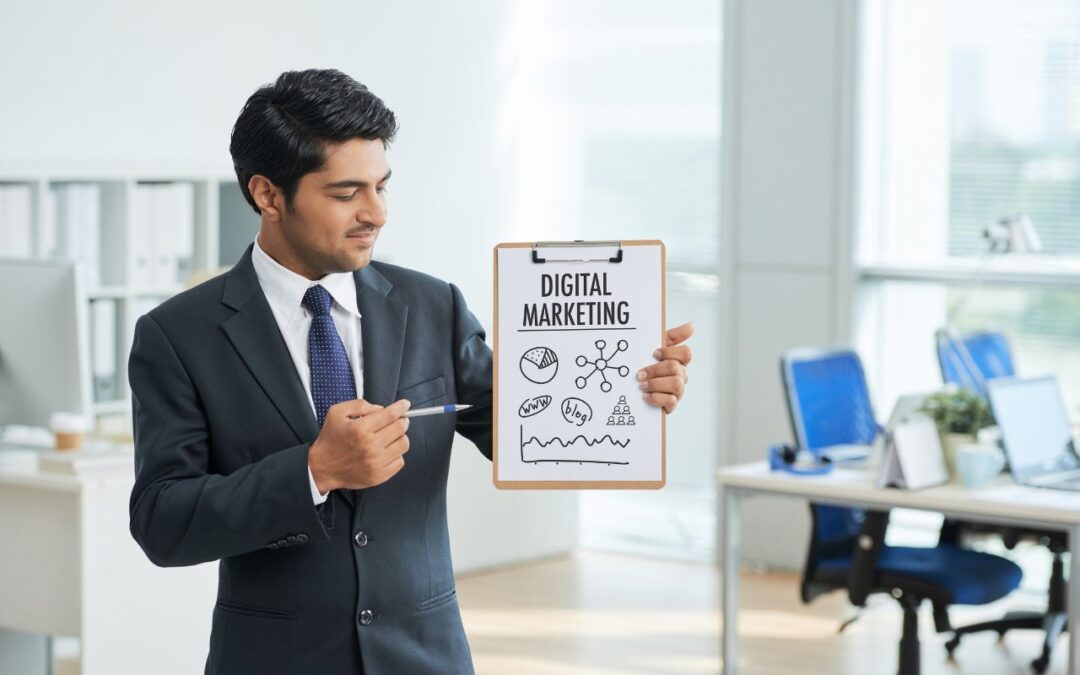
Digital marketing is one of those rare professional fields where free resources are of excellent quality. However, paid programs usually lead to better career outcomes for most learners. Understanding this paradox will help you invest your learning efforts better in 2026.
This guide will help you understand what the top digital marketing courses include, what free alternatives are available, in what cases expenses are justified, and what the digital marketing job market is.
What Digital Marketing Covers in 2026
Digital marketing is an ever-evolving field. In 2026, practical digital marketing requires competency across multiple domains, including technology, psychology, data, and creative strategy.
SEO remains a major component. This includes understanding how search engines rank websites, conducting keyword research, and optimizing content to gain visibility over time. With AI-generated content and conversational search becoming more prominent, SEO strategies must adapt to new search behaviors and intent patterns.
Paid advertising continues to be a key area. Platforms like Google Ads, Meta Ads, TikTok, and Connected TV require skills in campaign strategy, audience targeting, creative testing, and performance optimization. Businesses increasingly value marketers who can directly link ad spend to revenue outcomes.
Content marketing is also evolving. AI tools have made content production faster, but they have also increased the importance of quality, authenticity, and creativity. Marketers must balance efficiency with originality to attract and retain audiences.
Additionally, email marketing, social media management, conversion rate optimization, and marketing analytics are essential components of a well-rounded digital marketing skill set. Most professionals choose to specialize in a few of these areas while maintaining a working understanding of others.
Top Free Resources for Digital Marketing
There are several high-quality free resources that provide strong foundational knowledge.
Google Skillshop offers detailed online courses and certifications in Google Ads, including Search, Display, Video, and Shopping. These certifications are widely recognized and frequently updated, making them highly relevant for current industry practices.
Meta Blueprint provides free training for Facebook and Instagram advertising. It covers campaign structure, audience targeting, creative strategy, and performance analysis. These certifications are valuable for demonstrating social media advertising expertise.
HubSpot Academy offers free courses on inbound marketing, content marketing, email marketing, SEO, and social media. Its inbound marketing certification is particularly well known in B2B environments and focuses on strategic concepts beyond platform usage.
Semrush Academy provides high-quality SEO and content marketing courses. Since Semrush is a leading SEO tool, its courses are aligned with real-world practices and current industry trends.
While free resources are excellent for learning platform-specific skills, they often lack depth in strategy, integration, and real-world application. Practical project experience is usually missing, which is critical for job readiness.
When Paid Programs Are Worth It
Paid programs become valuable in specific scenarios.
For career changers with no prior marketing experience, structured programs provide a clear learning path. They help build foundational knowledge in an organized way and include guided projects, feedback, and portfolio development.
Paid programs are also useful for moving beyond execution into strategy. Topics like campaign planning, marketing analytics, budget allocation, and cross-channel integration are better taught in structured environments.
For learners who struggle with self-discipline, paid programs provide accountability through deadlines, mentorship, and structured progression. This often leads to higher completion rates and better outcomes.
However, not all paid programs are equal. The best ones include real-world projects, updated content, experienced instructors, and proven career outcomes. Programs that rely only on recorded lectures without hands-on work should be avoided.
The Hybrid Method Most Experts Recommend
The most effective approach combines both free and paid resources.
Start with free certifications from platforms like Google, HubSpot, and Meta to build foundational and platform-specific skills. Then, use a paid program to develop strategic thinking, analytics, and cross-channel expertise.
Alongside learning, building a portfolio is essential. Employers care more about actual work than certifications. Creating and documenting real campaigns, writing ad copy, analyzing performance data, and optimizing results are what truly demonstrate capability.
Having a few strong case studies is far more valuable than collecting multiple certificates without practical experience.
The Job Landscape for Digital Marketers in 2026
Digital marketing continues to grow as a career field in 2026. While AI has automated many repetitive tasks, it has increased the demand for strategic roles.
Entry-level roles typically involve execution, but higher-value positions focus on campaign strategy, audience insights, analytics, and marketing operations. Professionals who can integrate AI into workflows and make data-driven decisions are especially valuable.
In the U.S., entry-level digital marketing salaries range from $45,000 to $60,000. With two to four years of experience, professionals can earn between $65,000 and $90,000, especially when specializing in areas like SEO, paid media, or marketing automation. Senior roles in strategy and management can reach $95,000 to $130,000 or more, depending on the organization.
Ultimately, the value of any digital marketing course—free or paid—depends on the skills you build and your ability to apply them. The field rewards practical experience, adaptability, and measurable results far more than credentials alone.
