
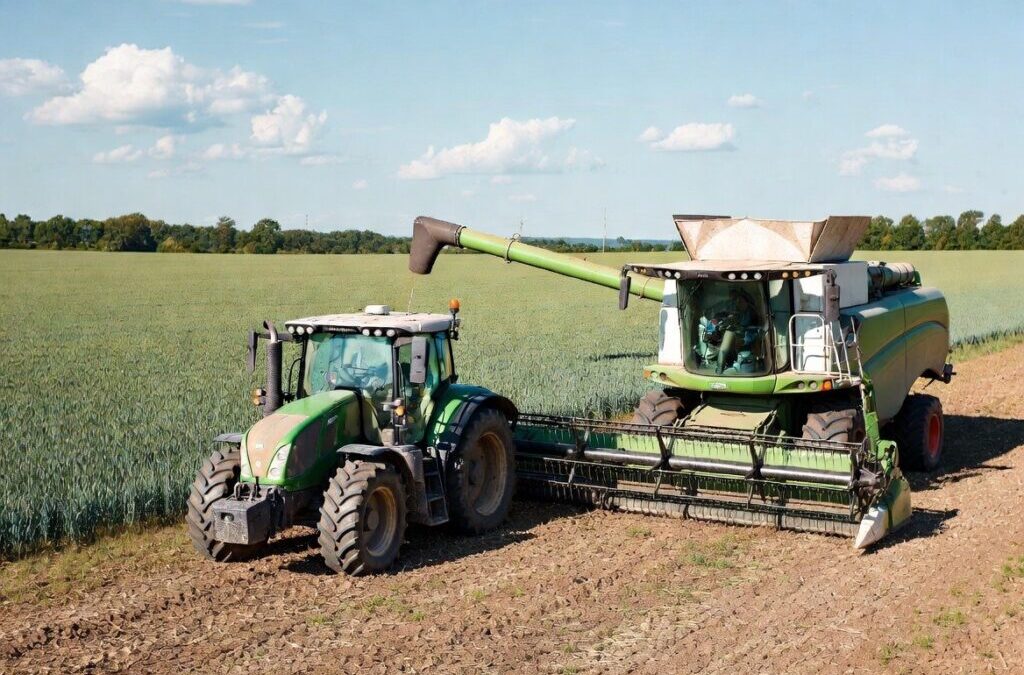
Investment interest in agricultural machinery and farm technology has grown steadily as the global agriculture sector adapts to economic pressure, climate challenges, and labor constraints. What was once considered a traditional, low-growth industry is now attracting strategic capital due to advances in automation, data analytics, and digital infrastructure.
Agricultural machinery sits at the center of this transformation, serving as both a productivity driver for farmers and a scalable investment opportunity for businesses and institutions. As food demand rises and operational efficiency becomes critical, investors are increasingly evaluating how farm machinery and technology can deliver long-term value across the agricultural ecosystem.
Capital Flows into Modern Farm Equipment
The steady increase in capital flowing into agricultural machinery reflects a broader shift toward mechanised and technology-enabled farming. Equipment such as tractors, harvesters, sprayers, and planters has evolved significantly, offering higher efficiency, reduced input waste, and improved output consistency.
For investors, these improvements signal stronger demand stability and longer asset lifecycles. Mechanisation reduces reliance on manual labor, which has become both scarce and costly in many agricultural regions.
This reality makes modern machinery a necessity rather than an optional upgrade. As a result, manufacturers and service providers operating in this space are seeing consistent interest from investors seeking exposure to essential infrastructure with innovation-driven growth potential.
Technology Integration as an Investment Driver
Technology has become a defining factor in how agricultural machinery is valued. Precision farming systems, sensor-enabled equipment, and GPS-guided operations have changed how farms measure performance and manage resources.
Machinery now generates operational data that supports better planning, predictive maintenance, and cost control. From an investment perspective, this integration of hardware and software creates defensible value.
Companies that embed analytics and automation into their machinery offerings are better positioned to differentiate themselves in competitive markets. This shift has encouraged investors to view agricultural machinery not merely as physical equipment but as part of a broader technology platform that delivers recurring value.
Digital Infrastructure and Market Transparency
A major development influencing investment decisions is the emergence of digital infrastructure supporting agricultural machinery markets. Historically, machinery transactions were fragmented, localized, and difficult to evaluate at scale.
Limited price visibility and inconsistent information made it challenging for investors to assess market dynamics accurately. Digital platforms now play a role in centralizing listings, specifications, and market data.
Solutions associated with Agriclicks reflect how industry participants are increasingly relying on structured digital environments to understand equipment availability and demand patterns. This shift enhances transparency, reduces inefficiencies, and supports more informed investment strategies across the sector.
Role of Marketplaces in Investment Analysis
Marketplaces have become particularly relevant for investors seeking insight into agricultural machinery trends. By aggregating equipment data and transactional signals, these platforms provide a clearer picture of market liquidity, pricing behavior, and buyer preferences.
This data-driven visibility supports more accurate valuation models and risk assessments. The Agriclicks farm machinery marketplace demonstrates how such platforms can contribute to market efficiency by organizing machinery information within a digital framework.
For investors, access to structured market data improves confidence and supports long-term capital planning in a sector traditionally characterized by information gaps.
Automation and Precision Agriculture Attracting Capital
Automation continues to be a key area of investment within agricultural machinery. Autonomous tractors, robotic harvesters, and automated feeding systems are increasingly viewed as solutions to labor shortages and operational volatility.
While adoption varies by region, the long-term investment case remains strong due to scalability and efficiency gains. Precision agriculture is similarly attracting capital due to its measurable impact on yields and cost reduction.
Machinery capable of targeted input application and real-time field monitoring aligns with both profitability goals and sustainability objectives. Investors increasingly prioritize technologies that offer data-backed performance improvements rather than incremental mechanical upgrades.
Sustainability and Regulatory Influence
Sustainability considerations are now influencing agricultural machinery investment decisions more directly. Regulatory pressure to reduce emissions, optimize water usage, and minimize chemical inputs has elevated demand for efficient, technology-enabled equipment.
Investors evaluating the sector are increasingly aligning capital allocation with environmental performance indicators. Electric and low-emission machinery, data-driven resource management, and precision tools that reduce waste are gaining relevance in ESG-focused investment strategies.
As sustainability reporting becomes more standardized, machinery providers that demonstrate measurable environmental benefits are likely to attract sustained investor interest.
Market Risks and Structural Challenges
Despite strong fundamentals, agricultural machinery investment carries inherent risks. High capital requirements, cyclical farm income, and exposure to commodity price fluctuations can affect returns.
Additionally, technology adoption may be slower among smaller farms with limited financing capacity. Investors often mitigate these risks by focusing on diversified product portfolios, scalable digital infrastructure, and flexible business models.
Platforms and companies that support a wide range of farm sizes and operating conditions tend to demonstrate greater resilience across market cycles.
Long-Term Investment Outlook
The long-term outlook for agricultural machinery and farm technology investment remains positive. Structural drivers such as population growth, food security concerns, and climate adaptation ensure sustained demand for efficient farming solutions.
As machinery becomes more intelligent and interconnected, its role in farm management and strategic planning will continue to expand. Rather than treating machinery as a standalone expense, investors increasingly evaluate how equipment integrates with data systems, marketplaces, and sustainability frameworks.
This holistic view supports more durable investment theses and aligns agricultural machinery with broader technological and economic trends.
Conclusion
Investment trends in agricultural machinery reflect a sector in transition, shaped by technology, data, and sustainability priorities. As mechanisation advances and digital platforms enhance market transparency, machinery is emerging as a strategic asset class within modern agriculture. Brand ecosystems such as Agriclicks highlight how digital infrastructure supports informed decision-making across the industry.
With continued innovation and growing investor interest, agricultural machinery and farm technology are set to remain central to the evolution of global farming systems, offering both operational value and long-term investment potential.
