
Synopsis: An agrochemical manufacturer is targeting 250% revenue growth over the next 4–5 years, backed by an Rs.850 crore expansion to boost capacity and deepen backward integration. FY26 revenue rose 22% to Rs.535.9 crore, while EBITDA surged 55%. Investors should watch plant utilization, debt levels, and margin expansion as the growth strategy unfolds.
India’s agrochemical industry is entering a fresh investment cycle, with select players expanding capacity, strengthening backward integration, and diversifying into high-value molecules to capture the next phase of growth. One such company is making a bold bet through a large-scale expansion plan, aiming for a sharp increase in revenue while balancing execution risks, higher debt, and evolving global demand dynamics.

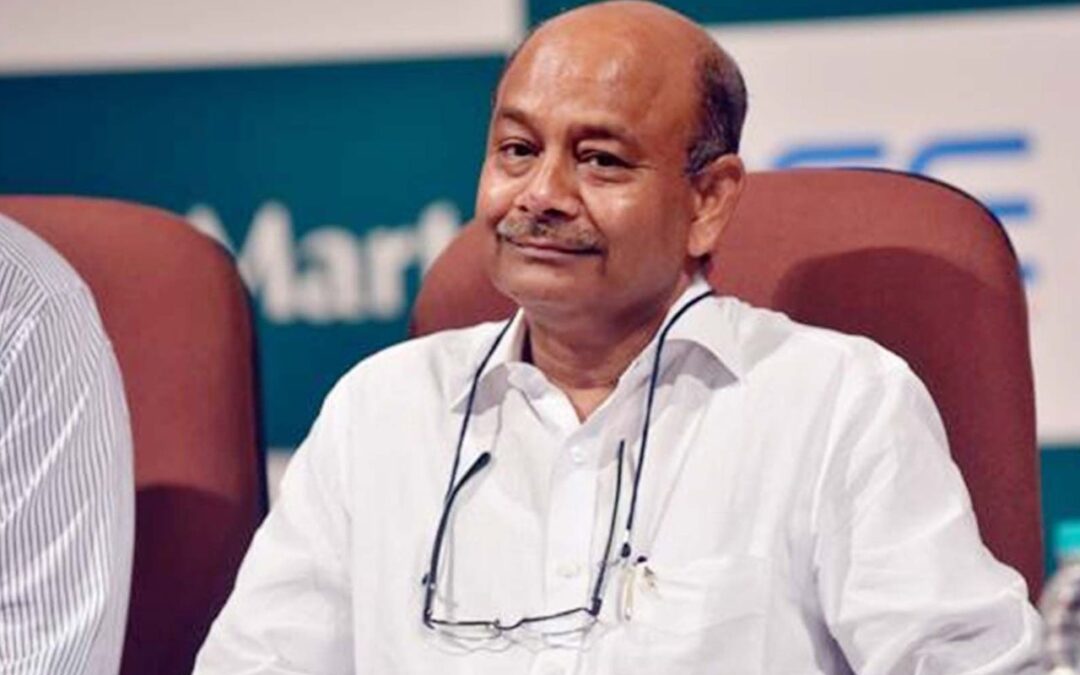
With a market capitalization of approximately Rs. 3,700 crore, the shares of Bhagiradha Chemicals & Industries Limited were trading at around Rs. 285 per share, with a 52-week range of Rs. 325 to Rs. 170.60. It is trading at a P/E of approximately 204x. Ace investor Radhakishan Damani holds a 3.3% stake in the company, a signal that the company’s growth thesis has attracted attention well beyond retail circles.
Bhagiradha Chemicals’ ₹850 Cr Growth Bet
Bhagiradha Chemicals & Industries Limited just closed out FY26 with numbers that suggest its multi-year expansion bet is starting to pay off. Consolidated revenue came in at Rs.535.9 crore, up 22% year-on-year, while EBITDA jumped 55% to Rs.57.1 crore and PAT rose 31% to Rs.18.2 crore. The company is now pushing hard into a growth phase it calls “BCIL 2.0.” Here’s what the investment case looks like.

The Rs.850 crore expansion story
At the heart of this thesis is a massive capex program of over Rs.850 crore being deployed across land, buildings, plant, and machinery, split roughly as Rs.200 crore for land and buildings and Rs.600 crore for plant and machinery.
Most of this is routed through Bhagiradha Chemicals & Industries’ wholly owned subsidiary, Bheema Fine Chemicals, incorporated in July 2020 and commercially operational since March 2024. The new facility sits on 34 acres in Kadechur, Karnataka, and comes with automation through Distributed Control Systems, a Zero Liquid Discharge effluent treatment plant, and a solar power setup to cut electricity costs.

The funding is a mix of Rs.410 crore equity (including preferential allotment of Rs.341 crore) and Rs.460 crore debt via term loans. Phase 1A (Rs.39 crore) commenced in March 2024, Phase 1B (Rs.411 crore) started up in Q3 FY26, and Phase 2 (Rs.400 crore) is expected around Q2 FY28, with each phase needing 12–24 months post-commencement to ramp up fully.
Once complete, this adds 9,002 MT of installed capacity, nearly triple the existing 3,250 MT at the Andhra Pradesh facility, which itself runs at a high 92% utilisation. The new Karnataka plant, by contrast, is still early; capacity utilization was only around 35%, and that too for just one quarter (Q4FY26).
Management’s target: nearly 250% revenue in 4-5 years
This is the number likely driving investor interest. Bhagiradha Chemicals & Industries Management has explicitly guided for consolidated revenue to grow around 250% over the next four to five years, backed by four levers: higher capacity, new product launches, deeper backward integration, and better operating efficiency.

For context, revenue has already grown from Rs.246 crore in FY20 to Rs.536 crore in FY26 a 14% CAGR, while EBITDA and PAT grew at 22% and 19% CAGR, respectively, over the same stretch. The next leg of growth is expected to lean more heavily on the new facility than on the base business.
Why backward integration matters here
One of the more understated strengths in this business is backward integration, manufacturing your own raw materials instead of buying them externally, especially from China. Bhagiradha has pushed backward integration for key molecules up to N-7 and N-9 levels (referring to how many production stages back in the chain the company controls), among the highest in the domestic industry.
In one product example shared by the company, deeper integration helped it command 6% global market share and 27% domestic market share, while import dependence for that category dropped to just 23%, compared to 60% import dependence seen in a less-integrated product line. The company plans to extend integration further, targeting up to 16 process stages by FY26 for some molecules.
Betting big on complex, off-patent molecules
Bhagiradha Chemicals & Industries product portfolio has grown to 35 active ingredients, intermediates and formulations in FY26, up from just 6 in FY04 and 32 in FY25 built through years of in-house R&D. Interestingly, the top 5 products’ contribution to revenue has fallen from 91% in FY21 to 81% in FY26, showing the portfolio is diversifying rather than staying concentrated in a handful of molecules.
The R&D backbone supporting this includes 8 synthesis labs with 60+ chemists, along with a pilot plant and semi-commercial plant that let new products move from lab scale to production faster. The company says it has designed manufacturing capability across 25+ chemistries and 120+ proven reactions in-house.
The company is also expanding its Contract Research and Manufacturing Services business, working closely with a few multinational partners. This tends to be less volatile than standard product sales, longer contracts, stickier relationships, and typically better margins. FY26 alone saw three new molecule launches and 19 new customer additions, including 5 major accounts.
Export quality over export quantity
Exports currently make up a small 2% of FY26 revenue, with 98% domestic, but over 80% of export sales go to regulated markets like the US, EU, Brazil, and Australia, which have strict registration and quality requirements. The customer base has also grown steadily, from 98 customers in FY21 to 149 in FY26, while top-5 customer revenue concentration has fallen from 48% to 35% over the same period a healthy sign of de-risking. No single customer accounts for more than 20% of sales, and average relationships with top customers span 10+ years.
Where the risks sit
None of this comes without cost. Depreciation and finance costs linked to the Bheema facility have weighed on profit growth. Interest expense rose from Rs. 7.1 crore in FY25 to Rs.17.5 crore in FY26, and depreciation nearly doubled to Rs.20.9 crore. PAT margin for FY26 stood at a modest 3.4%, and working capital days have also stretched, with the cash conversion cycle at 148 days in FY26 versus 73 days back in FY21.
Debt-to-equity has correspondingly risen to 0.3x after being as low as 0.1x in FY24-25. Management itself flagged developments in West Asia and their impact on crude-linked raw material costs as a factor to watch.
The bottom line
Bhagiradha Chemicals & Industries’ growth story rests on three things working together: the new plant ramping up on schedule from its current 35% utilization, backward integration continuing to protect margins, and new molecules finding traction in regulated markets. The building blocks look reasonably solid, but a 250% revenue target over five years is a big ask, and investors will want to track quarterly utilization and debt levels closely before getting too comfortable with the growth math.
Disclaimer: The views and investment tips expressed by investment experts/broking houses/rating agencies on tradebrains.in are their own, and not that of the website or its management. Investing in equities poses a risk of financial losses. Investors must therefore exercise due caution while investing or trading in stocks. Trade Brains Technologies Private Limited or the author are not liable for any losses caused as a result of the decision based on this article. Please consult your investment advisor before investing.