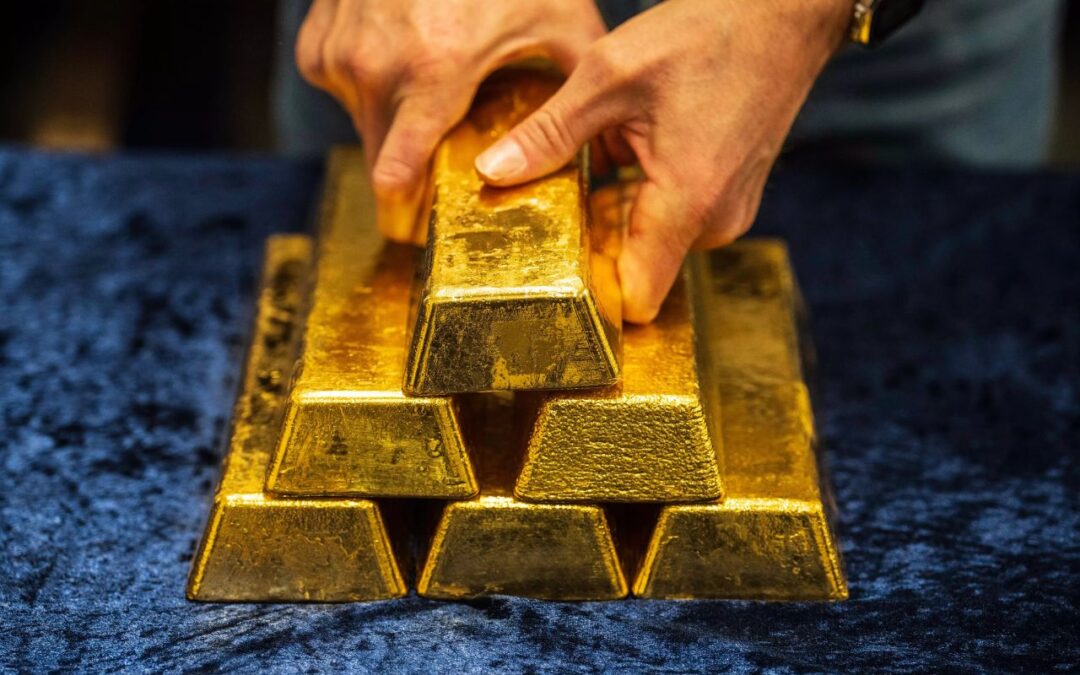
Synopsis: Gold prices in India climbed sharply on July 22, 2026, with 24 carat gold rising ₹2,290 to ₹1,46,510 per 10 gram, tracking a two-week high in international bullion amid Fed rate uncertainty and escalating Middle East conflict.
Domestic Gold Rates Today
Gold prices across major Indian cities moved up in tandem on Wednesday, with 24 carat gold in Delhi quoted at ₹1,46,560 per 10 gram and most other metros, including Mumbai, Kolkata, Chennai, Hyderabad and Bangalore, at ₹1,46,510. 22 carat gold held steady at ₹1,34,300 per 10 gram nationwide, while 18 carat gold ranged between ₹1,09,880 and ₹1,12,450 depending on the city.

Major jewellery retailers reflected similar pricing, with Joyalukkas and Malabar Gold both quoting 24 carat gold at ₹14,651 per gram, while Kalyan Jewellers priced it slightly lower at ₹14,420 per gram. On the MCX, the August gold futures contract was up ₹1,727, or 1.21 percent, at ₹1,44,580 as of 2:34 pm IST, against a previous close of ₹1,42,883, with the contract touching an intraday high of ₹1,44,950 and a low of ₹1,44,311 on volume of 2,110 lots.
Notably, despite the day’s sharp gains, Moneycontrol’s technical rating on the MCX gold contract remained “Very Bearish,” with moving averages, technical indicators and moving average crossovers all flagged bearish, and the 5 day, 10 day, 20 day, 50 day and 100 day SMAs all trending below current spot levels a divergence worth flagging for readers who track both the spot price move and the underlying technical setup.

International Cues Driving the Rally
Gold’s domestic gains mirrored strength in global bullion markets, with COMEX gold trading at $4,122.30 an ounce, up $45.90 or 1.13 percent on the day, after touching an intraday high of $4,146.00 against a low of $4,081.00. Silver moved in step, climbing to $59.84 an ounce, up 1.24 percent, having ranged between $59.03 and $60.30 during the session.
Crude oil provided the sharpest signal of renewed geopolitical stress, with WTI crude jumping nearly 3.9 percent to $87.60 a barrel and Brent surging 3.6 percent to $94.31, reversing the previous session’s dip below $90 that had come on hopes of a possible 10-day Iran ceasefire. The reversal points to a fast-changing conflict backdrop, with President Trump downplaying the prospect of near-term talks with Iran and warning of additional strikes.

Adding to supply-side pressure, Iran-backed Houthi forces disrupted shipping through the Red Sea, while a series of attacks on the Caspian Pipeline Consortium terminal on Russia’s Black Sea coast raised fresh concerns over crude flows even as a more modest diplomatic gesture emerged separately, with Iran’s Interior Minister visiting Pakistan to seek continued mediation.
On the US data front, ADP figures showed private employers added an average of 16,500 jobs per week over the four weeks to July 4, down from roughly 19,250 in the prior four-week period, marking a fourth straight slowdown in hiring. Despite the softer labour market, markets widely expect the Federal Reserve to hold rates steady at next week’s meeting, while now pricing in more than a 55 percent probability of a rate hike in September, as the renewed spike in oil prices keeps inflation risk elevated.
The China Buying Story
A significant structural driver behind the gold market’s resilience has been sustained central bank accumulation, led by China. According to data cited in market commentary, China’s central bank made its largest monthly gold purchase of the year in June, adding close to 15 tonnes even as prices sat roughly 30 percent below January’s peak, while customs data pointed to a sharp year-on-year jump in the country’s gold imports over the first five months of 2026.

This official-sector buying is seen as providing a price floor independent of daily headlines. Goldman Sachs has pointed to this persistent central bank demand, led by China, as a key factor supporting its year-end gold price target near $4,900 an ounce, according to commentary this week
Outlook
Gold remains in a wide trading range for the year, having pulled back more than 25 percent from January’s record highs even as it holds gains of around 22 percent on a year-over-year basis, reflecting how volatile 2026 has been for the metal. Analysts remain split on the path ahead: some maintain bearish year-end targets in the $2,875 – $2,994 range on expectations of further Fed rate hikes, while others, including Goldman Sachs, see scope for a recovery toward $4,900 by year-end on the back of central bank buying and geopolitical risk premia.
For Indian investors, near-term price direction will likely hinge on next week’s Federal Reserve meeting on July 28-29, along with any further developments in the US-Iran conflict and the rupee-dollar exchange rate, which directly influences landed gold costs in the domestic market. A shift toward Electronic Gold Receipts and similar physically backed instruments, as regulators in India have been encouraging, could also gradually alter how retail and institutional investors access gold exposure going forward.
Disclaimer: The views and investment tips expressed by investment experts/broking houses/rating agencies on tradebrains.in are their own, and not that of the website or its management. Investing in equities poses a risk of financial losses. Investors must therefore exercise due caution while investing or trading in stocks. Trade Brains Technologies Private Limited or the author are not liable for any losses caused as a result of the decision based on this article. Please consult your investment advisor before investing.