
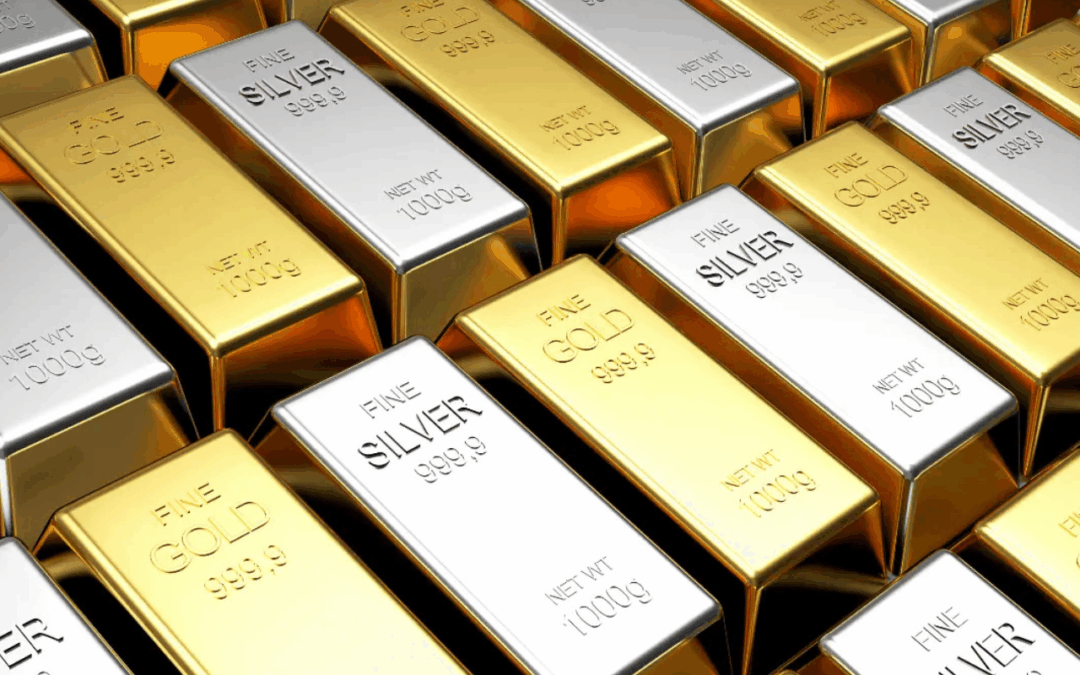
Synopsis: Gold and silver prices remained under pressure on Friday, with gold slipping below the key $4,000 mark and silver declining over 1%, as rising oil prices and higher Treasury yields strengthened expectations that US interest rates may remain elevated.
Precious metals have entered a volatile phase as investors balance safe-haven demand arising from escalating Middle East tensions against concerns that higher energy prices could reignite inflation and delay monetary easing by the US Federal Reserve.

Gold futures on COMEX were trading around $3,982.80 per ounce, down 0.23 percent on the day after touching an intraday high of $4,012.20. Spot gold recovered slightly to around $3,988 per ounce during Asian trading but remained on track for its biggest weekly decline in nearly six weeks.
Silver futures declined 1.36 percent to $55.43 per ounce after falling from levels above $58 earlier this week. Spot silver was trading near $55.68 per ounce, while platinum and palladium also witnessed sharp declines of 3.1 percent and 4.1 percent, respectively.

What’s Driving the Decline?
The recent weakness in bullion prices comes despite escalating geopolitical tensions between the US and Iran. Normally, such developments would boost demand for safe-haven assets like gold. However, investors are instead focusing on the inflationary impact of surging oil prices.
Reports suggesting possible disruptions to Middle East energy supplies, including concerns surrounding the Red Sea shipping route, have pushed Brent crude prices near $85 per barrel, their highest levels in nearly a month. Rising energy prices have revived fears that inflation may remain elevated globally.

Higher inflation expectations have strengthened the US dollar and pushed Treasury yields higher, reducing the attractiveness of non-yielding assets such as gold and silver. Benchmark US bond yields have risen as investors reassess the possibility that the Federal Reserve may need to maintain interest rates at elevated levels for longer.
Federal Reserve Remains the Key Variable
Recent US inflation data came in softer than expected, reducing the likelihood of a rate increase during the Federal Reserve’s July meeting. Market participants currently expect rates to remain within the 3.50 percent to 3.75 percent range this month.
However, the sharp rise in oil prices has complicated the outlook. Investors remain divided over whether the Fed could still adopt a more hawkish stance later this year if inflationary pressures intensify again. This uncertainty has created a tug-of-war in precious metals markets.

Silver Faces Additional Pressure
Silver has underperformed gold due to its dual role as both a precious and industrial metal. Slower economic expectations and concerns about industrial demand have amplified the decline. However, technical indicators suggest that the recent correction may have been excessive.
Analysts note that MCX silver has entered oversold territory, with support emerging around Rs. 2,18,000 per kilogram. If prices hold above this level, silver could witness a short-term rebound towards Rs. 2,27,000 as fresh buying and short-covering emerge.
Gold is heading for its worst weekly performance in six weeks, while silver has corrected sharply from its earlier highs. The broad selloff reflects a shift in investor preference toward interest-bearing assets as higher yields improve returns in fixed-income markets.
Despite the weakness, gold remains nearly 19 percent higher than its levels a year ago, highlighting that the long-term bullish trend remains intact even after the recent correction.
What Investors Should Watch
Going forward, precious metal prices will remain highly sensitive to developments in the Middle East conflict, movements in crude oil prices, US inflation readings, Treasury yields, and signals from the Federal Reserve.
The Fed’s upcoming policy meeting on July 29 and inflation expectation data from the University of Michigan will be closely monitored by markets. Any signs of persistent inflation could further pressure bullion, while easing price pressures may revive expectations of monetary easing and support a recovery in gold and silver prices.
Disclaimer: The views and investment tips expressed by investment experts/broking houses/rating agencies on tradebrains.in are their own and not those of the website or its management. Investing in equities poses a risk of financial losses. Investors should therefore exercise due caution while investing or trading in stocks. Trade Brains Technologies Private Limited or the author are not liable for any losses arising from decisions based on this article. Please consult your investment advisor before investing.