Synopsis: IndusInd Bank Limited reported 1% Q1 FY27 NII growth and 72% profit growth, while brokerages remained divided despite improving asset quality, loan growth, and operating performance.
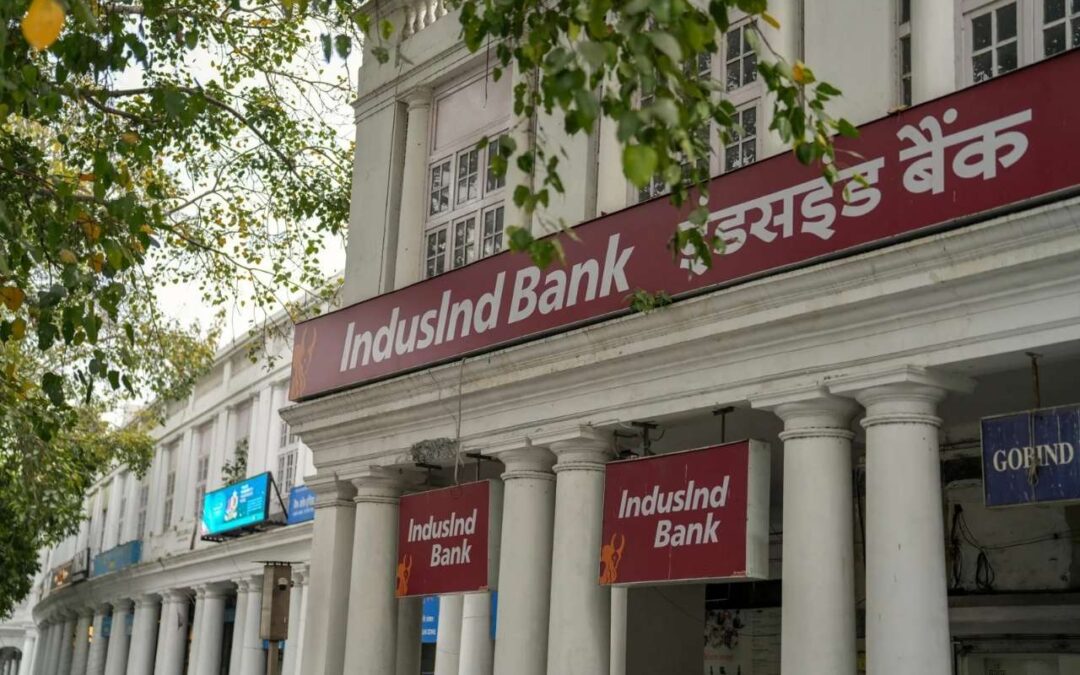
This Private Sector Bank Stock, engaged in providing retail and corporate banking, vehicle finance, commercial banking, treasury, wealth management, digital banking, and financial services across India through branches and digital channels, crashed 5.74 percent after the company reported its June quarterly results, while brokerages shared their insights on the company’s future outlook.

With a market capitalization of Rs. 78,575.54 crore, the shares of IndusInd Bank Limited were currently trading at Rs. 1,008.50 per equity share, down nearly 5.74 percent from its previous day’s close price of Rs. 1,069.90.
Q1 FY27 Result Walkthrough:
Coming into the quarterly results of IndusInd Bank Limited, the company’s consolidated Net Interest Income increased by 0.97 percent YOY, from Rs. 4,640 crore in Q1 FY26 to Rs. 4,685 crore in Q1 FY27, and grew by 7.18 percent QoQ from Rs. 4,371 crore in Q4 FY26.

In Q1 FY27, IndusInd Bank Limited’s consolidated net profit increased by 71.69 percent YOY, reaching Rs. 1,037 crore compared to Rs. 604 crore during the same period last year. As compared to Q4 FY26, the net profit has increased by 74.58 percent, from Rs. 594 crore. The basic earnings per share increased by 71.74 percent and stood at Rs. 13.31 as against Rs. 7.75 recorded in the same quarter in the previous year, FY2026.
Brokerage Viewpoints:
Macquarie, a prominent brokerage firm, has recommended a “Underperform” call on IndusInd Bank Limited with a target price of Rs. 625 per share, indicating a downside potential of 38.03 percent from its previous day’s close price of Rs. 1,008.50.

Macquarie has maintained its Underperform rating on IndusInd Bank, saying the bank’s asset quality is improving as expected. The brokerage noted that net profit (PAT) came in above estimates, mainly due to lower credit costs. However, it believes net interest margins are likely to remain under pressure. While the bank aims to improve its return on assets (RoA), Macquarie said achieving this target will be challenging and may take longer than expected.
Similarly, Jefferies has recommended a “Buy” call on IndusInd Bank Limited with an increased target price from Rs. 1,100 to Rs. 1,250 per share, indicating a upside potential of 23.95 percent from its previous day’s close price of Rs. 1,008.50.
Jefferies has maintained its Buy rating on IndusInd Bank, saying the June quarter results indicate that the bank is moving in the right direction. The brokerage highlighted improvements in loan growth, asset quality, and core return on assets (RoA). It also noted that core operating performance was stronger than expected, supported by lower operating expenses and reduced credit costs.

Jefferies expects these positive trends to continue over the next two to three years, leading to a gradual improvement in profitability. The brokerage believes that achieving and sustaining a 1.5 percent RoA will be a key trigger for a re-rating of the stock, as stronger earnings and better operating performance could improve investor confidence over the long term.
Distribution Network:
IndusInd Bank Limited has a strong distribution network with 9,413 touch points, reaching around 1.6 lakh villages across India. As of June 2026, it operated 6,560 outlets, including banking branches, BFIL branches, and vehicle finance marketing outlets. Although the total touch points and outlets declined slightly compared to March 2026, the network continues to provide wide customer access across the country.
IndusInd Bank Limited’s branch network is well spread across regions, with the South (27 percent) and North (22 percent) accounting for the largest share, followed by the East, West, and Central regions. Geographically, the presence is balanced across Metro (28 percent), Urban (25 percent), Rural (24 percent), and Semi-urban (23 percent) areas, helping the company serve customers in both cities and rural markets.
Loan Book Mix (Q1 FY27):
IndusInd Bank has a well-diversified loan book, reducing its dependence on any single customer segment. The overall loan book stood at Rs. 3.26 lakh crore in Q1 FY27. Retail loans accounted for Rs. 1.63 lakh crore, while wholesale loans were Rs. 1.20 lakh crore, providing a balanced mix between retail and corporate lending.
Within the loan portfolio, Vehicle Finance is the largest segment, contributing 31 percent of the total loan book. This is followed by Large Corporates (17 percent), SME (13 percent), while Consumer Banking, Rural Banking, Institutional & Government Banking, and Mid Market Group & Specialized Verticals each contribute around 10 percent. This diversified portfolio helps the bank spread risk and supports stable growth across different business segments.
Company Overview:
IndusInd Bank Limited is an Indian private sector bank that provides retail, corporate, and digital banking services. Established in 1994, it has grown into one of India’s major private lenders, serving millions of customers through an extensive nationwide branch and ATM network while also maintaining representative offices in the Middle East.
Annual Performance of FY26:
IndusInd Bank Limited’s Net Interest Income has decreased from Rs. 19,031 crore in FY25 to Rs. 17,982 crore in FY26, which is a drop of 5.51 percent. The net profit has also decreased by 65.48 percent from Rs. 2,575 crore in FY25 to Rs. 889 crore in FY26. In terms of return ratios, the company’s ROCE and ROE stand at 5.68 percent and 1.36 percent, respectively. IndusInd Bank Limited’s debt-to-equity ratio is 6.75x.
Disclaimer: The views and investment tips expressed by investment experts/broking houses/rating agencies on tradebrains.in are their own, and not that of the website or its management. Investing in equities poses a risk of financial losses. Investors must therefore exercise due caution while investing or trading in stocks. Trade Brains Technologies Private Limited or the author are not liable for any losses caused as a result of the decision based on this article. Please consult your investment advisor before investing.