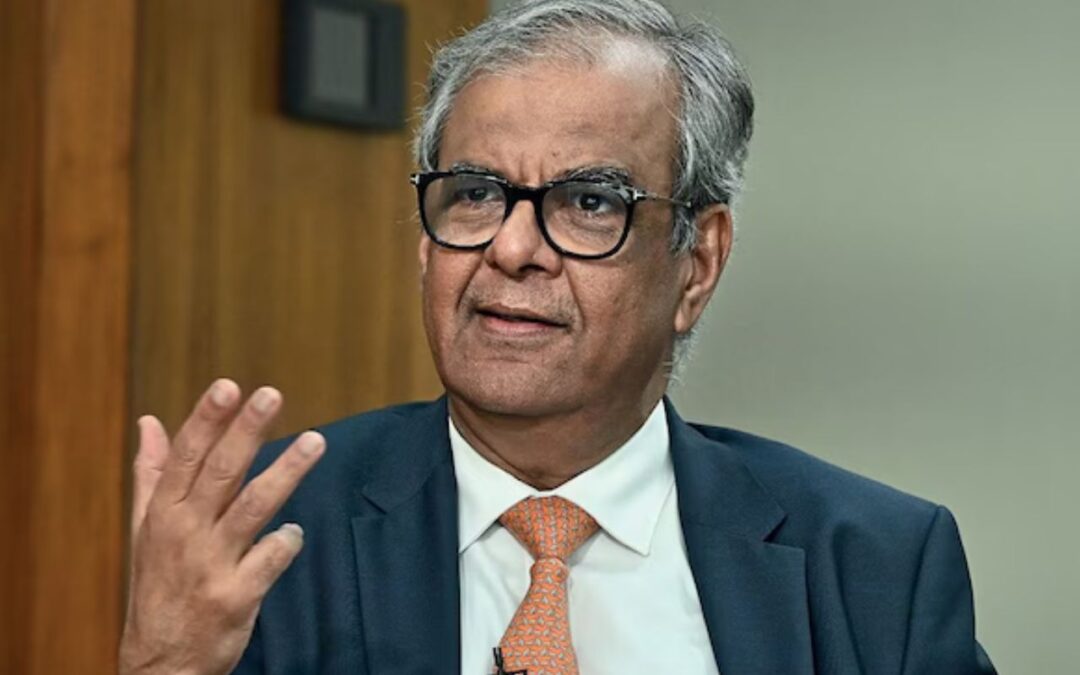
Synopsis: In a major leadership development, Kotak Mahindra Bank’s Managing Director and CEO Ashok Vaswani has decided not to seek reappointment after the expiry of his current term on December 31, 2026, citing personal reasons. The board has initiated a formal succession process within RBI regulatory timelines, while the announcement triggered a sharp decline in the bank’s stock amid concerns over leadership continuity.
Leadership transitions at major private banks often carry significance beyond management changes, as investor confidence and long-term strategy execution remain closely tied to leadership stability. For Kotak Mahindra Bank, this transition comes at a crucial time as the lender continues its digital transformation while navigating an increasingly competitive banking landscape.

What’s the News?
In a major leadership development for Kotak Mahindra Bank, Managing Director and CEO Ashok Vaswani has informed the board that he will not seek reappointment after his current term concludes on December 31, 2026. The decision, attributed to personal reasons, has prompted the bank to begin a formal search for a new Managing Director and CEO, with the transition process set to take place within the applicable regulatory framework laid down by the Reserve Bank of India (RBI).
Vaswani, a veteran global banker who previously held senior leadership roles at Barclays, took charge of the bank following the transition of founder Uday Kotak from executive leadership. During his tenure, he focused on strengthening the bank’s retail banking franchise while accelerating digital transformation initiatives aimed at modernizing customer acquisition and banking operations.

Investors reacted negatively to the announcement, with shares of Kotak Mahindra Bank falling 2.51% during Monday afternoon trade to ₹398.75. The banking major currently commands a market capitalization of approximately ₹3,96,666.78 crore and is trading at a trailing P/E ratio of 21.21.
While a CEO departure does not directly affect a bank’s financial position, leadership transitions in financial institutions often carry broader strategic implications. Markets generally treat such events as high-sensitivity developments because changes at the top can influence future growth priorities, lending discipline, technology investments, and long-term execution strategy. The immediate decline in the stock reflects uncertainty regarding who will lead the bank’s next phase of expansion and whether existing strategic priorities will remain unchanged.

The timing of the transition is particularly important because Kotak Mahindra Bank continues to compete aggressively with major private sector peers while investing heavily in technology-led banking infrastructure. Any delay or uncertainty during the succession process could temporarily affect strategic execution during an increasingly competitive phase for India’s banking sector.
Strategic Interpretation
This marks another significant leadership transition for Kotak Mahindra Bank in recent years and will likely bring greater market scrutiny toward the bank’s management stability. The biggest factor investors will now watch is succession planning. An internal appointment would likely signal continuity in strategy, while an external appointment could indicate a broader strategic reset under new leadership.
From a long-term perspective, the bank’s underlying fundamentals, asset quality, capital strength, and overall franchise remain intact. However, the near-term uncertainty lies entirely around execution continuity and how effectively the incoming leadership manages the next phase of growth.

Company Overview
Incorporated in 1985 and headquartered in Mumbai, Kotak Mahindra Bank Limited is one of India’s largest private sector banks by market capitalization and assets. The bank operates across retail banking, corporate banking, treasury services, wealth management, insurance, and capital markets through its diversified financial services ecosystem. Kotak Mahindra Bank is listed on both BSE and NSE and remains a constituent of benchmark indices including the Nifty 50.
Disclaimer: The views and investment tips expressed by investment experts/broking houses/rating agencies on tradebrains.in are their own, and not that of the website or its management. Investing in equities poses a risk of financial losses. Investors must therefore exercise due caution while investing or trading in stocks. Trade Brains Technologies Private Limited or the author are not liable for any losses caused as a result of the decision based on this article. Please consult your investment advisor before investing.