
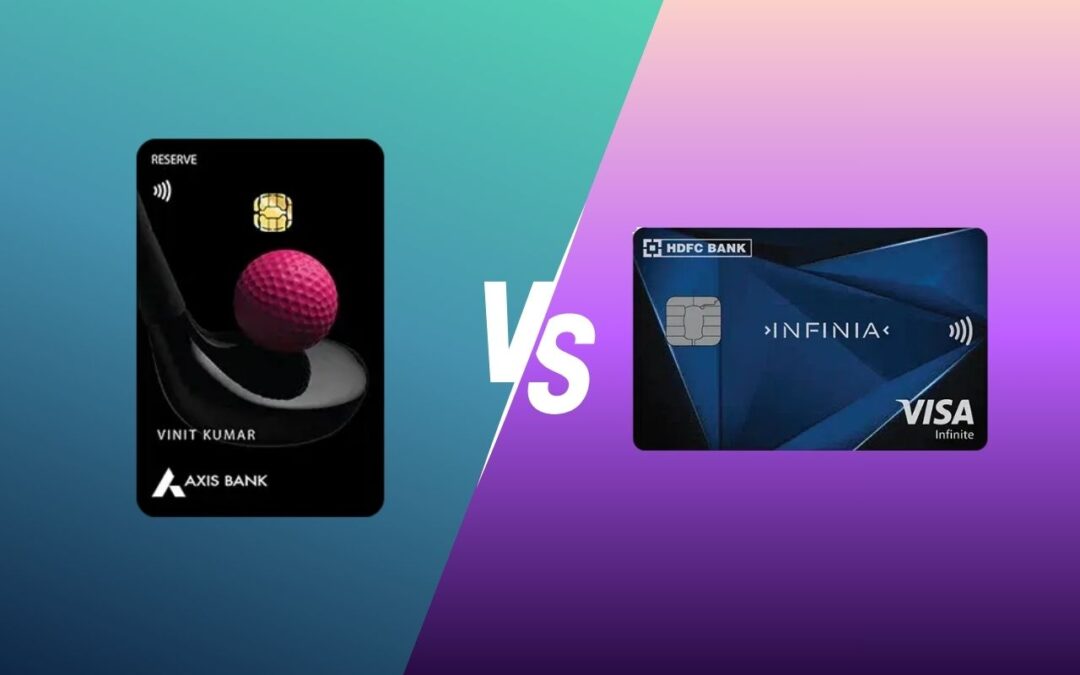
Synopsis: This article compares the Axis Reserve Credit Card and the HDFC Infinia Metal, two of India’s leading premium credit cards. Explore their features, benefits, rewards and charges below to help you make an informed choice.
Among India’s top-tier credit cards, the Axis Bank Reserve and HDFC Infinia Metal cards stand out, both focusing on high-income users. However, both offers varied benefits and are different in their own ways.
Comparison Table on Axis Reserve vs HDFC Infinia Metal
Axis Bank Reserve Credit Card
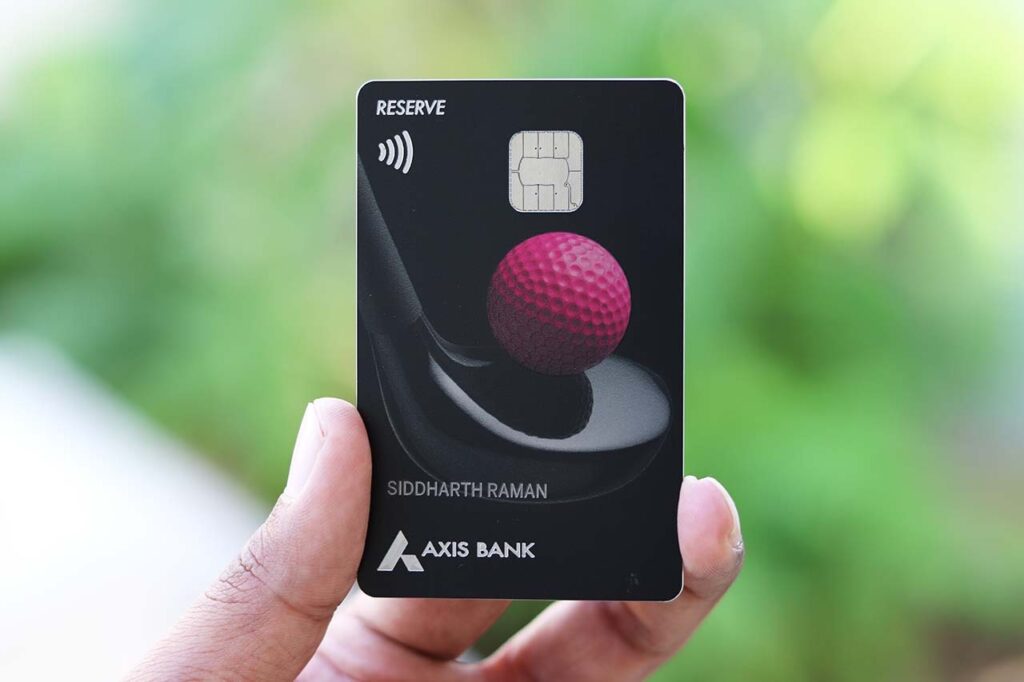
The Axis Bank Reserve Credit Card is one of India’s most exclusive premium credit cards for ultra-high-net-worth individuals and frequent travellers. Since its relaunch in 2020, the card provides benefits in luxury, travel, and a luxury lifestyle.
Charges
- Joining/annual fee: ₹50,000 +GST
- Interest rate: 3.0% p.m
- Forex mark-up rate: 1.5%
- Late payment fee: ₹500 to ₹1,200
Key Features and Benefits:
- Welcome Benefit: 15,000 EDGE points
- Lounge Benefit: Unlimited domestic and international lounge access using Priority Pass.
- Fuel Benefit: 1% fuel surcharge waiver on transactions between ₹400- ₹4,000.
- Insurance Coverage: Insurance is provided for purchase and travel.
- Other benefits: Concierge services, complimentary memberships on EazyDiner, Club Marriot, etc and up to 50 free golf rounds.
Reward Structure
- 15 EDGE Reward Points per ₹200 spent on eligible purchases
- 30 EDGE reward points on every ₹200 international spend.
Also Read: Amazon Pay ICICI vs HDFC Millennia: Which Credit Card Offers Better Cashback Rewards in 2026?
HDFC Infinia Metal Credit Card
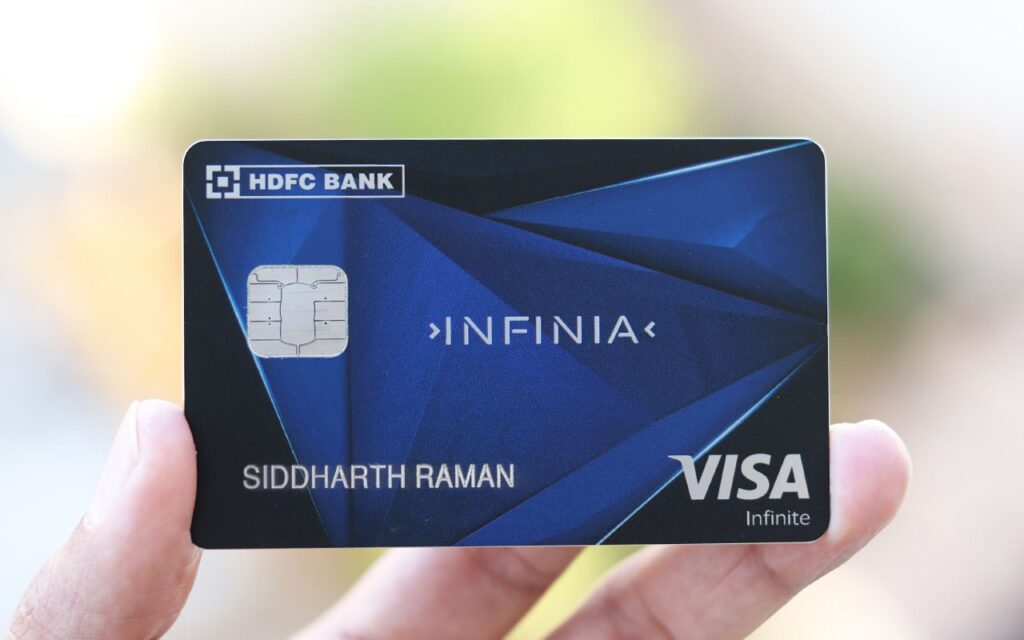
HDFC Infinia Metal Credit Card is one of the most prestigious credit cards made for premium customers and high spenders. It was introduced in 2021 as an upgrade to the classic Infinia card with a metal texture.
Charges
- Joining/annual fee: ₹12,500 +GST
- Interest rate: 1.99% p.m
- Forex mark-up rate: 2%
- Late payment fee: ₹100 to ₹1,300
Key Features and Benefits:
- Welcome Benefit: Complimentary Club Marriott membership for a year and 12,500 reward points
- Lounge Benefit: Unlimited domestic and international lounge access using Priority Pass.
- Fuel Benefit: 1% fuel surcharge waiver on transactions between ₹400- ₹1 lakh
- Insurance Coverage: Insurance is provided for credit shield benefits, accidental air death and emergency overseas hospitalisation.
- Other Benefits: Concierge services, unlimited golf lessons or games and up to 25% off in Club Marriott.
Reward Structure
- 5 Reward Points per ₹150 spent on retail transactions
- Up to 10 reward points on shopping and travel-related spends made through HDFC Smartbuy
Which Card is better?
Axis Reserve is a great choice if you spend a lot and travel internationally often. It provides higher reward rates, especially for foreign transactions, unlimited lounge access worldwide, golf benefits, and luxury concierge services. However, its high annual fee and steep waiver requirement make it better for those who can take advantage of these elite benefits regularly.
In contrast, HDFC Infinia Metal offers strong rewards mainly through SmartBuy, travel and lifestyle benefits, and a lower fee with an easier waiver requirement. It’s a better fit for high spenders who want rewards and premium perks without the extremely high cost.
To summarise, Infinia Metal tends to offer better everyday value for most premium users, while Axis Reserve delivers more exclusivity and better perks for top spenders.
Conclusion
Both the Axis Bank Reserve and HDFC Infinia Metal cards target premium users, but they offer different benefits. You should choose the card based on whether you value unmatched luxury and exclusivity or a cost-effective yet rewarding premium experience.
Written by Nila Maria Jacob