
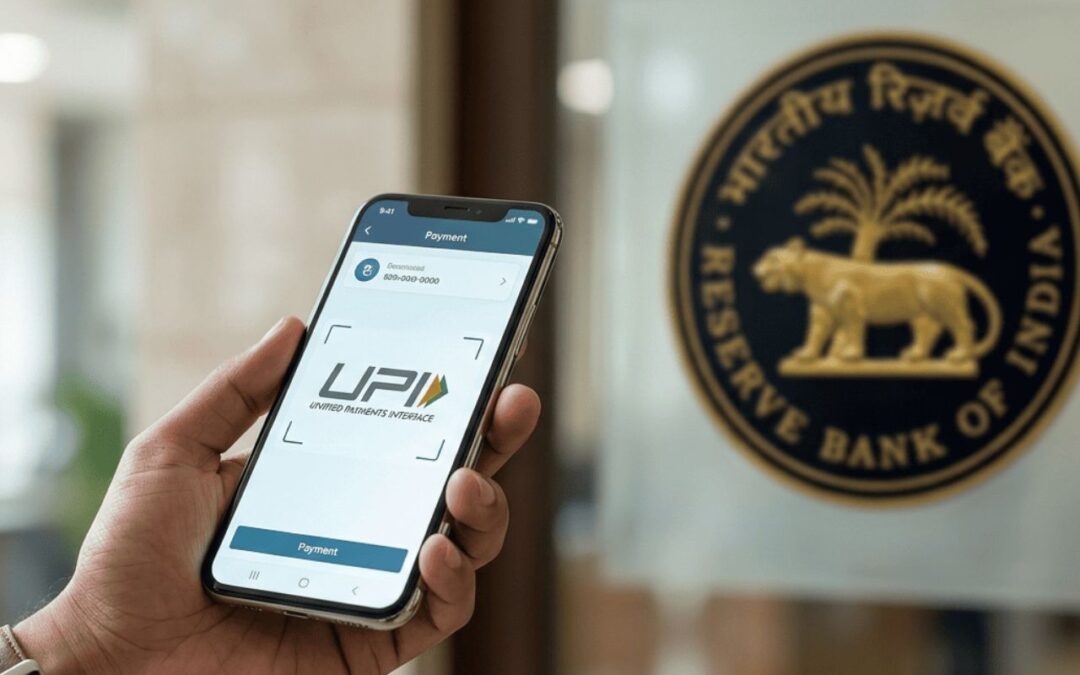
Synopsis: This article discusses the problem of growing UPI scams in India and the techniques adopted by fraudsters who exploit the psychology of users. It explains the RBI’s proposal for a one-hour waiting period for transactions above Rs. 10,000, giving users time to reverse fraudulent payments.
Every day, crores of Indians make payments through their UPI apps without a second thought. It is convenient and easy, this is the perfect weapon for fraudsters. Here are some statistics mentioned in the RBI’s discussion paper released on 9th April 2026. In just five years, the total number of digital payment scams in India jumped from 2.6 lakhs worth ₹551 crore in 2021 to 28 lakhs worth ₹22,931 crore in 2025, a tenfold jump in just 5 years.
According to a survey conducted by LocalCircles in June 2025, 1 in 5 Indian families with a UPI user have experienced fraud at least once in the past three years. And in September 2024, fraudsters made off with ₹4 crores from Bajaj Electronics in Hyderabad using fake screenshot payments. More alarmingly, about 51% of fraud victims never bothered to report to authorities. All these frauds have one thing in common, the victim was pressured to act fast, leaving no time to think.
What is Being Proposed?
On April 9, 2026, the RBI published a discussion paper entitled “Exploring Safeguards in Digital Payments to Counter Fraud“. The primary recommendation is to make a delay of one hour mandatory for all account-to-account digital payments that exceed ₹10,000 using UPI, IMPS, internet banking, or mobile banking channels. As per the proposal, instead of the payment being transferred right away, when the sender clicks the “Pay” button, the money will be held by the bank for up to 60 minutes. During this time, the person can reverse the payment if they realise they have been scammed. Also, if the bank identifies the transaction as suspicious, then they are mandated to ask the customer for confirmation.
The RBI’s rationale is straightforward, since most UPI frauds do not involve cyber hacking, the scammer uses social engineering tricks, such as fake calls, psychological stress, and pressure, to get people to send money themselves. As RBI’s discussion paper mentions, Fraudsters typically depend on inducing psychological urgency and applying sustained pressure to keep the victim under constant stress to avoid reasoning.
Why does it matter?
The ₹10,000 threshold is not just a random number. As found out by the RBI, transactions exceeding ₹10,000 are responsible for around 45% of all reported cases of fraud in quantity but constitute 98.5% in monetary terms. Simply put, high-value fraud is usually associated with large sums of money. A one-hour pause targets exactly where the money is being lost.
This is not the first time that India has attempted to tackle this problem. Back in 2017, two people managed to withdraw ₹45 lakhs from nine Axis Bank customers’ accounts via an application of BHIM UPI, and there was nothing that could be done by the time the fraud had been detected because the transfers were completed in real-time. Only about 6% of fraud chargebacks are successfully recovered after the fact, according to government data presented in Parliament.
Also Read: RBI New Rules 2026: Big Changes for Bank Deposits, UPI, Taxation – Check the List
Focus on Vulnerable Users
Moreover, the RBI paper goes beyond the one-hour delay by recommending additional measures aimed specifically at protecting vulnerable citizens. Citizens who are over the age of 70 years and those who are disabled will have to nominate a “trusted person,” and they will have to authenticate for transactions worth more than ₹50,000. Such transactions constitute almost 92% of the total fraud amount for this particular group. The fourth suggestion in the paper might be the most useful for ordinary consumers, especially when they are under duress. The one-button “kill switch” that allows any customer to instantly freeze all digital payment channels on their account.
Not for all Payments
There are crucial exemptions to this rule. Any merchant payments, e-mandate, NACH transactions, and cheque will not come under the purview of this rule. It will only apply to peer-to-peer and account-to-account transfers above ₹10,000. Even more interestingly, you will have the ability to whitelist payees. This means that any amount transferred to those whom you frequently transfer money to, such as family and landlords, will not come under this delay.
It’s not just India that is considering implementing such a measure. In October 2024, the Financial Conduct Authority in the United Kingdom implemented a similar policy. Banks were now allowed to delay any suspicious transaction up to 4 banking days. While in Singapore, the Monetary Authority of Singapore mandated a cooling-off period of 12 hours when a transaction was made to any new payee over a particular threshold.
Still Under Discussion
This rule is still under discussion and is not a regulation. Public and industry views can be provided till May 8, 2026, through RBI’s Connect 2 Regulate portal. The central bank has explicitly recognized the trade-offs involved.
- Pros
- Allows scam victims a time window within which to reverse fraudulent payments
- Neutralizes psychological pressure techniques used by fraudsters
- Brings India in line with global practices in the UK and Singapore
- Focuses on major fraud and avoids disruptions to routine transactions
- Cons
- Treads on the fundamental principle behind UPI, which is, immediate settlement
- Fraudsters who are technically savvy can instruct victims to “whitelist” their accounts
- May delay necessary payments like those for medical emergencies and last-minute payments
- Might leave customers confused about payment processing times
As the RBI itself recognized, A mandatory lag period conflicts with the fundamental design principle of instant payments and may confuse users.
Conclusion
India has created one of the finest digital payment systems from scratch. Nearly 185 billion transactions on the Unified Payment Interface (UPI) platform were carried out in FY25 alone. However, along with the system’s success comes vulnerability. The criminals have been able to capitalize on that, too. The proposal of introducing the RBI’s delay policy is nothing but a roadblock in the path of the fraudsters. Whether an hour is enough or something else will be determined by the public hearing.
Written by Shrikara