
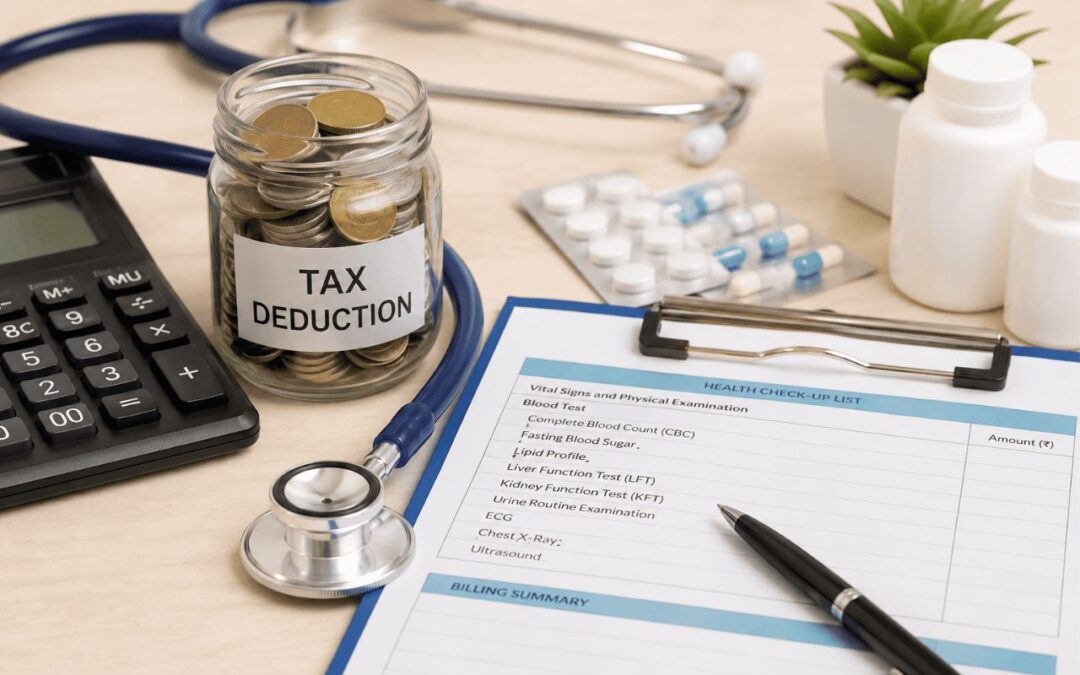
Synopsis: Tax deductions for medical treatment expenses on certain critical illnesses and diseases like cancer, kidney failure, and neurological disorders can be claimed by the taxpayers under Section 80DDB of the Income Tax Act, 1961. This provision offers a meaningful financial relief to the taxpayers, who are already burdened by high treatment costs.
Navigating critical life-altering diseases is both emotionally and financially devastating, but the Indian tax laws do offer some significant financial relief. Section 80DDB of the Income Tax Act allows the qualified taxpayers to claim an income tax deduction for expenses incurred on the treatment of specified diseases under the Rule 11DD such as cancer, AIDS, renal failure, dementia, and more, which significantly reduces the tax burden on individuals.
Who Can Claim? Eligibility Under Section 80DDB
- The deduction under Section 80DDB can be claimed by an individual or a Hindu Undivided family (HUF) and is resident in India.
- An individual can claim the deduction for medical expenses incurred on himself or for a dependent person including spouse, children, parents, brothers and sisters.
- A HUF can claim the deduction for medical expenses incurred for any of the family members.
- The taxpayer must opt for the Old Tax Regime as the deductions under Section 80DDB are not available under the new tax regime in India.
Deduction Limits for AY 2026-27
The maximum deduction under Section 80DDB is ₹40,000 for individuals under the age of 60 years and ₹1,00,000 for senior citizens aged between 60 years and above.
Please note, the deduction depends on the age of the patient and not on the taxpayer. Only the expenses incurred during the relevant financial year can be claimed, and the deduction is usually the lower of the actual amount spent or the maximum deduction limit.
Also read: Income Tax Compliance Deadlines June 2026: STT, CTT, Form 16, Form 16A, Form 12BA and More
How Reimbursements Affect the Claim
Deduction is available under the Section 80DDB, only after adjusting any other reimbursements. If reimbursement has been received from other sources, then that amount is excluded. Only the net medical expenses borne completely by the taxpayer are eligible for deductions. Let’s take an example to understand,
Case-1: If an individual incurred ₹80,000 in medical expenses and received ₹30,000 from an insurer, Claim amount = Maximum Deduction or Expenses (whichever is lower) – Reimbursement from other sources = ₹40,000 – ₹30,000 = ₹10,000
A senior citizen in the same situation, Claim amount = Maximum Deduction or Expenses (whichever is lower) – Reimbursement from other sources = ₹80,000 – ₹30,000 = ₹50,000
Case-2: If a taxpayer spent ₹80,000 and received ₹60,000 from an insurer he will not be eligible to claim, Reimbursement from other sources > Maximum Deduction Threshold (that is, ₹40,000)
However, a senior citizen in the same situation can claim, Claim amount = Maximum Deduction or Expenses (whichever is lower) – Reimbursement from other sources = ₹80,000 – ₹60,000 = ₹20,000
Diseases Covered Under Section 80DDB (Rule 11DD)
Section 80DDB refers to Rule 11DD of the Income Tax Rules, which lists the specific diseases and ailments that are covered under it. The list is comprehensive and is updated by the CBDT from time to time to include relevant critical illnesses.
- Neurological Diseases- Dementia, Dystonia, Musculorum Deformans, Motor Neuron Disease, Ataxia, Chorea, Hemiballismus, Aphasia, Parkinson’s Disease, with the disability level certified at 40% or more.
- All forms of malignant cancers
- Full-blown Acquired Immuno-Deficience Syndrome (AIDS)
- Chronic Renal Failure, and the condition which is covered under this section is requiring dialysis or transplant.
- Haematological Disorders- Haemophilia, and Thalassaemia
Required Specialist Certificate
A CBDT Notification vide S.O. No. 2791(E) dated 12th October 2015 amended Rule 11DD, relaxing the requirement of obtaining a certificate from a specialist working in a Government hospital. The prescription can now be issued by any qualified specialist, and it is no longer mandatory to obtain it from a Government hospital.
For neurological diseases, the prescription must be issued by a Neurologist holding a Doctorate of Medicine (D.M.) degree in Neurology or an equivalent degree recognised by the Medical Council of India. For cancer, an Oncologist is required, similarly for chronic renal failure, a Urologist, for haematological disorders, a Haematologist and for AIDS, an Immunologist. The prescription must contain the name and age of the patient, the name of the disease or ailment, and the name, address, the registration number, and the issuing specialist’s qualification.
How to Claim: Filing Process for AY 2026-27
- Use Section 80DDB while filling the ITR for FY 2025-26 (AY 2026-27)
- Choose Old Tax Regime to avail the deduction
- Calculate the deduction as the lower of the following,
- Net eligible medical expenses incurred or,
- The maximum limit, which is ₹40,000 for individuals below 60 years of age and ₹1,00,000 for senior citizens.
- In ITR form, go to the Chapter VI-A Deductions and enter the amount under Section 80DDB
- No need to upload the medical certificates or bills while filing the return, but keep all these supporting documents safely for future verification by the Income Tax Department
Written by Jahnavi