
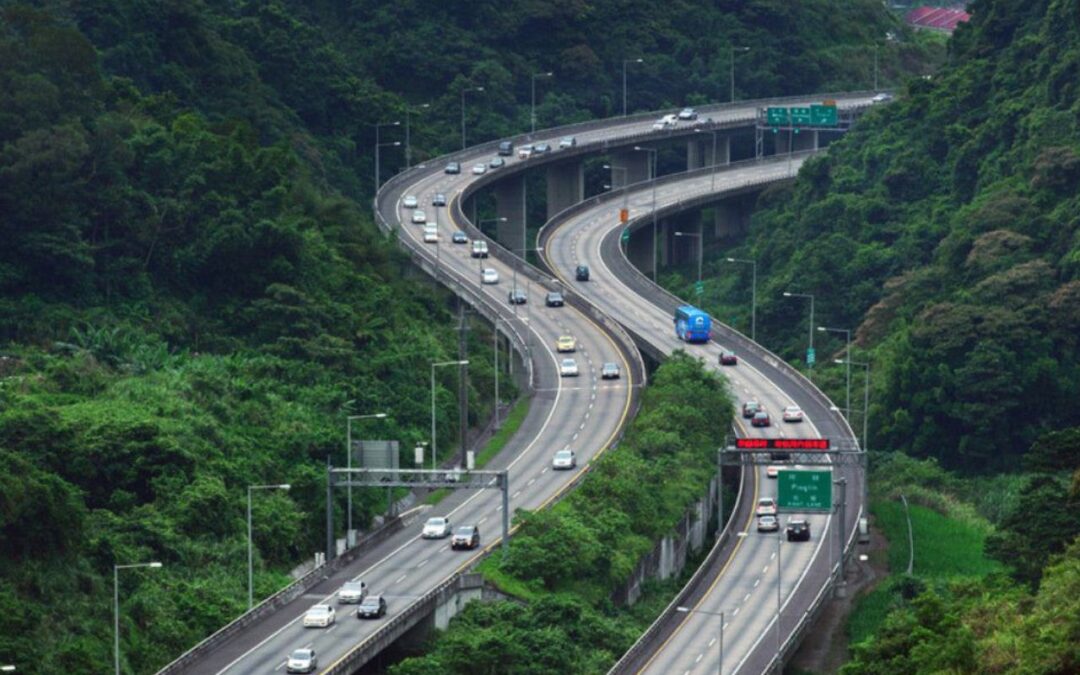
Synopsis: The Delhi-Dehradun Expressway is now officially open, and this is a big shift for people travelling between the two cities. The travel time is reduced from around 5 hours to 2.5 hours, making weekend trips and regular travel much easier.
According to Magicbricks reports, it was stated that the housing demand across hill stations grew 8.2% year-on-year in the July-September 2025 quarter. Within this, Dehradun recorded one of the sharpest price appreciations at 30.9%. This data was given even before the expressway’s full inauguration. This indicates that the market is already pricing in what the road would do.
The Delhi-Dehradhun Expressway
The Delhi-Dehradhun economic corridor was developed under the Bharatmala Pariyojana by the National Highways Authority of India (NHAI), which is, 213-km access-controlled corridor spanning Delhi, Uttar Pradesh and Uttarakhand. It was built under the Engineering, Procurement and Construction (EPC) model built at an officially approved cost of ₹11,963 crore.
The project was approved in 2020, with the tenders, land acquisition, and foundation stone laying completed in 2021. The elevated corridor work began from Ashrodi to Ganeshpur in 2022, and the structural works accelerated through 2024, and by 2025 the elevated corridor was nearly complete with the broader route at 90% completion. PM Modi formally inaugurated the full corridor on April 14, 2026. Additional details related to the Delhi-Dehradhun Economic Corridor:
Emerging Hotspots and Real Estate Changes
The expressway’s impact on property markets is measurable and multi-layered. Real estate groups project 15-25% price appreciation in established NCR-linked micro-markets over the next 18-24 months, with 10-20% growth in emerging zones. The structural logic is simple as the expressway compresses geography. Land parcels that were previously unattractive due to distance now sit within a commercially viable commute radius of Delhi. This resulted in a simultaneous re-rating of property values across three states, which are Delhi, Uttar Pradesh, and Uttarakhand, each offering a different investment profile and price point.
The corridor’s impact across three clear zones-
- The NCR-adjacent belt, Sahibabad, Shahdara, and Narela, is seeing strong residential demand from end-users drawn by proximity to Delhi.
- The western UP zones, Baghpat, Shamili, and Muzaffarnagar, suit early investors looking for plotted land at accessible price points with high upside potential.
- At Uttarakhand, Dehradhun and Rishikesh are attracting lifestyle and second-home buyers, with holiday homes in ₹30-₹70 lakh range and studio apartments in the ₹20-₹35 lakh bracket gaining traction.
Siddharth Group India, a Dehradhun-based developer, sees the city’s demand as structural rather than speculative
- The migration from Delhi-NCR, hybrid work trends, and growing interest in second homes.
- Demand is concentrated in RERA-regulated, gated communities, primarily 2BHK and 3BHK configurations, rather than unplanned land parcels.
Also read: Top 7 Indian Cities by Tourism Revenue in 2026 – This Northern City Leads
Key Points to Note:
- Proximity to expressway interchanges and entry-exit points
- Verified legal and RERA approvals
- Track record and credibility of the developer
Future Outlook: Plans and Programmes
Central Government / NHAI
- The 51-km Haridwar greenfield road (₹2,095 crore), as confirmed in the Economic Times, directly links the expressway to Haridwar and the Char Dham highway network, stimulating pilgrimage and tourism economies along the Haridwar-Rishikesh belt
- The Ambala-Shamli Expressway (121 km) connects northward into Punjab and onward to the Bareilly-Ludhiana Economic Corridor
- Over ₹74,100 crore is allocated in the 2026 state budget to enhance connectivity across districts to convert the thousands of kilometers of unpaved roads into durable, climate-resilient highways, and improve access to essential services.
Uttarakhand State Government– The state is building a complementary policy and infrastructure layer around the expressway:
- The Uttarakhand Housing and Urban Development Authority (UHUDA) has confirmed Transit-Oriented Development (TOD) zones and Personal Rapid Transit (PRT) will be integrated into the Dehradhun’s plan, a response to expressway-driven inflow of investment and population.
- The Mussoorie Dehradhun Development Authority (MDDA) passed a ₹968 crore budget for FY 2026-27 at its 113th board meeting, ring-fencing ₹268 crore specifically for land acquisition for new housing schemes in areas including Dhoran, Rispana and Dhaulas
The Dehradun-Khatima Highway and urban bypass projects are prioritised specifically to decongest urban movement and streamline connectivity across districts, and is set to stimulate local commerce and tourism
Written by Jahnavi