
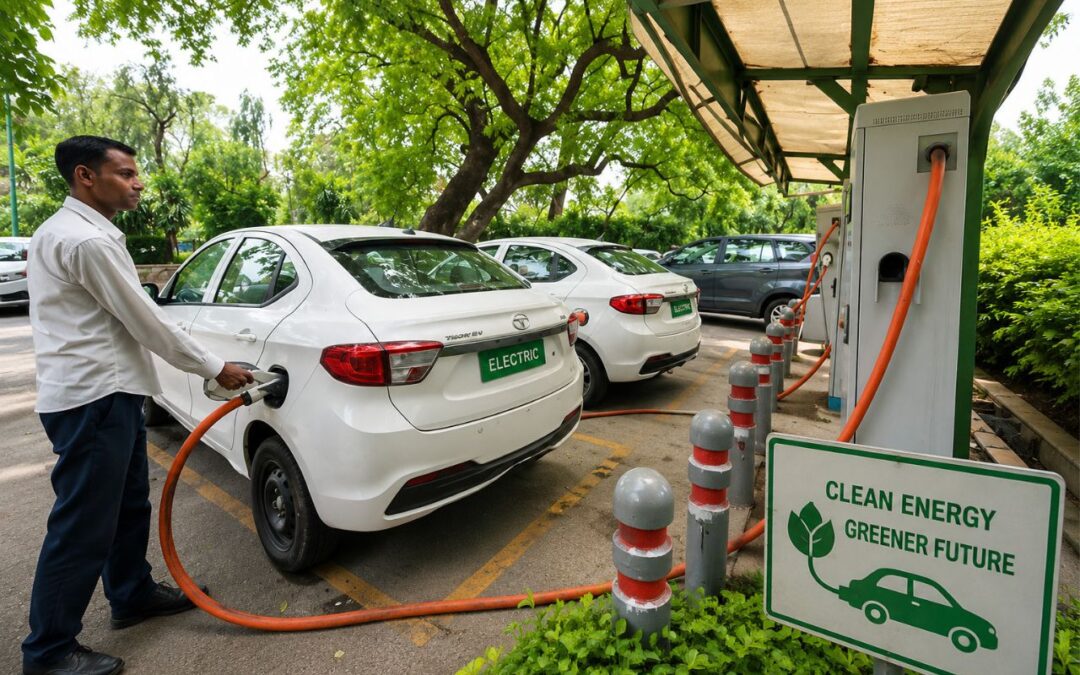
Synopsis: In this article, we will look at the top 10 states that offer the highest EV subsidies and incentives. Both the central government and many state governments are providing subsidies and incentives, with benefits including direct cash support, road tax exemptions, and registration fee waivers.
EV adoption has been a huge success in India due to strong government policy, lower operational costs, rising consumer awareness, global campaigns and adoption. Cost is a major barrier for buyers which is why the government has introduced incentives like subsidy & loan benefits that reduce upfront cost. EVs might be heavy on your pockets now but they are cheaper and better for the environment in the long run. State policies are the most influential factor in the success of the adoption.
What EV Incentives Actually Include?
- Purchase Incentives: Direct discount provided to the user on the cost of the electric vehicle
- Coupons: Financial incentive where the amount is reimbursed later
- Interest Subventions:Discount offered on the interest rate while availing loan
- Road tax exemption:Road tax at the time of purchase is waived off
- Registration fee exemption:One-time registration fee applicable on new vehicle purchase is waived off
- Income tax benefit: Provided as a deduction on the tax amount payable by an individual to the government
- Scrapping incentives:Provided upon de-registering old Petrol and Diesel Vehicles
- Others: Incentives such as interest-free loans, top-up subsidies, special incentives on electric three-wheelers, etc. can also be availed
Key Types of EV Benefits
- Financial Incentives (Central & State):FAME-II Scheme: Subsidies for 2W, 3W, 4W, and E-buses based on battery capacity (kWh).State-Level Incentives: Various states offer additional purchase subsidies, 100% road tax exemptions, and registration fee waivers, particularly for early adopters.
- Income Tax Benefit (Section 80EEB): Individuals can claim up to ₹1.5 lakh deduction on interest paid on loans for electric vehicles.
- Reduced GST: A reduced GST rate of 5% applies to electric vehicles and chargers.
- Operational Benefits: Lower running and maintenance costs. EVs are exempt from needing a PUC (Pollution Under Control) certificate.
- Environmental & Performance Benefits: Improves urban air quality by eliminating pollutants like nitrogen oxides and CO2 during operation.Low noise pollution and better performance.
Top 10 States with Highest EV Subsidies
1. Maharashtra – Subsidy is up-to ₹2.5 lakh for cars, road tax is 100% exempted, extra benefits include schemes & financing support – waiver of tolls, early bird incentives & loan benefits. Maharashtra ranks high because it has the most comprehensive and high monetary benefit.
2. Delhi –Subsidy is ₹30,000 (2W) up to ₹1.5 lakh for cars, road tax is 100% exempted, registration fee is fully waived, loan benefits include scrappage incentives. Interest subvention schemes are also available. Delhi has one of the most balanced EV policies, with good subsidies and financing support
3. Gujarat – It has high Per kWh Subsidy Model, the subsidy is ₹10,000 per kWh (up to ₹1.5 lakh cap), road tax is 100% exempted, registration fee is fully waived off. Loan incentives are Limited & extra benefits includes a strong push for EV adoption. Gujarat gives one of the highest direct subsidies, making EVs much cheaper upfront.
4. Karnataka – A full ecosystem which contains moderate direct subsidy, purchase subsidy which means no direct subsidy for cars, road tax is 100% exempted, loan incentives include interest-free loans for EV ecosystem players (indirect support), extra benefits are charging infra subsidies & EV policy support. While Karnataka doesn’t have direct purchase subsidies, it makes up for it with good ecosystem support and tax benefits, making owning an EV cheaper overall.
5. Tamil Nadu – Tamil Nadu is a manufacturing & infra focus hub. It provides no direct subsidy for private EV cars. Road tax – 100% exemption, Loan incentives – Indirect (industry & infra financing support), Extra benefits – charging station subsidies & EV manufacturing hub. Tamil Nadu has a lower focus on providing subsidies to consumers and a higher focus on building a sustainable EV ecosystem in the long-term.
6. Telangana – Fully tax exemption model, there is no direct subsidy ,road tax is 100% exempted, registration fee is completely waived, extra benefits include extra discounts for government employees (10 to 20 percent).The zero tax & fee structure reduces the upfront cost considerably, even without subsidies.
7. Kerala – Special loan & finance support, no major direct subsidy is given, road tax has a 50% waiver,loan incentives include interest-free / subsidized loan schemes (policy-driven),extra benefits are charging infrastructure incentives. Kerala has a different approach , it is funding innovation and making EVs more affordable by reducing the cost of borrowing.
8. Rajasthan – Tax benefits driven state purchase, subsidy is limited / none for cars, road tax exemptions are available (policy driven), loan incentives are limited, extra benefits are strong focus on ev adoption via policy incentives. Rajasthan wants tax relief instead of direct cash subsidies.
9. Assam – Subsidy is per kwh, has high purchase subsidy – ₹10,000 per kwh (₹1.5 lakh cap) road tax has 100% exemption, limited Incentives for loans, additional benefits are strong upfront subsidy. One of the highest direct subsidy structures, significantly reducing the upfront cost of EVs.
10. Andhra Pradesh – Infrastructure-led EV growth, no purchase subsidy, road tax has 100% exemption, loan incentives are limited, extra benefits are massive charging infra push (5,000 stations planned). Aggressive infrastructure development helps long-term EV adoption, and subsidies are low.
Also read: Top 6 Emerging Areas in Greater Noida Where Property Prices Are Rising Sharply Due to Upcoming Jewar Airport
End Note
EV incentives differ greatly from state to state in India, with different offerings. Choosing the right state is important as it can greatly reduce the overall cost of owning an EV, making policy awareness important for the buyers.
Written by Shreya Tiwari