
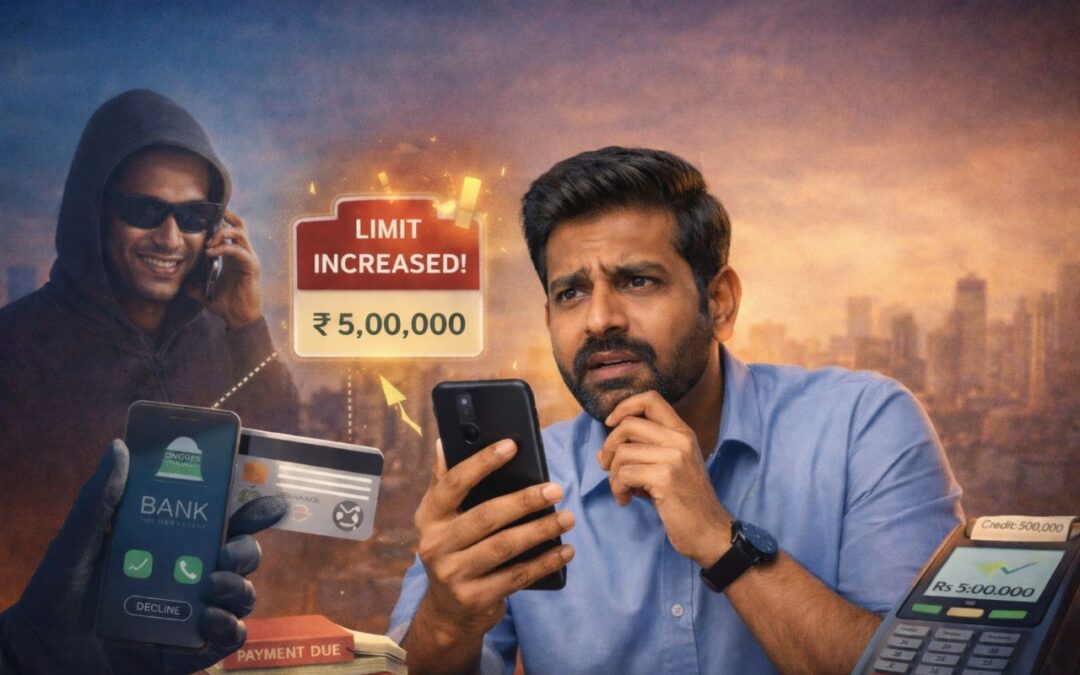
Synopsis: Fraudsters across India are targeting credit card users with fake promises of instant credit limit increases. The criminals deceive their victims into disclosing confidential data, which includes one-time passwords and card verification value numbers and credit card information. Cardholders can protect themselves from financial loss through understanding the scam operation and analyzing actual case studies.
India experiences rapid growth in credit card users because more people use digital payments and online shopping. The increasing number of users has made transactions more convenient, but it has created new opportunities for cybercriminals who target unknowing cardholders.
The credit card limit increase scam has become an upcoming danger that operates through fraudsters who pretend to be bank officials while offering their victims instant credit limit upgrades.
The offenders are trying to get their secret data, which contains one-time passwords (OTPs), card numbers and CVV numbers. The thieves utilise the stolen information to conduct illegal transactions that lead to total financial loss to the victim.
The recent experiences in such cities as Ahmedabad and Bhopal show how citizens can so easily fall victim to the scams. The best way of preventing financial fraud is to make people not only know about the dangers but also employ protective features.
What Is a Credit Card Scam?
A credit card limit increase scam is a type of fraud whereby fraudsters masquerade as bank officials to offer counterfeit credit limit increases. They lure users to give their personal banking details. This information can be used by the scammers to make unauthorized purchases and illegal withdrawals.
Typical scammers of information requests:
- One-time passwords (OTP)
- Expiry date and credit card number.
- CVV code
- Banking login credentials,
How the Scam Usually Works
Fraudsters use a predetermined scheme to defraud credit card holders. Scammers start their deceptive scheme by contacting people through phone calls, SMS messages and WhatsApp messages while pretending to be bank representatives.
The caller uses an instant credit card limit increase together with a special upgrade offer to create an appealing and urgent proposition. The fraudster asks his victim to validate his identity by providing personal information, which includes his credit card number, expiry date and CVV and one-time password (OTP), which goes to his registered mobile phone.
The scammer uses the information that the victim gave to him in order to conduct unauthorized online transactions and steal money. The bank transaction alerts that victims receive serve as the first indication of their fraudulent experience.
Real-Life Scam Cases in India?
Case 1: Ahmedabad Credit Card Limit Scam
A 31-year-old microbiologist based in Ahmedabad lost 2.3 lakh rupees because someone who had called him, pretending to be a bank officer, promised to raise his credit card limit. The fraudster employed a short call where he persuaded the victim that his request for a limit upgrade would be done in 24 to 48 hours.
Soon after the phone call, the victim received SMS messages to the effect that there were two fraudulent credit card charges amounting to 2.3 lakh. The police registered a case of cybercrime and commenced an investigation.
Case 2: Bhopal Credit Card Limit Increase Fraud
A Bhopal private driver faced a loss of 1.21 lakh as he responded to a WhatsApp call by a fraudster posing as an official of a bank. The fraudster asked the victim to give him his bank account details and one-time password, owing to the fact that he was supposed to increase the credit card limit.
After the victim provided the OTP, the scammer performed an instant transfer of 1.21 lakh to the account of the victim. The government alerted the citizens to avoid transferring one-time passwords and sensitive banking information to individuals who make calls without identification.
Also Read: Top 5 Lifetime Free Fintech Credit Cards: Which Card Offers the Best Rewards in 2026?
Warning Signs of a Credit Card Limit Increase Scam
You should be concerned with a fraudster in case of the following warning signs:
- The call-in is forcing you to take action now and is insisting that the offer can only last a short time.
- They demand the sensitive data, OTP, CVV, and credit card details in their alleged verification procedure.
- This is a call or a message from an unknown number, a private number, or a WhatsApp account, which pretends to be one of the banks.
- They provide instant credit limits without the need to request and have the bank check.
No genuine banks require their clients to provide any confidential data, including OTPs, CVVs, and complete card details on the phone, through messages, or in any email.
How to Protect Yourself
The cardholders should ensure they take necessary precautions in order to keep their credit cards safe against fraud. The sensitive information of the customers, such as their OTP and full CVV credit card information, should be kept safe by the customers against any third party. The mobile banking application and the customer service number of the bank should be used to verify any credit card-related correspondence.
The user should not view any suspicious links or attach any suspicious software that was sent to them via SMS or email or messaging services. The users are encouraged to enable transaction notifications along with two-factor authentication to receive real-time notifications on all the activities that happen on their credit cards. Everyone receiving a fraudulent call or a text message that seems to be sent by his or her bank must immediately contact his or her bank and report the case.
What To Do If You Become a Victim
- The first precautionary step that would be taken in taming the unauthorized transactions is blocking your credit card through the bank security process.
- The bank should investigate the report of fraud, and this report should be forwarded to the bank through their customer care section, and they will help in locking down your account.
- The National Cyber Crime Reporting Portal will require you to file a complaint that will notify the authorities of the occurrence and will register an official report on the same.
- Well, contact the cybercrime helpline and present your case as soon as possible at 1930.
- The rapid response process also helps the organizations in eliminating fraud and retrieving lost money that they have lost as a result of fraudulent activities.
Conclusion
Scammers who operate the credit card limit increase scam have become a serious problem in India because they impersonate bank officials to acquire confidential customer data.
The cases from Ahmedabad and Bhopal demonstrate how fast financial loss occurs to victims of this fraud. The best way to protect yourself from these scams involves maintaining constant vigilance while you check all bank messages and refuse to disclose your OTPs and card information.
Written by Ameet S
Disclaimer: This article is for awareness purposes only. It does not constitute financial or legal advice. Readers should verify information independently and consult their bank or authorities before taking any action regarding credit cards or personal banking details.