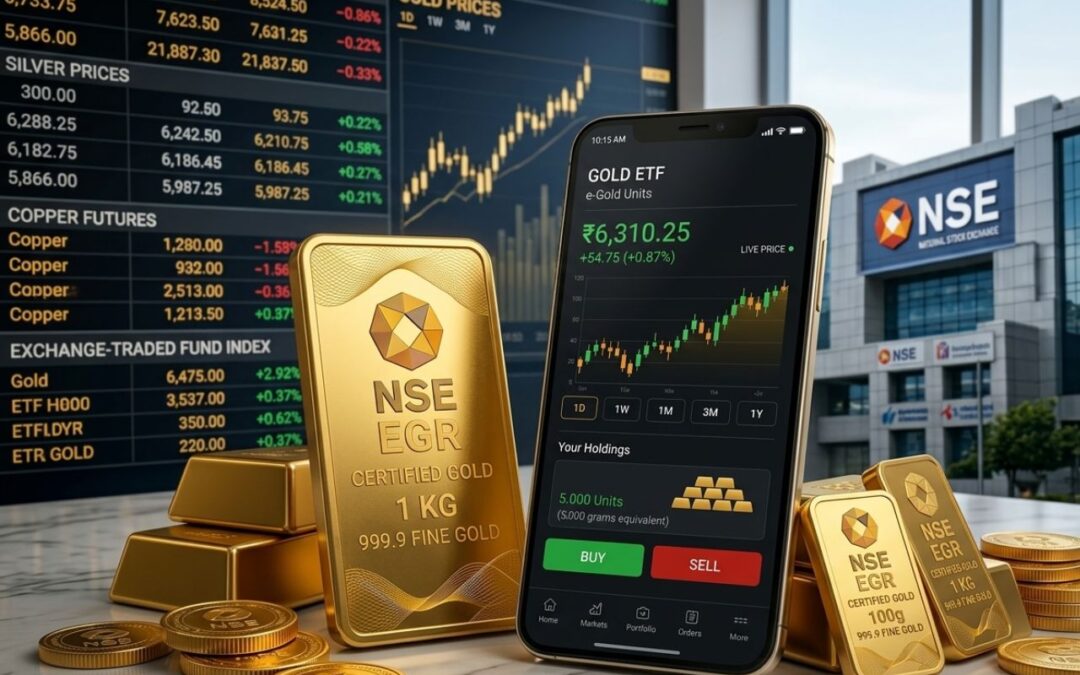
Synopsis: The SEBI-regulated electronic gold receipt is a form of digital gold, which is backed by actual gold. EGRs enable investors to buy, hold, and sell gold easily and transparently in stock exchanges.
One of India’s favorite investment assets, gold has problems with respect to storage and quality. SEBI introduced the concept of Electronic Gold Receipts (EGRs) to provide investors a safe and transparent alternative for investment in gold. Under this, investors could trade in gold in electronic form on the stock exchanges with an underlying holding of the physical gold kept in secured vaults.
What is Electronic Gold Receipt (EGR)?
The Electronic Gold Receipt (EGR) is a dematerialized security showing ownership of physical gold stored in a vault approved by SEBI. These are traded at the stock exchanges such as the NSE and BSE in demat form. All EGRs are 100% backed by physical gold of standard purity, such as 995 and 999 fineness.
Available EGR Product Symbols on NSE
Benefits and Features of Electronic Gold Receipts (EGRs)
- Unified pricing with a “One Nation, One Price” gold ecosystem
- Easily tradable on NSE and BSE like stocks
- More convenient and safer than holding physical gold
- Provides liquidity along with assured gold purity and quality
- Allows fungibility and seamless delivery of standardised gold
- Settlement guarantee through clearing corporations
- Helps diversify investment portfolios with regulated gold exposure
- Held securely in demat account form
- Available in flexible denominations from 100 mg to 1 kg
- Backed 1:1 by physical gold stored in SEBI-approved vaults
- SEBI-regulated investment framework with transparent price discovery
- Option to redeem EGRs into physical gold whenever required
- T+1 settlement cycle for faster trade settlement
- Participation allowed for retail investors, jewellers, bullion traders, and refineries
Also read: NPS New Withdrawal Rules: How Subscribers Can Now Receive Monthly Income Till Age 85
EGR vs Physical Gold vs Gold ETFs vs Gold Mutual Funds
Taxation on EGRs
- Short-Term Capital Gains (STCG): If EGRs are sold within 12 months, gains are taxed as per the investor’s applicable income tax slab.
- Long-Term Capital Gains (LTCG): If held for more than 12 months, gains are taxed at 12.5% without indexation benefits.
- GST Implications: Buying and selling EGRs on stock exchanges does not attract GST. However, physical redemption of gold may attract 3% GST.
- Conversion Taxation: Conversion between physical gold and EGRs generally does not trigger capital gains tax under current tax rules.
How to Invest in EGRs?
A demat account, a trading account, and a SEBI-approved stockbroker are necessary to purchase EGR units on NSE or BSE during trading hours, just like purchasing shares via the stock market. EGRs are held in demat form and can be sold on an exchange or redeemed in the form of gold whenever required.
Is EGR open for retail investors?
Yes. EGRs (Electronic Gold Receipts) have now been opened for retail investors. NSE officially launched live EGR trading on May 18, 2026. Retail investors can buy, sell, hold, and redeem EGRs just like they can for other securities on an exchange.
Written By Ameet S