
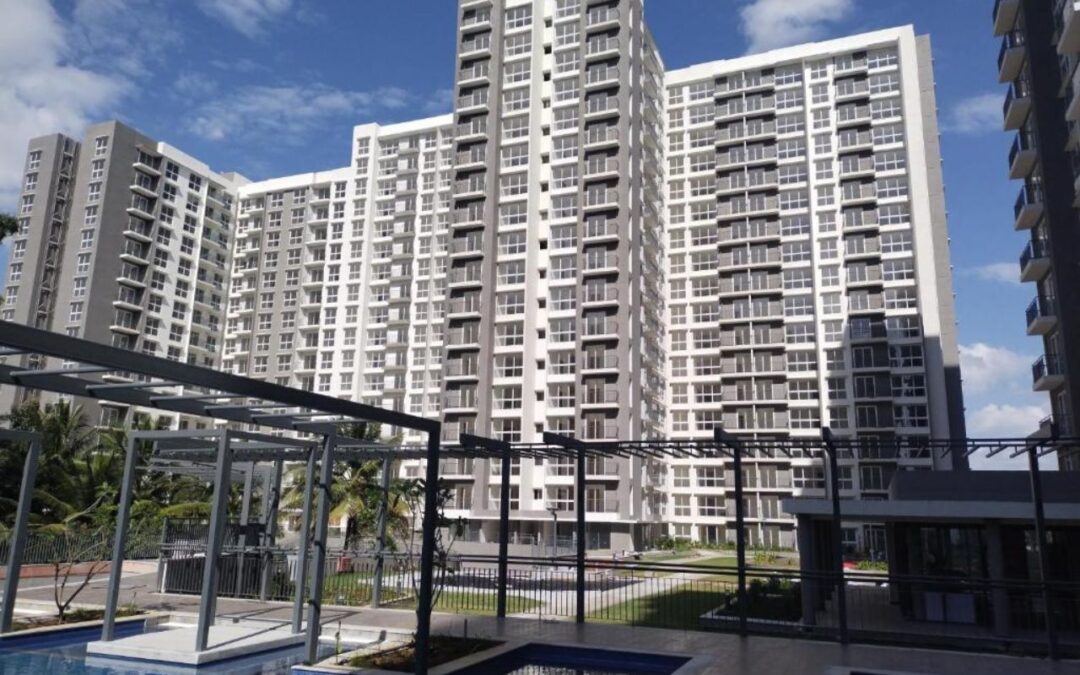
Synopsis: Bengaluru is moving towards growth vertically as the Karnataka government is planning higher Floor Area Ratio (FAR) limits according to its revised planning policies. If approved, more taller residential projects could develop in Bengaluru, house supply will be increased and it could give a push to high growth real estate corridors in the city.
The Floor Area Ratio or FAR for short is the comparison of the area of a building to the size of the land it is built on, this tells us how much we can build on a piece of land. Here is the formula: FAR = Total Built-up Area divided by Plot Area
Let me give you an example, if a piece of land is 1,000 meters and the allowed FAR is 3 then we can build up to 3,000 square meters of floor space. If the FAR is higher it means we can build more on the land maybe by adding more floors or making the building bigger. The allowed FAR varies in different places depending on things like how wide the road is, what the zoning rules are, what the land is used for and if there are things, like water, sewage and roads nearby.
What’s Changing in Bengaluru’s FAR Policy?
Bengaluru is following the Revised Master Plan from 2015, the RMP 2015 has rules about how much you can build on a piece of land. These rules are different depending on what the land’s used for and how wide the road is, in areas where people live,you can build up to a certain limit which is called the base FAR, the base FAR is around 3.25 in these areas.
The Karnataka Government started the Premium FAR scheme by sending out a notice on 2 April 2025, this notice said that people who own property can buy the right to build more but they have to pay a fee to do this. On 6 February 2026, the Karnataka government changed the rules for buildings in KIADB areas, they increased the limit for building up to 5.2 for some plots, you can get this limit by paying for the Premium FAR. The state government has sent out an order about these new rules and they are part of the Revised Master Plan.
Under the Current Regulations
Allowing a higher Floor Area Ratio or FAR does not mean Bengaluru will suddenly have many skyscrapers. Here are some things developers can do with a higher FAR:
- They can add floors to a residential building.
- They can build apartments in the same project.
- They can make mixed-use projects bigger.
- They can create communities with homes.
- The height of the building will still depend on things like the width of the road, rules about how close buildings can be to airports, how much space must be left around a building, rules about fire safety and local regulations, about building.
Could Property Prices Increase?
A higher Floor Area Ratio could lead to expensive property prices in some areas especially near Bengaluru’s main IT areas like Whitefield, Outer Ring Road and Sarjapur Road because developers can build space on the same land making that land more valuable.
Over time more houses being built might help lower apartment prices if people want them and the area has good roads, schools and shops.The increase in housing supply could help ease price pressures for apartments depending on demand and infrastructure development in Bengaluru. More apartments could mean more choices for people looking to buy which could help keep prices from rising too fast.
Which Areas Could Benefit the Most?
If the base FAR of Bengaluru is increased in the future IT corridors and the areas that have good infrastructure, are connected to the Metro and have a lot of people looking to buy houses will benefit the most.
- Whitefield: Whitefield is one of the major IT hubs in Bengaluru, it has a lot of people looking to buy houses it is connected to the Metro and if the FAR is increased, builders can make tall apartment buildings near big offices.
- Outer Ring Road (Bellandur, Marathahalli & Kadubeesanahalli): The Outer Ring Road is home to big technology companies, the price of land here is very high. If they can build taller buildings it will help increase the number of houses available near big offices.
- Sarjapur Road: Sarjapur Road is close to Whitefield, Outer Ring Road and Electronic City which makes it a popular place for IT professionals to live and if the Floor Area Ratio is higher, it will support tall housing projects.
- Electronic City: Electronic City is still an important place for professionals because of its big IT campuses and if the Floor Area Ratio is increased builders can make more residential towers to meet the growing demand for houses.
- Hebbal–Manyata Corridor: Hebbal is famous because of Manyata Tech Park and its good connection to the airport. The demand for houses is increasing here and if the Floor Area Ratio is increased it will encourage premium tall buildings.
- North Bengaluru (from Thanisandra to Yelahanka to Devanahalli): North Bengaluru is a prime candidate for more dense housing projects if the Floor Area Ratio limits are increased because the infrastructure is developing fast and new business parks are coming up and the airport is nearby.
Which Developers Could Benefit?
The people who build houses and have a lot of land in Bengaluru and who have already made buildings for people to live in will probably get the most benefit if Bengaluru eventually increases its base Floor Area Ratio, in the Revised Master Plan 2041.
Conclusion
If Bengaluru increases its base Floor Area Ratio under the Revised Master Plan 2041 it could lead to tall buildings for people to live in, especially near the major IT corridors in Bengaluru. This development will only happen if the roads and other basic things like water and electricity supply are improved at the same time so that Bengaluru can grow in a way that includes overall growth.