
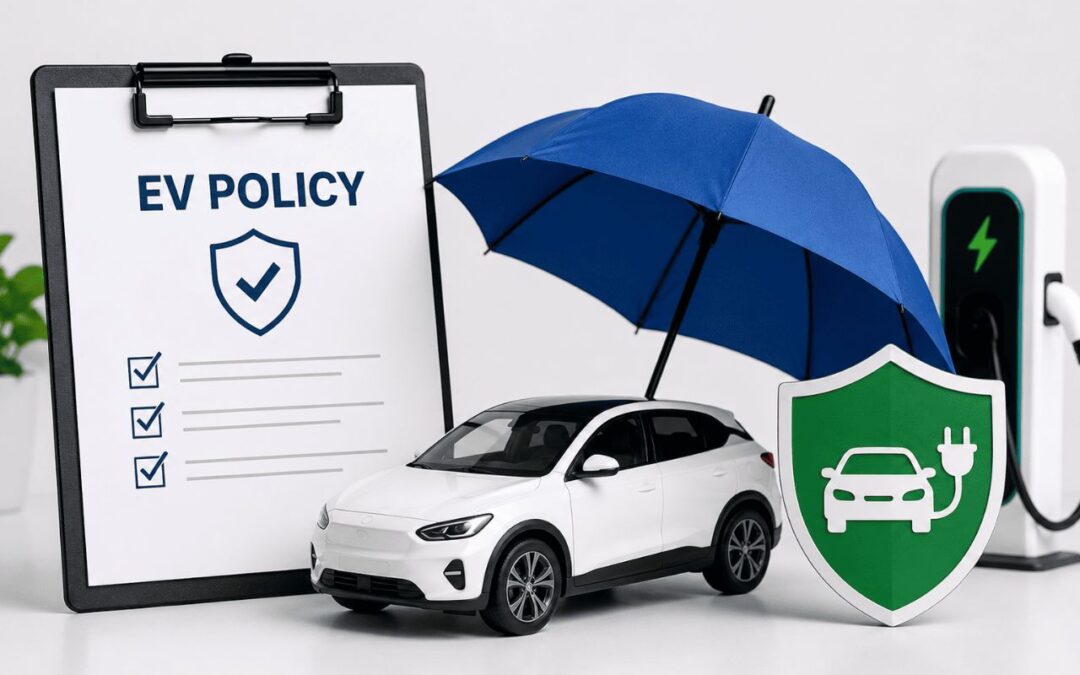
Synopsis: EV insurance in India has matured rapidly. This analysis deep-dives into the three strongest EV insurers, HDFC ERGO, TATA AIG, and ICICI Lombard, comparing their coverage structures, add-ons, and premium mechanics with worked calculations.
As EV adoption accelerates across Indian cities, insurance has evolved from a generic motor policy into a specialised product built around the vehicle’s most expensive component which is the battery. Choosing the right EV insurer now requires evaluating claim settlement track record, EV-specific add-ons, and how the premium is actually computed.
Top 3 EV Insurance in India
1. HDFC ERGO Electric Car Insurance
HDFC ERGO has built out a dedicated EV add-on suite covering the battery charger, electric motor, and detachable battery, applicable under the comprehensive plan.
- Starting premium (approx.)– Starting from ₹1,780 per year (depends on the EV Motor Power)
- Cashless garage network– Around 8,700 garages across India
- EV add-ons– Battery Charger and Accessories cover, Electric Motor cover, Zero Depreciation on battery charger these are optional add-ons under comprehensive plan.
- NCB (No Claim Bonus)– Up to 50% on renewal
- Unique feature– Pay-As-You-Drive add-on, up to 25% own damage (OD) premium discount for low-mileage EV owners
HDFC ERGO’s battery charger add-on covers fire, explosion, flood, and earthquake damage to the charger and accessories. Its zero-depreciation claim extends to the detachable battery itself, a differentiator not commonly offered elsewhere.
2. TATA AIG Electric Car Insurance
TATA AIG offers one of the most transparent premium-calculation frameworks among Indian EV insurers, publishing the exact formula used to compute comprehensive cover.
- Starting premium (approx.)- Starting from ₹2,094 per year (depends on the EV Motor Power)
- Signature EV add-ons- Electric Surge Secure, Zero Depreciation on Battery
- NCB- Up to 50%
- Owner-driver personal accident cover- Around ₹15 lakh
- Claim support- More than 750 claim experts, 24×7 helpline
TATA AIG’s Electric Surge Secure add-on covers damage from short circuits, arcing, or water ingress during charging, while excluding manufacturing defects and non-approved chargers. Its Zero Depreciation on Battery add-on reimburses depreciation on the battery, provided the battery cost is built into the IDV.
3. ICICI Lombard Electric Car Insurance
ICICI Lombard’s EV offering centres on its Battery Protect add-on and a well-regarded digital claims process through its InstaSpect app.
- Starting premium (approx.)- Starting from ₹2,094 per year (depends on the EV Motor Power)
- Cashless garage network– Nationwide network, and can be search via ICICI cashless garage website
- EV add-ons- Battery Protect Cover, and Zero Depreciation under comprehensive plan
- Claim settlement window- Usually within 30 days of document verification (subject to the insurer and insurance provider)
- Unique feature- Instant claim approval through InstaSpect app and dedicated Women Assist roadside support
The Battery Protect Cover is built for water-ingression and short-circuit damage to the battery and related systems. However, only one claim is allowed per policy tenure, and all claims need prior company approval before repairs begin.
Best out of the 3 EV Insurances
How to Calculate Your EV Insurance Premium
Insurers use a broadly similar formula for comprehensive cover. TATA AIG’s published method is,
Comprehensive EV Premium = Third-Party Premium + (IDV × Insurer’s OD Premium Rate) + Add-ons − (NCB + Other Discounts)
Note: Third-Party Premium (fixed by IRDAI, same across all insurers)
Illustrative worked example– Taking a mid-size electric SUV, 40 kW motor, IDV ₹15,00,000, with one claim-free year
Why is having an EV Insurance important?
- The battery is approximately 30% to 50% of the vehicle’s value
- Under the Motor Vehicles Act, 1988, every EV, like any other vehicle, must carry at least third-party insurance to be driven on public roads
- Charging infrastructure is a separate insurable asset
- EVs generally carry a cleaner risk profile
Things to Note Before Choosing an EV Insurance
- Confirm the IDV basis. Always insist the IDV is calculated on on-road price, not ex-showroom price
- Check battery claim limits. Some battery-specific add-ons, like ICICI Lombard’s Battery Protect) cap coverage at one claim per policy tenure, so read the fine print before assuming unlimited protection.
- Verify garage network coverage in the respective city, since EV-certified technicians and battery-handling infrastructure aren’t universal across all cashless garages.
- Compare claim settlement track record, particularly for battery-specific claims, as documentation and root-cause disputes tend to be more common on high-value battery claims than on routine accident damage.
- Preserving the No Claim Bonus where possible skipping a small claim to protect a 20% to 50% NCB slab is usually more valuable over a 3 to 5 year ownership cycle than the claim payout itself.
All in all
HDFC ERGO, TATA AIG, and ICICI Lombard each bring a distinct strength like, battery-charger add-ons, transparent premium calculation, and digital claims speed respectively. The right choice depends on matching an insurer’s specific add-ons to the EV model, with the IDV set correctly from the start, and insurers advised to contact the respective agency for more accurate information.