
Synopsis: India’s IT sector shows long-term growth, expected to reach $400 billion by 2030 with an 8.7% CAGR from FY25-FY30. This article highlights India’s 7 fastest growing IT corridors emerging as next tech hotspots in India’s top cities in 2026.
Fewer metropolitan areas across India have a strong hold on its IT industry. Increased interest in Gateways to Collaboration, digital service offerings, and use of cloud infrastructure as well as AI-driven innovation has encouraged companies to re-evaluate their location strategy. Significant advancements in infrastructure, connectivity between metropolitan areas, build-out of expressways let companies establish IT corridors nationally.
India’s Top IT Corridors in 2026
Bengaluru – The Undisputed Technology Capital
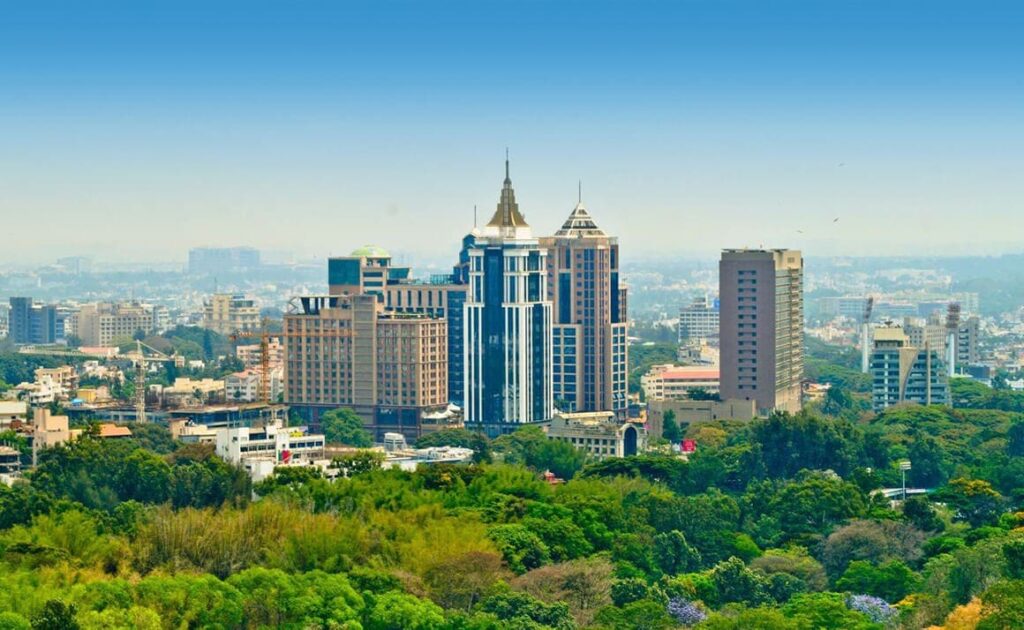
Bengaluru continues to dominate India’s IT landscape with its extensive ecosystem across Outer Ring Road – premium tech corridor with high infrastructure quality, Whitefield– major IT hub connected by metro and expressways and Electronic City– strong corporate presence and new office campuses. It hosts the highest concentration of global IT firms, startups, unicorns and R & D centers. By 2026, Bengaluru’s IT corridors are expected to remain among the most expensive yet most sought after, driven by deep talent availability and innovation density. Estimated average residential prices along the IT corridors are Rs. 8000 – Rs. 10,000+.
Hyderabad – The Scalable Growth Engine
Hyderabad has emerged as a strong challenger to Bengaluru, with HITEC City, Gachibowli and the financial district attracting large scale GCCs and digital enterprise. Lower operational costs combined with world class infrastructure make it highly competitive. By 2026 Hyderabad is poised to strengthen its reputation as India’s fastest scaling IT hub. Estimated average residential prices along the IT corridors are Rs. 7500 – Rs. 8500+.
Also read: Real Estate 2026: Will India’s Property Market Sustain the 2025 Momentum?
The Corporate Technology Convergence Hub – Gurugram
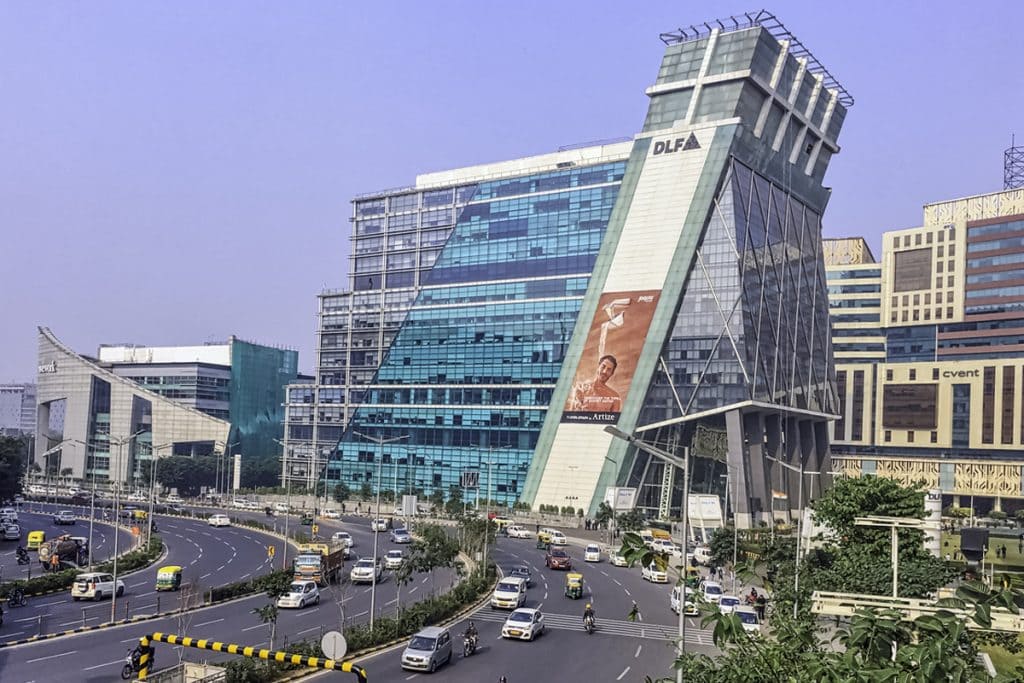
Located at the centre of NCR, Gurugram contains many forms of enterprise operations and includes the two main forms of Information Technology & Financial Services. Many global companies continue to expand their presence in Gurugram by opening their own corporate headquarters and establishing large IT Campuses in Cyber City and Udyog Vihar. The city has remained a preferred location for Enterprises to run their IT Businesses because of its proximity to Governmental Policy Making Centres and International Airports. As a result of this continued growth, the property values and prices in Gurugram have risen substantially over the past three years (2019), with property prices increasing as much as 150% from 2019 to 2023. For Residential Properties located along the IT Corridors, average residential values are approximately Rs. 8000 – Rs. 9500+.
Pune – The Talent Driven Alternative
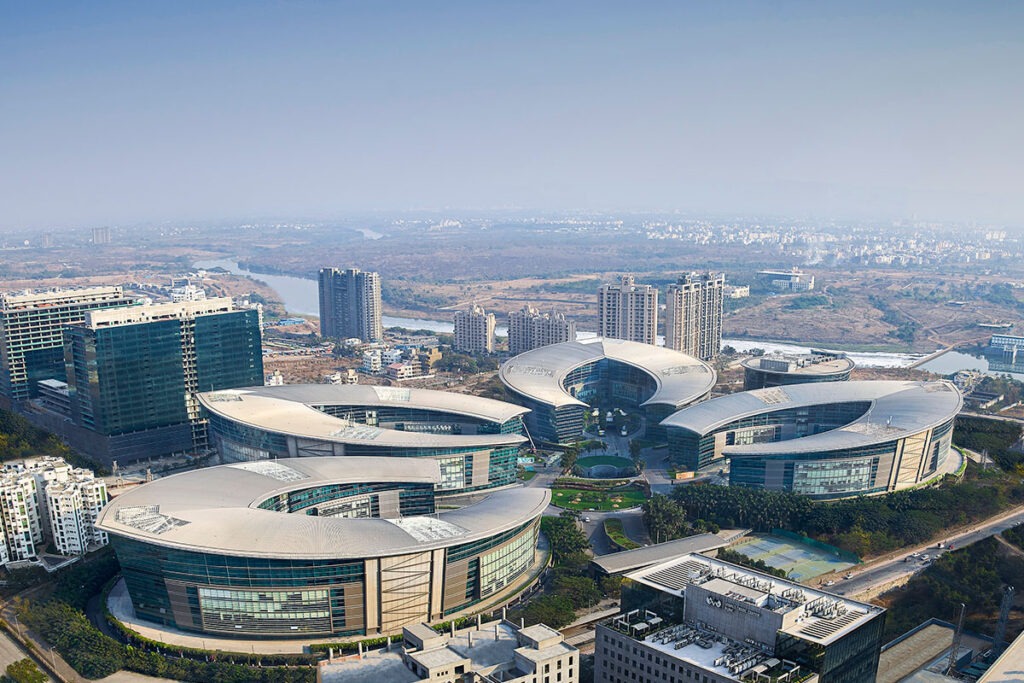
As of 2026, Pune can be assumed to absorb overflow demand from Bengaluru, due to its talent driven alternative, which includes two major IT and engineering services. locations: The Hinjewadi and Kharadi corridor is supported by a good educational network, and quality of living is also favourable. The range of average residential prices within these corridors is Rs. 7500 – Rs. 9000 + each.
Ghaziabad – The Emerging NCR Support Hub
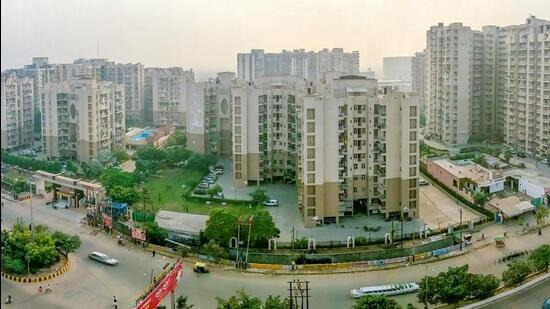
Ghaziabad is evolving from a suburban area into an ICT and services corridor because of its location along NH24, which is connected to the Greater Noida and Delhi NCR. Ghaziabad will be a major centre for back office operations and midsize technology companies by 2026, even though it is not currently an IT centre. Expected average prices for residential properties along the IT corridor are between Rs. 6000-$7500+.
Also read: South Indian Cities Dominate 64% of GCCs in India: Here’s the List
Noida – North India’s IT Growth Leader
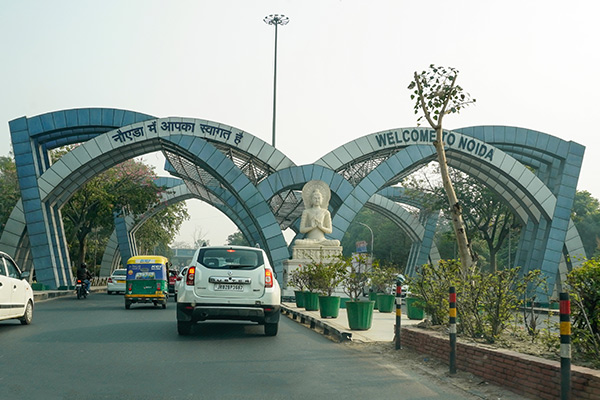
Among all the regions in North India, Noida has established itself as an IT & ITooE technology park with various types of IT parks within its boundaries, namely Sector 62 and Greater Noida Expressway. By 2026, it is anticipated that Noida will develop into a major IT & ITooE technology services hub and be one of the top two locations in India to absorb office space in the same way that the southern metro cities do. Several of the prominent IT Parks and Corridors located in Noida include DLF IT Park, Logix Infotech Park & Logix Cyber Park, Software Technology Park of India, Embassy Galaxy Business Park, Stellar IT Park, and IHDP Business Park. The residential price points located along these IT Corridors are estimated to range from Rs. 8000 to Rs. 12000 or more per square foot.
Visakhapatnam – The Coastal IT Frontier
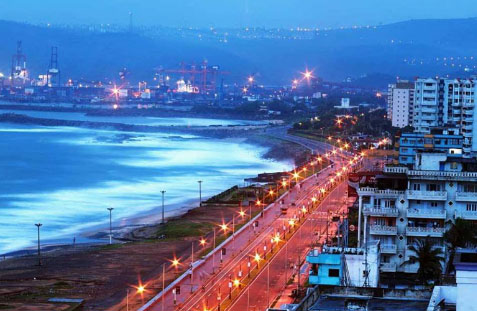
Visakhapatnam represents India’s next wave of IT expansion. Rushikonda IT SEZ and Madhurawada are drawing attention due to lower costs, government support, and quality infrastructure. By 2026, the city is likely to attract mid size IT firms and digital startups, positioning itself as a strategic Eastern IT node. Land prices surged to approximately 60% in key IT growth zones. Estimated average residential prices along the IT corridors are Rs. 3500 – Rs. 5000 +.
Future Outlook
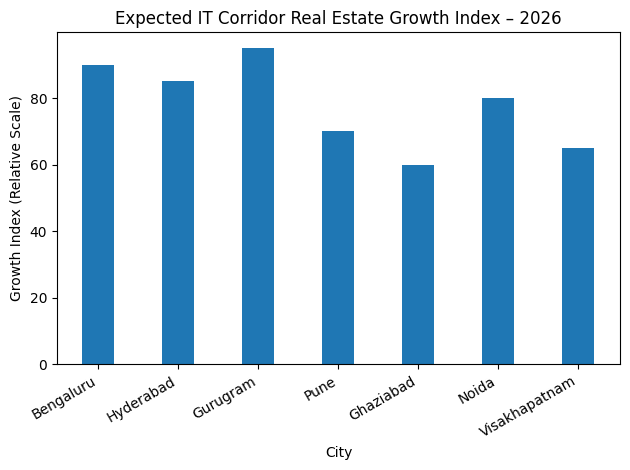
By 2026 these seven cities will collectively define India’s IT growth story balancing talent, infrastructure, cost efficiency and scalability that helps in shaping the nation’s journey toward becoming a global traditional hub. Strategic infrastructure (expressways, smart cities) accelerates economic linked growth beyond traditional urban cores.
| City | Market status (2026) | Key Strength |
| Bengaluru | Mature & Premium | Deep Tech Ecosystem |
| Hyderabad | High Growth | GCC & innovation hub |
| Gurugram | Mature NCR Hub | Corporate + IT mix |
| Pune | Expanding | Talent + affordability |
| Ghaziabad | Emerging | NCR spillover growth |
| Noida | High Growth | IT parks & Metro access |
| Visakhapatanam | Emerging | Cost efficient coastal hub |
Conclusion
The IT sector’s future in India has a few major areas of change: it will be more varied and dispersed than it had historically been. In addition to the well-known tech capital cities of Bengaluru and Hyderabad, there has also been a growing number of towns and city locations that are gaining prominence. Examples of emerging city locations are Ghaziabad and Visakhapatnam, which demonstrate how technologies are spreading beyond traditional technology hubs into previously unserviced markets.
Written by Soumya M