
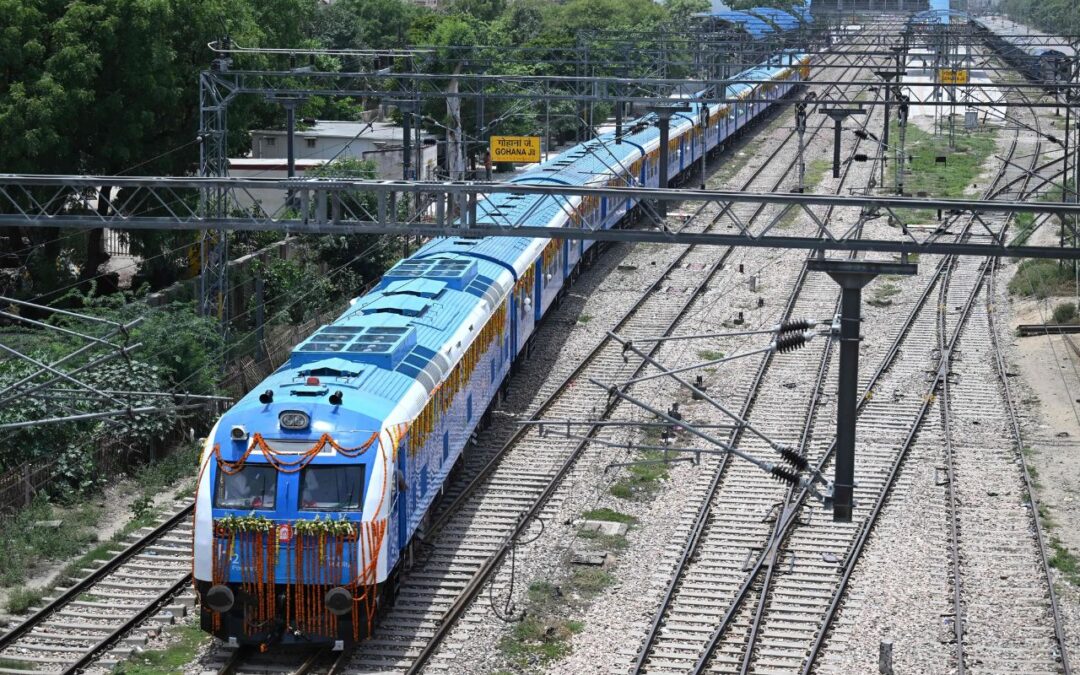
Synopsis: India’s first hydrogen-powered train was launched on 17th July 2026 on the Jind–Sonipat route in Haryana, marking a major step towards sustainable rail transport and reducing reliance on diesel-powered locomotives.
The first hydrogen-powered passenger train of India was flagged off by Prime Minister Narendra Modi from Jind railway station in Haryana on 17th July 2026, marking a significant step towards green transportation in the country. The train will run under Northern railway on Jind-Sonipat line.
With this launch, India has become one of the few nations to launch hydrogen-powered trains. The train, which has been developed with indigenous technology, will not only help Indian Railways to achieve cleaner and more sustainable transportation but also significantly reduce carbon emissions and be dependent on diesel-powered locomotives.
India’s First Hydrogen Train: Key Details
Why Was India’s First Hydrogen Train Introduced?
Hydrogen fuel train was developed by Indian railways as a part of their initiatives to ensure sustainable and environmentally friendly means of transport. Although most of the railway lines in India are electrified, there are some routes that use diesel engines. The use of hydrogen fuel cells is an environmentally friendly choice for these routes while supporting the National Green Hydrogen Mission. Key reasons behind the launch:
- Reducing dependence on diesel locomotives on selected routes.
- Lowering carbon emissions from railway operations.
- Testing the efficiency and commercial viability of hydrogen technology.
- Promoting indigenous clean transportation solutions.
Route, Stops and Journey Time
The hydrogen-powered train will operate on the 89-km Jind–Sonipat route in Haryana, covering the journey in around 2 hours. During the trip, it will stop at 12 intermediate stations: Jind City, Pandu Pindara, Lalit Khera, Bhambeva, Ishapur Kheri, Butana, Khandrai, Gohana, Rabhra, Lath, Mohana Haryana, Barwasni
The Jind–Sonipat service (Train No. 74010) will depart from Jind at 7:40 AM and arrive at Sonipat at 9:40 AM. The return service (Train No. 74009) will depart Sonipat at 10:40 AM and arrive in Jind at 1:00 PM.
How Does India’s First Hydrogen Train Work?
Hydrogen powered Indian trains differ from diesel trains by the usage of fuel cells to generate electricity. In the hydrogen-powered train, the hydrogen contained in the tank on the train reacts with the oxygen in the fuel cell to produce electricity which powers the electric motors in the train. With no combustion taking place, the only emissions from the train include heat and steam. Some of the modern features in the hydrogen-powered train include:
- Hydrogen fuel cell propulsion system.
- 10-coach configuration with capacity for around 2,600 passengers.
- Dedicated hydrogen refuelling facility.
- Hydrogen leak detection sensors.
- Fire and smoke monitoring systems.
- Automatic emergency shutdown mechanisms.
- Real-time onboard monitoring systems.
The Indian Railways have made the cost of a ticket reasonable, ranging from ₹5 to ₹25, depending on the distance travelled. There are several safety measures provided on the train, which include hydrogen leak detection sensors, fire and smoke detection system, auto shutdown systems, and real-time monitoring of the onboard equipment.
What’s Next?
The launch is the beginning of India’s hydrogen train programme. The Jind–Sonipat service will be a test run to show the operational performance, safety and commercial viability of the technology and the commercial viability of hydrogen-powered train services before the Indian Railways decides to extend it to other suitable routes.