
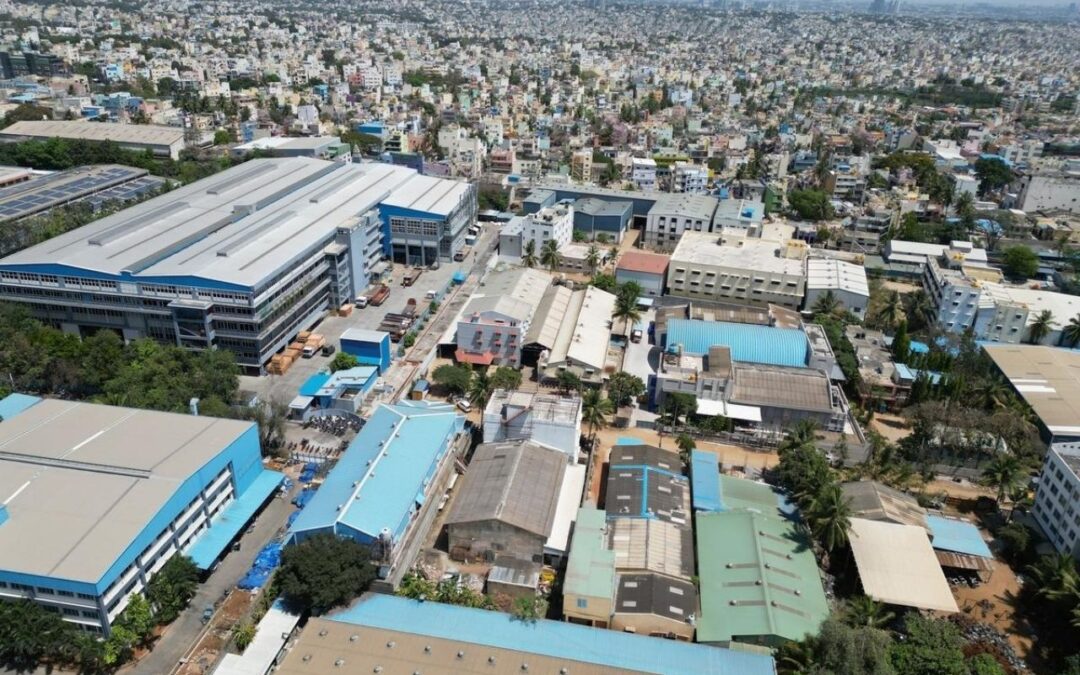
Synopsis: The India Special Economic Zones (SEZs) are creating exports, investments and industrial development throughout the country. This article discusses the SEZ landscape in India, the best states for SEZs, the top industry sectors, the economic impact, and more.
Special Economic Zones (SEZs) are now the key drivers of export, investment and job creation in India. Currently, there are 368 notified SEZs in the country which have attracted investments worth ₹7.86 lakh crore, created 31.73 lakh jobs and export receipts amounting to ₹11.70 lakh crore during April-December FY2025-26.
What are Special Economic Zones (SEZs)?
Special Economic Zones (SEZs) are geographical zones that are given special tax, regulatory and infrastructure advantages to encourage exports and investment. These zones, created under the Special Economic Zones Act, 2005, provide businesses with simplified business regulations, world class infrastructure and speeded up approvals which make them a desirable place for companies to locate industries like IT/ITeS, electronics, pharmaceuticals, engineering and textiles.
State-wise Distribution of SEZs in India
The strong geographic distribution of SEZs shows that they are well located in the south and the west, where the industrial setup is strong and ports as well as IT growth are significant. The top ten states in terms of number of SEZs in the country are Tamil Nadu (58), Karnataka (50), Telangana (51), Maharashtra (41),Andhra Pradesh (30), Gujarat (27), Uttar Pradesh (23), Haryana (22), Kerala (20), and Madhya Pradesh (8) are other prominent states. These states along with each other account for bulk of the notified SEZs in India, which are key manufacturing and export centers.
The Top 7 States with the Most SEZs
Tamil Nadu-58 SEZs
Tamil Nadu has the largest number of SEZs in India, with the major clusters in Chennai, Sriperumbudur, Coimbatore, Hosur and Tiruchirappalli. The state’s growing industrial base and port connectivity lends support to these SEZs which have a primary emphasis on IT/ITeS, automobiles and auto components, electronics manufacturing, engineering, textiles, leather, and renewable energy equipment.
Karnataka – 50 SEZs
The SEZ ecosystem in Karnataka is focused on Bengaluru, Mysuru, Mangaluru and Dharwad. The state is home to a number of leading industries such as IT/ITeS, biotechnology, aerospace and electronics, engineering, fintech and R&D, which contribute to it being one of the top technology and innovation centres in India.
Telangana – 51 SEZs
Hyderabad and its surrounding areas are home to most of the SEZs in Telangana, such as Genome Valley, Maheshwaram and Adibatla. They have got a strong core in the fields of IT/ITeS, pharmaceuticals, biotechnology, life sciences, aerospace, electronics, medical devices which brings the focus to the fact that Hyderabad is one of the major technology hubs and a pharma hub.
Maharashtra – 41 SEZs
The SEZs of Maharashtra are distributed in Mumbai, Navi Mumbai, Pune, Nagpur and Aurangabad. The state’s good industrial/commercial infrastructure draws businesses into these zones, such as IT/ITeS, engineering, gems and jewellery, pharmaceuticals, automobiles, logistics and financial services.
Andhra Pradesh – 30 SEZs
Important SEZs in Andhra Pradesh are located at Visakhapatnam, Sri City, Tirupati, Kakinada and Nellore. The Zones are driven by electronics manufacturing, IT/ITeS, food processing, pharmaceuticals, engineering, textiles, multi-product manufacturing with strategic port access and industrial parks.
Gujarat – 27 SEZs
The prominent SEZs in Gujarat are Ahmedabad, Surat, Vadodara, Kandla, Mundra and Dahej. With a long coastline and industrial corridors, the state has a significant presence in petrochemicals, chemicals, engineering, ports and logistics, textiles, gems and jewellery and renewable energy.
Uttar Pradesh – 23 SEZs
The SEZs in Uttar Pradesh are mostly clustered at Noida, Greater Noida, Kanpur and Moradabad. They have expertise in IT/ITeS, electronics manufacturing, engineering goods, apparel, handicrafts, and export-oriented manufacturing, owing to the proximity of the state to the NCR, and growing industrial infrastructure.
Why do Southern States dominate SEZ development?
The south regions have proven to be the best region for SEZ in India, mainly because of the robust industrial base, talent pool and export industries. The presence of a strong base of prominent IT, electronics, automobile, aerospace, pharmaceutical, engineering hubs in cities like Chennai, Bengaluru, Hyderabad, and Visakhapatnam is a good base for the growth of SEZs. Well-developed ports, international airports, industrial corridors and investor-friendly state policies have further boosted investments making southern India the country’s biggest export hub.
Economic Impact of SEZs in India
The economic development of India is constantly going on with the presence of SEZs. The total investment in the notified 368 SEZs as of February 2026 is worth ₹7.86 lakh crore, and over 31.73 lakh people have been employed in these zones. The total exports from SEZs during April-December FY25-26 stood at ₹ 11.70 lakh crore with an annual growth rate of 32.02%. The figures demonstrate that the contribution of SEZs is increasing in the area of exports, industrialisation and employment in India.
Conclusion
The SEZs have emerged as the backbone of India’s export-oriented economy and have been instrumental in the generation of millions of jobs, attracting investments to the country and fostering industrial growth to a great extent. These zones are likely to become even more important in enhancing manufacturing growth, exports and India’s global competitiveness as policy changes are continued and more states begin to develop their SEZ ecosystem.