Synopsis: A power transmission player is now betting big on green hydrogen, battery storage, and fuel cells. With record revenue growth and a swelling order book, the company is scripting a fresh energy transition story worth watching closely.
India’s energy sector is witnessing a quiet transformation as companies once focused purely on power infrastructure now diversify into renewable technologies. One such transmission solutions provider has posted stellar full-year numbers while simultaneously building capabilities in hydrogen, batteries, and fuel cells, positioning itself at the intersection of two fast-growing themes in India’s energy story. With a market capitalisation of Rs.2,287 Crores, shares of Advait Energy Transitions Ltd. closed at Rs.2,085.4 per share.

Strong Consolidated Numbers And A Fast-Growing Order Book
Advait Energy’s consolidated revenue for the financial year came in at 715 crore rupees, marking an 80 percent year-on-year jump. Earnings before interest, tax, depreciation and amortisation rose 64 percent year-on-year to 84 crore rupees, with margins settling at 11.7 percent compared to 12.9 percent in the previous year. Profit after tax grew 75 percent year-on-year to 58 crore rupees, while the profit margin stood at 7.7 percent.
The unexecuted order book has been a standout metric. As of March 31, 2026, it stood at 1,304 crore rupees, up 159 percent year-on-year and reflecting a compounded annual growth rate of 107 percent over four years. Of this, the power transmission segment contributed 64 percent, while the newer renewable energy vertical accounted for 36 percent, showing how quickly the newer business is scaling up alongside the legacy one.

Power Transmission Remains The Core Engine
Advait energy’s traditional business spans optical ground wires, aluminium clad steel wires, emergency restoration systems, stringing tools, and turnkey project work including reconductoring of old conductors with high-temperature, low-sag variants. During the quarter, it secured a 17 crore rupee emergency restoration order, entered a new state for the first time with a 23.5 crore rupee turnkey contract, and won a 27.9 crore rupee reconductoring order from a state utility. It also received laboratory accreditation for its manufacturing facility and product approvals from ten state utility boards cumulatively during the year.
A new multi-integrated manufacturing facility near Dholera, Gujarat, is under development and expected to be operational by the fourth quarter of the next financial year, adding capacity for high-temperature conductors and other niche products.

Battery Storage Gains Momentum
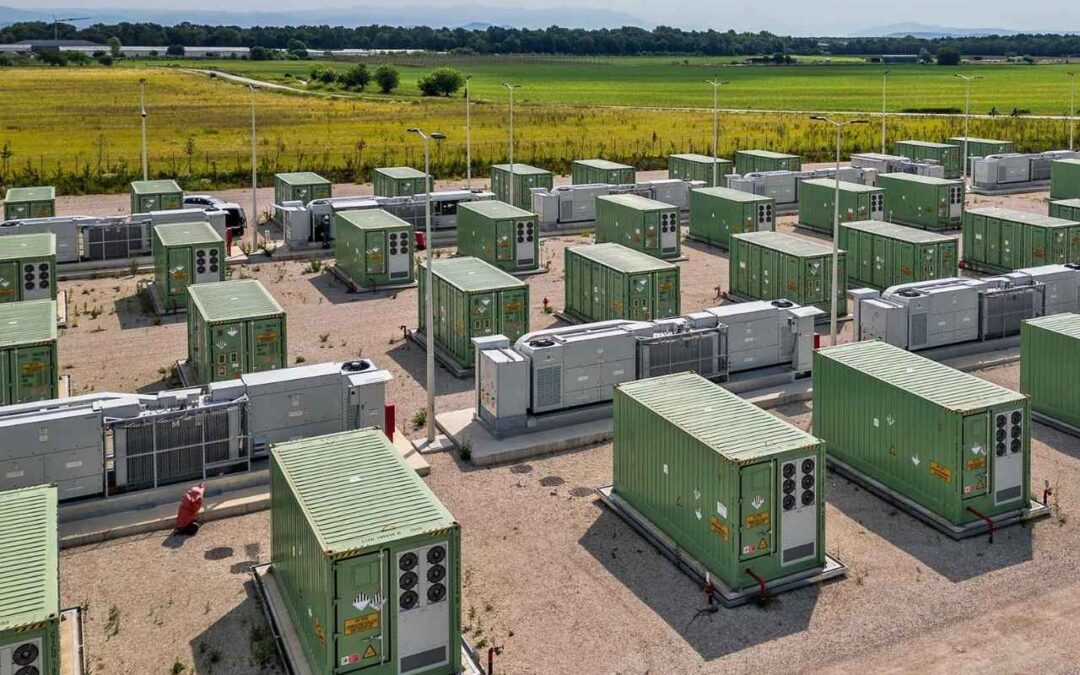
The renewable energy arm commissioned its first battery storage project for a state utility on a build-own-operate basis, with a project cost of around 141 crore rupees and a twelve-year concession period. The company is eyeing 1 gigawatt of battery storage projects over the next five years and has signed a technology collaboration with a Chinese partner for a 2.5 gigawatt-hour battery manufacturing line, covering design, engineering, manufacturing, and installation support.
The Hydrogen Business, Explained Simply
The company has built a new factory that puts together hydrogen-making machines called electrolysers. Think of an electrolyser as a machine that splits water into hydrogen and oxygen using electricity. This new factory can build machines ranging from small ones (250 kilowatts) to fairly large ones (5 megawatts), and it can produce up to 30 megawatts worth of these machines in a year.
What makes this factory special is that it does everything under one roof, from checking small parts to final testing before the machines are shipped out. The company learned how to do all this with help from a Chinese partner who already has this technology.

The factory isn’t just about making machines. It’s also being used to train and test Indian suppliers who can make the smaller parts that go into these machines, things like seals, gaskets, and membranes. Right now, India buys most of these parts from other countries, so building this at home is a big deal.
The company has bigger plans too. It wants to grow this factory from making 30 megawatts a year to 100 megawatts, and eventually 300 megawatts, as more companies start wanting hydrogen equipment. This would also make the company eligible for government incentives meant to boost local manufacturing, and could make it one of the key suppliers for India’s push to become a major green hydrogen producer.
To make sure it has enough technology and partners to grow, the company recently signed deals with a few outside firms. One deal is about storing hydrogen safely. Another is with a company that makes two types of hydrogen-splitting technology (called PEM and AEM, which are just two different ways of building electrolysers). A third deal is with an international firm to build hydrogen projects using similar technology.
Balance Sheet Stays Comfortable Despite Expansion
Despite aggressive capacity expansion, the company’s standalone net debt remained negative at 4.44 crore rupees as of FY26, with a debt-equity ratio of 0.46 times. Net worth has grown substantially to 261 crore rupees from 199 crore rupees a year earlier, giving the company headroom to fund its next phase of growth across both business verticals.
Advait Energy Transitions Ltd. is an emerging player focused on power transmission solutions and energy transition businesses. It operates manufacturing facilities for wires, restoration systems, and stringing tools, while expanding into solar projects, battery storage, green hydrogen electrolysers, and fuel cell technology, alongside a diversified carbon credits and renewable energy certificates portfolio.
Disclaimer: The views and investment tips expressed by investment experts/broking houses/rating agencies on tradebrains.in are their own, and not that of the website or its management. Investing in equities poses a risk of financial losses. Investors must therefore exercise due caution while investing or trading in stocks. Trade Brains Technologies Private Limited or the author are not liable for any losses caused as a result of the decision based on this article. Please consult your investment advisor before investing.