
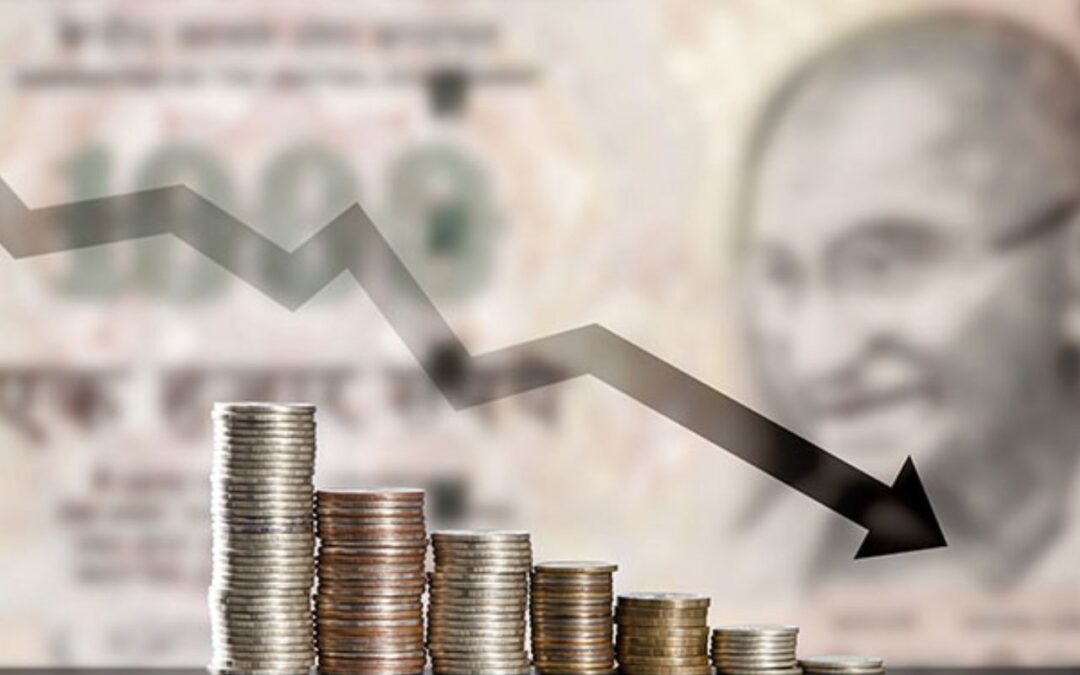
Synopsis:-With Brent crude stubbornly hovering near $100 per barrel on the back of a three-month-old U.S.-Israeli war on Iran and a near-total disruption to Strait of Hormuz traffic, the Indian rupee has slipped to 95.7675 per dollar and the RBI, burning through forex reserves to hold the line, now faces a June 5 policy decision with no clean options.
A fragile currency recovery is showing fresh cracks. The Indian rupee fell 0.1 percent to 95.7675 per dollar on May 27, reversing some of the ground it had clawed back after touching a record low of nearly 97 per dollar in recent weeks. The trigger, as it has been for much of 2026, is oil with one market analyst describing the rupee as a “shadow of Brent crude,” a characterisation that is difficult to dispute when 85 percent of India’s crude requirement comes from overseas and the global benchmark is trading near $100 a barrel.

The Energy Shock
The proximate cause of the current oil price environment is the U.S.-Israeli military campaign against Iran, now three months old and showing no sign of resolution. Hopes that the conflict might wind down quickly evaporated after Iran accused the United States of violating a ceasefire agreement, cementing the geopolitical risk premium in energy prices and removing any near-term catalyst for a supply recovery.
The structural damage to global oil markets runs deeper than the headlines suggest. The ongoing conflict has effectively shut down or severely restricted maritime traffic through the Strait of Hormuz, the single chokepoint through which roughly 20 percent of global oil supply passes, along with significant volumes of liquefied natural gas.

The market has lost approximately 14.4 million barrels per day from the Gulf’s pre-war output. Emergency releases from strategic petroleum reserves provided temporary relief, but those measures are expected to run out by mid-summer, leaving global crude inventories at critically low levels. Brent crude, which had previously spiked as high as $126 per barrel at the height of the conflict, has settled back near $100, still high enough to do serious damage to oil-importing economies.
Why India Bears the Brunt
Among the world’s major economies, India is structurally among the most exposed to an oil price shock of this kind. The country imports nearly 85 percent of its crude oil requirements, meaning that every dollar added to the Brent price translates almost mechanically into a wider import bill. Because oil is settled in US dollars, Indian refiners and importers must continuously sell rupees to buy dollars, a process that, at elevated crude prices and volumes, generates sustained downward pressure on the domestic currency regardless of what else is happening in the broader economy.

The damage does not stop at the currency. Expensive crude raises transportation, logistics, and manufacturing costs across the domestic economy, feeding what economists call imported inflation price pressures that the RBI can neither directly control nor easily offset through conventional policy tools. A higher current account deficit, a weaker rupee, and rising retail inflation form a self-reinforcing loop that is difficult to break without either a fall in oil prices or a sharp compression in domestic demand, neither of which the RBI would welcome engineering right now.
The RBI’s Uncomfortable Position
The Reserve Bank of India has been fighting the rupee’s slide on two fronts. State-run Indian banks, acting on the RBI’s behalf, have been intermittently selling dollars in the open market to supply liquidity and slow the rupee’s descent, a defence funded by India’s foreign exchange reserves, which currently hover near $700 billion. That buffer is substantial, and the RBI has demonstrated willingness to use it aggressively, having already pulled the rupee back from its near-97 record low. The intervention has worked, for now.
The harder question is what happens on June 5, when the RBI’s monetary policy committee meets for its next rate decision. Textbook central banking would call for rate hikes to defend a falling currency and cool imported inflation. But the drop in 1-year forward premiums down 8 basis points to 3.23 percent signals that the market is already walking back expectations for aggressive tightening. The read is that the RBI may be reluctant to raise rates sharply enough to risk choking off domestic growth, preferring instead to rely on its forex war chest rather than demand compression as its primary defence mechanism.

That is a coherent strategy, but not a comfortable one. Forex reserves, however large, are finite. If the Iran conflict extends through the summer and crude remains near current levels, the RBI will eventually face a starker choice between growth and currency stability than it does today.
What to Watch
Three variables will determine where the rupee trades over the next two to three months. The first is the trajectory of the U.S.-Israel-Iran conflict any credible de-escalation would ease the Hormuz risk premium and take immediate pressure off crude. The second is the pace at which global strategic petroleum reserve stocks are drawn down; if emergency supply runs out faster than expected, a return to $120-plus crude is not out of the question. The third is the RBI’s June 5 decision: a hawkish surprise could stabilise the rupee meaningfully, while a hold or mild hike would likely invite fresh selling pressure. Until at least one of those variables shifts in India’s favour, the rupee’s direction of travel remains hostage to a geopolitical conflict it has no ability to influence.
Disclaimer: The views and investment tips expressed by investment experts/broking houses/rating agencies on tradebrains.in are their own, and not that of the website or its management. Investing in equities poses a risk of financial losses. Investors must therefore exercise due caution while investing or trading in stocks. Trade Brains Technologies Private Limited or the author are not liable for any losses caused as a result of the decision based on this article. Please consult your investment advisor before investing.