Synopsis: Sterlite Technologies has jumped over 400 percent as investors bet on stronger orders, better margins and rising demand from AI data centres. But after such a sharp rally, the stock trades at a high valuation. Has the business improved enough to justify the excitement, or have expectations run too far?
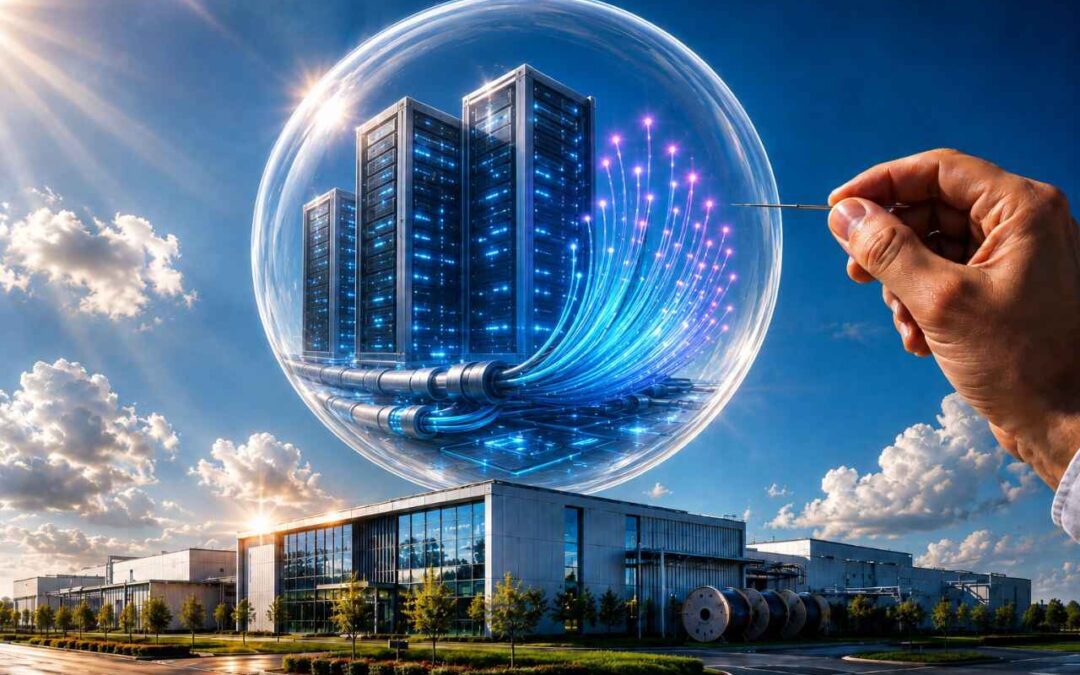
Optical fibre is important to the digital economy because telecom networks, home broadband, 5G and data centres all need faster connections. Artificial intelligence has made the opportunity larger, as GPU-heavy data centres require more fibre than traditional computing facilities. However, a strong industry opportunity does not automatically make every stock attractive when expectations and valuations rise much faster than profits.

The stock in focus is Sterlite Technologies Ltd, which is trading in the Rs. 520-550 range. The shares are down around 22 percent from their early June 2026 high of Rs. 679.90. At the peak, the stock had delivered returns of 563.3 percent in five months, while it is still up more than 400 percent. The rally has pushed the stock to a price-to-earnings ratio of nearly 570 times, raising an important question: has the business improved enough to support such expectations?
What Does Sterlite Technologies Do?
Sterlite Technologies builds the physical infrastructure through which internet data travels. Its customers include telecom operators, data-centre and cloud companies, citizen networks and large enterprises. The company manufactures optical fibre, optical-fibre cables, specialty cables and connectivity products, and had around 8 percent share of the global optical-fibre-cable market outside China in FY26.

Its business model is vertically integrated. STL begins with high-purity silicon, converts it into glass preforms, draws optical fibre, turns it into cables and then adds connectors, enclosures and pre-terminated systems. This “glass-to-gigabit” approach allows it to sell basic cables and higher-value connectivity solutions.
The company also owns STL Digital, a smaller technology-services business offering cloud, cybersecurity, artificial intelligence, enterprise SaaS and product engineering. In FY26, STL Digital reported revenue of Rs. 284 crore and EBITDA of Rs. 3 crore, compared with revenue of Rs. 290 crore and an EBITDA loss of Rs. 23 crore in FY25.

Why Has The Stock Rallied So Sharply?
The rally is not without reason. STL entered FY26 after a difficult period, but demand, utilisation and profitability began improving. The biggest change was in orders. FY26 order intake increased 109 percent to Rs. 7,687 crore from Rs. 3,672 crore, supported by large data-centre projects in North America and long-term orders from a Tier-1 Indian telecom operator.
The open order book increased 67 percent to Rs. 7,309 crore. Of this, Rs. 1,468 crore was scheduled for execution in Q1FY27, while Rs. 5,841 crore was meant for Q2FY27 and beyond. This provides stronger revenue visibility than a year earlier.
North America also became a larger part of the business, with its contribution increasing from 25 percent of revenue in FY25 to 39 percent in FY26. Management also launched new products for AI data centres and next-generation networks. These developments changed the market’s view of STL from a weak fibre-cycle company into a possible beneficiary of the AI infrastructure boom.

FY26 Performance Shows A Real But Uneven Recovery
In Q1FY26, revenue stood at Rs. 1,019 crore, EBITDA was Rs. 140 crore and the EBITDA margin was 13.7 percent. Profit after tax from continuing operations came in at Rs. 10 crore, compared with a loss of Rs. 48 crore in the corresponding quarter. Order intake reached Rs. 1,529 crore, nearly three times Q1FY25.
In Q2FY26, revenue increased to Rs. 1,034 crore and EBITDA reached Rs. 141 crore, with a margin of 13.6 percent. However, the underlying operational EBITDA margin was 16.7 percent. A reset in US tariffs reduced the reported margin by around 3.1 percentage points. Since several contracts had been signed at fixed prices, STL absorbed most of the tariff cost during the quarter.
Q3FY26 showed the problem more clearly. Revenue jumped to Rs. 1,257 crore, but EBITDA fell to Rs. 129 crore and the margin dropped to 10.3 percent. The operational margin before tariffs had improved to 17.9 percent, but the tariff impact reached around 7.6 percentage points. The quarter also included a one-time Rs. 15 crore expense related to the new labour codes, and the company reported a net loss of Rs. 17 crore.
Q4FY26 delivered a stronger reported performance. Revenue rose to Rs. 1,441 crore, EBITDA increased to Rs. 218 crore and the margin recovered to 15.1 percent. Net profit stood at Rs. 59 crore. For FY26, revenue increased 18.8 percent to Rs. 4,745 crore, EBITDA rose to Rs. 628 crore and the margin improved to 13.2 percent. Annual profit after tax from continuing operations turned positive at Rs. 56 crore, compared with a loss of Rs. 72 crore in FY25.
However, Q4 profit was helped by a Rs. 31 crore reversal of an earlier impairment charge related to Jiangsu Sterlite Fiber Technology. Therefore, the full Rs. 59 crore quarterly profit should not be treated as recurring earnings.
Can AI Data Centres Become The Next Growth Engine?
STL has built a wide product portfolio for high-density networks. Neuralis, its AI-data-centre portfolio, includes pre-terminated fibre trunks, high-density arrays, intelligent enclosures and Celesta IBR cables with close to 7,000 fibres. The company says this can support faster deployment and large GPU clusters.
It has also developed Multi-Core Fibre, which can provide four to seven times higher capacity in the same physical space, G.654.E fibre with around 30 percent lower signal loss, and Hollow-Core Fibre, which can reduce latency by around 30 to 47 percent.
These products give STL a technology story, but the financial contribution still needs to catch up. Enterprise and Data Centre revenue contribution declined from 21 percent in FY25 to 19 percent in FY26. Management expects it to reach 30 percent and believes a higher data-centre mix can support better margins. The company is considering around Rs. 500 crore of investment for higher-value data-centre products.
What Could Go Wrong?
The first risk is that expectations may run ahead of execution. STL has a large order book, but those orders must be delivered on time, at healthy margins and with proper cash collection. Strong orders alone do not guarantee strong profit.
The second risk is profitability. The operational EBITDA margin improved from 14.4 percent in Q1 to 21.1 percent in Q4, but tariffs reduced the reported margin in every quarter. In Q4, the tariff impact was still around six percentage points. New cost pressures have appeared in helium and polymer-based materials due to geopolitical disruption in West Asia.
The third concern is the optical connectivity attach rate, which declined from 22 percent in FY25 to 15 percent in FY26. These products help STL earn more from each cable deployment. Management linked the decline to product mix, project timing and faster growth in cable revenue, but the metric now needs to recover.
There is also balance-sheet and legal risk. Net debt improved to Rs. 1,128 crore and net debt-to-EBITDA fell to 1.3 times by Q4, but the disclosed net-debt number excludes Rs. 372 crore of restricted cash linked to a US legal matter. The case involving STL’s US subsidiary has a confirmed award of about USD 101.25 million at the lower-court level, although the subsidiary has appealed and the final financial impact remains uncertain.
Is Sterlite Technologies Still Worth Watching At 570x Earnings?
At nearly 570 times earnings, the stock is not valued on its present profit. It is valued on the expectation that profit will multiply as orders convert into revenue, tariffs reduce, utilisation rises and data-centre products become a larger part of the business. To bring the valuation down to 50 times without any fall in the share price, earnings would need to increase roughly 11.4 times.
That makes STL watchlist worthy, but not because the valuation appears comfortable. The recovery is real: revenue, EBITDA, orders, North American exposure and leverage all improved during FY26.
However, the stock has already priced in a large part of that future. Investors tracking the company should watch whether Enterprise and Data Centre contribution moves towards 30 percent, whether the connectivity attach rate recovers, whether reported margins move closer to the underlying operational margin and whether debt and legal risks reduce.
Therefore, Sterlite Technologies remains an interesting execution story, but the 570x valuation leaves little room for delays. The company may be worth watching because of its order book and technology pipeline, while the current price demands near-perfect delivery.
Disclaimer: The views and investment tips expressed by investment experts/broking houses/rating agencies on tradebrains.in are their own, and not that of the website or its management. Investing in equities poses a risk of financial losses. Investors must therefore exercise due caution while investing or trading in stocks. Trade Brains Technologies Private Limited or the author are not liable for any losses caused as a result of the decision based on this article. Please consult your investment advisor before investing.