
Synopsis: A premium flexible workspace operator used its first Analyst Day as a listed company to lay out how it intends to convert a debt-free balance sheet into faster, self-funded expansion, anchored on proprietary site-selection tools, a multi-tier product stack, and a thesis that flex space has graduated from a temporary fix to a permanent corporate strategy. The presentation leans heavily on FY26 numbers and forward guidance, with investors left to judge whether the underlying unit economics justify a valuation that already prices in much of that growth.
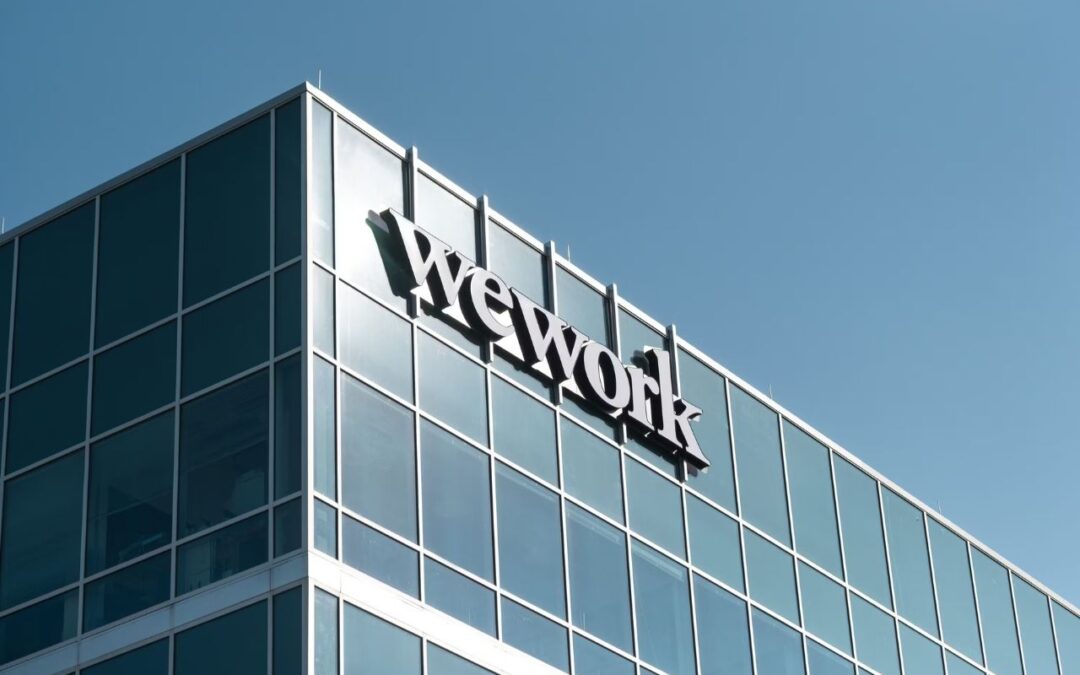
A leading flexible workspace operator came into focus after submitting its Analyst Day 2026 presentation to the exchanges on June 29, 2026, ahead of the event scheduled for June 30. The filing lays out the company’s financial position, its expansion methodology, and the operating systems it credits for improving member retention and centre profitability.

With a market capitalisation of Rs. 9,018.76 crore, the shares of WeWork India Management Limited were trading at Rs. 650.75 per share, up 0.31 percent from its previous closing price of Rs. 648.75 apiece. It is trading at a P/E of 117.
FY26 Performance
WeWork India reported full-year revenue of Rs. 2,477.4 crore, up 23.4 percent year-on-year, alongside EBITDA of Rs. 499.2 crore and a sharply higher PAT of Rs. 179 crore. The company says it ended the year net-debt negative, a meaningful shift for a business that has historically carried heavy lease-linked borrowings on its books. Quarterly trends back the turnaround: net profit rose to Rs. 65.55 crore in the March 2026 quarter against Rs. 36.52 crore a year earlier, following a Rs. 16.70 crore profit in the December quarter that had swung from an Rs. 83.25 crore loss in the same period the year before.

The company’s framing of this as a “flywheel” rests on a specific claim: that each incremental rupee of revenue should now convert into outsized margin gains because the fixed cost of running a centre, primarily lease and fit-out costs, is already on the books once a centre matures. That operating leverage argument is reasonable in a high fixed-cost business like managed office space, but it has not yet been tested at scale. Interest coverage remains thin by conventional standards, and the swing from losses to profit over the past four quarters has been recent enough that one or two soft quarters would meaningfully alter the growth narrative the company is asking investors to underwrite.
Strategic Evolution: Flex as Core, Not Backup
The presentation’s central thesis is that flexible workspace has moved from being a contingency option to a default corporate real estate decision, with businesses increasingly treating office space as a productivity and culture tool rather than a square-footage line item. WeWork India frames its addressable market accordingly, positioning itself to serve businesses of every size and industry rather than the startup-heavy customer base flex operators were associated with a decade ago. This is a directional claim rather than a quantified one in the deck; the presentation does not break down enterprise versus SME revenue mix or contract tenure trends that would let investors verify how far this shift has actually progressed within the company’s own portfolio.

Data-Driven Expansion Engine
Future site selection runs through two proprietary tools: REScout, which screens locations against 32 micro-market and building-level criteria before a lease is signed, and PRIMO, which models commercial terms, risk, and expected returns ahead of negotiation. The stated intent is to reduce the guesswork that has historically made commercial real estate underwriting slow and inconsistent across operators. Systematising site selection is sound practice, though the presentation offers no historical hit rate, such as what share of REScout-evaluated sites were ultimately built and how their performance compared with centres chosen before the tool existed, which would have made the claim verifiable rather than aspirational.
The company is expanding beyond core coworking into a four-tier product structure: ready-to-move-in or customised Core offices, fully managed offices sourced and operated for individual clients, on-demand Digital workspaces billed by the hour, day, or month through the WeWork app, and Rivet, a design-and-build arm that constructs workspaces for clients who want WeWork’s execution capability without taking a long-term lease. Layering these revenue streams onto the same real estate footprint is a sensible way to lift revenue per square foot without taking on additional lease liabilities, and it mirrors a broader shift among flex operators globally toward asset-light, fee-based services alongside traditional space leasing.
Tech-Driven Operational Efficiency
A centralised, nine-member Command Centre now handles customer service tickets that the company says it has cut from an average resolution time of over six hours to under three minutes, alongside a Building Management System that tracks HVAC performance, air quality, and energy use against real-time occupancy. These are credible efficiency levers for controlling the operating cost base as the centre count scales, though ticket resolution speed is a service-quality metric rather than a margin one, and the more relevant number for investors, cost per managed square foot, was not disclosed.

Business Overview
WeWork India’s near-term outlook centres on whether its proprietary underwriting tools and multi-tier product mix can sustain double-digit revenue growth while operating leverage does the work of expanding margins, without requiring fresh external capital given the net-debt negative position the company highlighted for FY26. Execution against this plan, rather than the financial reset itself, is what will determine whether the current valuation holds.
Incorporated in 2016 and majority owned by the Embassy Group, WeWork India Management Limited is the exclusive licensee of the WeWork brand in the country and operates as a premium flexible workspace provider across India’s Tier-1 cities. The stock trades at roughly 28.6 times book value and carries a P/E near 117, a valuation that prices in sustained execution of the growth plan rather than the company’s historical earnings record, which includes years of losses before the recent swing to profitability. Promoters have pledged 41.4 percent of their holding, a figure worth tracking alongside the company’s deleveraging claims.
Disclaimer: The views and investment tips expressed by investment experts/broking houses/rating agencies on tradebrains.in are their own, and not that of the website or its management. Investing in equities poses a risk of financial losses. Investors must therefore exercise due caution while investing or trading in stocks. Trade Brains Technologies Private Limited or the author are not liable for any losses caused as a result of the decision based on this article. Please consult your investment advisor before investing.