Synopsis: Indian markets declined as banking stocks fell after Q1 earnings, while rising crude prices, geopolitical tensions, weak global cues, and higher bond yields pressured investor sentiment.
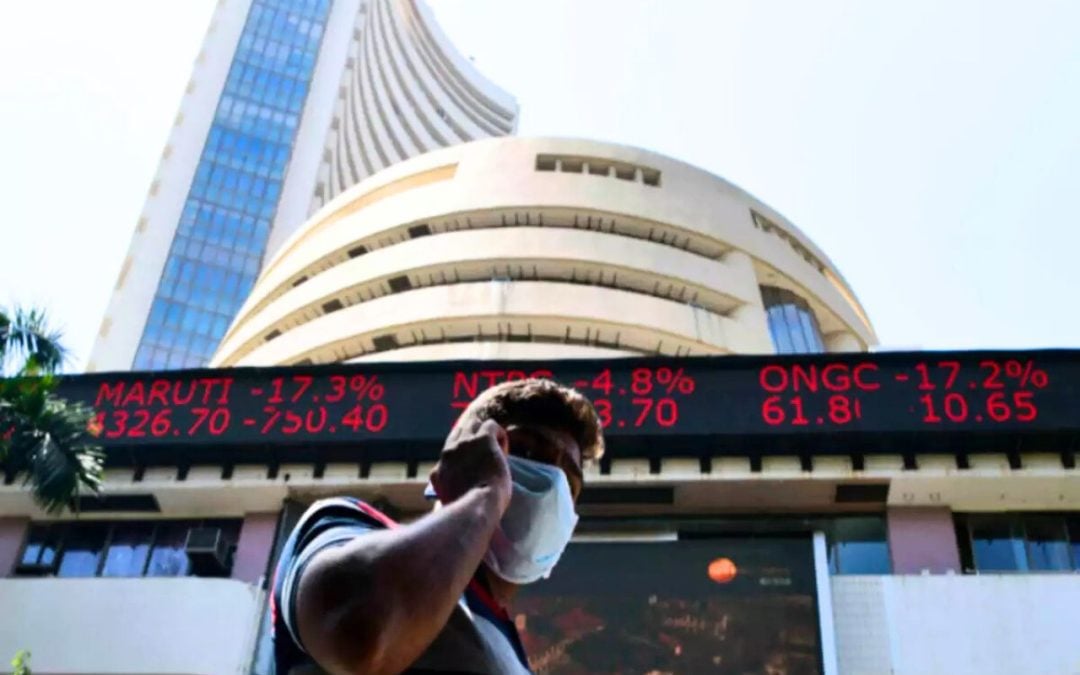
Indian stock markets witnessed a sharp sell-off today as investors turned cautious amid weak global cues, rising crude oil prices, and escalating geopolitical tensions. The Nifty 50 declined 0.78 percent from the previous close of 24,334 levels, while the Bank Nifty fell 1.45 percent from the previous close of 58,521 levels.

The decline was led by heavy selling in banking stocks after Q1 earnings disappointed investors, while concerns over inflation, foreign fund outflows, and global market weakness further impacted sentiment. Here are the key reasons behind today’s market fall.
Factors that might be fueling the sell-off today
Bank stocks plunge after Q1 earnings
The market decline was led by a sharp sell-off in heavyweight banking stocks after their Q1 earnings failed to meet investor expectations. Shares of Axis Bank and HDFC Bank fell around 6 percent each, while Kotak Mahindra Bank declined over 3 percent, adding pressure on the Sensex and Bank Nifty. The private lenders had announced their June quarter results on Saturday, and investors reacted to the earnings performance when trading resumed today.

Crude oil prices surge amid Middle East tensions
Crude oil prices moved higher as rising tensions in the Middle East increased concerns over supply disruptions. Brent crude gained nearly 4 percent to trade above $91 a barrel, marking its highest level since mid-June, after military exchanges expanded beyond usual targets. The sharp rise in oil prices raised concerns over higher inflation and increased fuel costs.
Iran-US tensions intensify, raising global uncertainty
The conflict between Iran and the US escalated further over the weekend, increasing concerns across global markets. The US carried out its ninth consecutive night of attacks on Iran, while allies Kuwait and Bahrain reported additional strikes. Meanwhile, Iran’s Revolutionary Guard claimed that two oil tankers were damaged near the Strait of Hormuz, adding to fears of supply disruptions in a key oil transit route.

Weak global cues weigh on Indian markets
The bearish sentiment in Indian equities was driven by a broad-based decline across global markets. Asian markets remained under pressure, with Japan’s Nikkei 225 and South Korea’s Kospi falling over 4 percent each, while Taiwan Weighted also traded lower. However, Hong Kong’s Hang Seng, China’s Shanghai Composite, and Australia’s S&P/ASX 200 managed to stay positive.
The weakness followed a sharp fall on Wall Street in the previous session, where the S&P 500 and Nasdaq declined more than 1 percent each, while the Dow Jones Industrial Average slipped nearly 0.8 percent. For the week, the S&P 500, Nasdaq, and Dow ended lower by 1.55 percent, 2.9 percent, and 0.93 percent, respectively.
Rising bond yields and rupee weakness add pressure
Rising US bond yields further impacted investor sentiment as higher yields made fixed-income assets more attractive compared to equities. The benchmark US 10-year Treasury yield increased to 4.551 percent, while the 30-year bond yield rose to 5.073 percent and the 2-year yield climbed to 4.183 percent.

Meanwhile, the Indian rupee weakened by 11 paise to 96.41 against the US dollar in early trade, pressured by elevated crude oil prices and cautious foreign fund flows. Market participants are closely tracking global developments, oil prices, and FII activity for further market direction.
Disclaimer: The views and investment tips expressed by investment experts/broking houses/rating agencies on tradebrains.in are their own, and not that of the website or its management. Investing in equities poses a risk of financial losses. Investors must therefore exercise due caution while investing or trading in stocks. Trade Brains Technologies Private Limited or the author are not liable for any losses caused as a result of the decision based on this article. Please consult your investment advisor before investing.