Synopsis: Rolex Rings has transformed from a financially stressed company into a debt-free precision engineering player with a strong balance sheet and global customer base. As India’s largest bearing ring manufacturer, the company is benefiting from localisation, China+1 opportunities and growing automotive demand, positioning it for its next phase of growth.
India’s automotive industry has evolved into one of the world’s largest manufacturing hubs, creating significant opportunities for component suppliers that play a critical role in the global supply chain. While automobile manufacturers often attract investor attention, several niche auto ancillary companies have quietly built strong market positions through technological capabilities, long-standing customer relationships and export presence.

Increasing localisation, the China+1 strategy and rising demand for precision-engineered components are further reshaping the sector and creating new opportunities for specialised manufacturers. With a market cap of Rs 4,300 crore, the shares of Rolex Rings Ltd are trading at Rs 158 and are trading at a PE of 24 compared to their industry’s PE of 30.
From Financial Stress to a Clean Balance Sheet
There may be few instances as extraordinary as that of Rolex Rings. The company went into the Corporate Debt Restructuring (CDR) process in 2013, during which time its business model was put through an acid test. However, the management persisted with investments in customers, operations and diversification even amidst the challenging times.

All that changed in FY22 when Rolex Rings turned cash positive and came out of the CDR process. However, more significantly, on March 31, 2026, Rolex Rings paid off its right of recompense liability to consortium lenders worth Rs 101 crore, thus freeing itself of all legacy liabilities and constraints.
As per management, the company now has zero covenants and financial constraints on its books and can focus on growth. In April 2026, the company declared a buyback of Rs 180 crore while the promoters decided not to participate in it.

India’s Largest Bearing Ring Manufacturer
It has silently established one of the largest integrated forging business operations in India. Rolex Rings is amongst the top producers of forged and machined components in India and holds the fifth largest forging capacity in the country. It has a forging capacity of 165,000 metric tonnes per annum and a machining capacity that exceeds 75 million pieces per annum.
The firm sells its products to customers in 14 different countries and 57 customers globally. Approximately 56% of the FY26 revenue was earned from the domestic market and the remaining 44% from export sales, indicating a balanced geographic spread.
Bearing rings account for 47% of revenue, and automotive components account for 45%. Rolex makes a diverse array of bearing rings, gear blanks, wheel hubs, driveline parts, differential parts and other forged components.

Why Bearing Rings Are a Niche Business
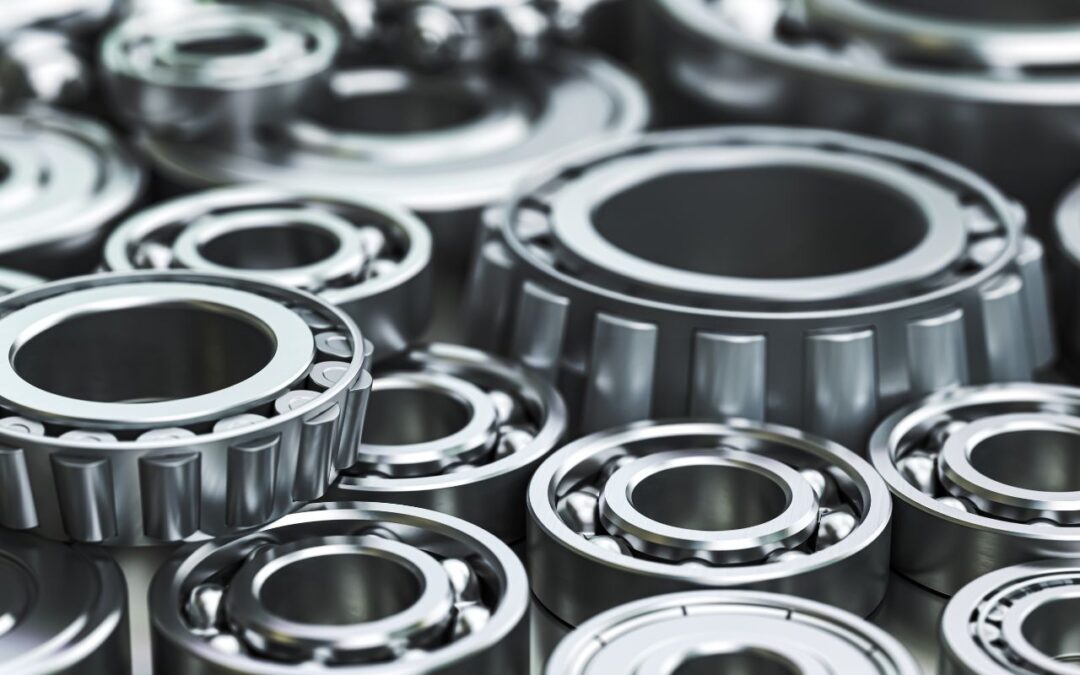
Though not always considered important, bearing rings play an immensely significant role in the machines today. Bearing rings are necessary parts that provide for rotational motion of various machines such as cars, trains, industrial machinery, and renewable energy sources.
By 2033, the global bearing market will be valued at around $301 billion, whereas India’s forging market will be worth $12.8 billion by 2032. Almost half of the global bearings’ demand comes from Asia.
Furthermore, bearing rings account for nearly 18% of the total bearing market value in India. Forged bearing rings have higher prices compared to tube-type ones due to better properties of bearing load and longevity. Moreover, customer loyalty in this industry is very high, with 7 out of 10 best customers of Rolex Rings being loyal for more than 15 years.
Building a Diversified Global Customer Base
Rolex Rings, throughout its history, has evolved itself from being a conventional bearing ring manufacturing organisation into an advanced precision engineering firm. It supplies its products to markets in Europe, North America, South America and Asia and supplies parts to some of the top bearing and automotive organizations across the globe. It has slowly grown out of the scope of bearings to develop skills in high-value added automotive parts.
One of the positive developments in FY26 was the growth in Europe. While there were many disturbances in the US market because of the tariffs problem, the European sales had risen by about 25%, and almost 60% of the orders had been placed by the European clients. According to management, it confirms the capability and relationship of the firm with global OEMs.
Auto Components Are Becoming Increasingly Important
A key strategic change that is currently taking place at Rolex Rings involves the greater role played by automotive components. Auto currently accounts for nearly half of revenue, and the expectation is that the same will continue going forward. Rolex Rings makes gear blanks, wheel hubs, hub bearing units, CV joint components, driveline components, and transmission components catering to all kinds of vehicles right from two-wheelers to heavy trucks.
The company has been making some inroads into EV platforms and expects EVs and industrial programs to make a material contribution in the next two to three years. In addition, demand for forged parts from the automotive segment due to electric vehicles/hybrid cars will increase going forward. The gradual transition towards more machined parts is likely to help margins in the long run.
China+1 and Import Substitution Offer Structural Tailwinds
The constant global diversification of supply chains could turn out to be a significant opportunity for Rolex Rings. While Western OEMs are increasingly turning towards the China+1 strategy and alternative sources in nations like India, the initiatives of the government in terms of “Make in India” and other production-linked incentive programmes are promoting localisation within various manufacturing segments.
Management pointed out that the opportunities for substituting imports in the domestic bearing industry have become much better. Rolex Rings holds a nearly 30% market share in the domestic bearing-ring segment which falls in its ambit. Moreover, domestic bearings’ sales rose from Rs 329 crore in FY25 to Rs 386 crore in FY26.
Near-Term Challenges Still Exist
In spite of excellent long-term prospects, the firm still faces some short-term challenges. The hike in tariffs in the United States had a considerable impact on the company’s operations in FY26. The duties on certain auto parts were raised for a period of time from 3% to even 53%. This caused plants to be closed down in case of their major clients and resulted in a drop of 30% in U.S. exports.
The company also experienced increased costs of shipping and delays in obtaining containers. The inventory days were increased slightly due to extended transit time. Nevertheless, management is confident that order flows in the United States will stabilise starting FY27.
Financial Performance Remained Resilient
The FY26 revenue came in at Rs 1,143 crore, which was roughly flat compared to FY25, despite the decline in revenues from the U.S. The bearing rings’ revenue grew by 11% y-o-y to Rs 539 crore, whereas auto components’ revenue came in at Rs 520 crore.
Gross profit grew to Rs 589 crore, with gross margins expanding to 51.5%. Adjusted EBITDA for FY26 was Rs 230 crore, with EBITDA margins of 20.1%. Meanwhile, adjusted profit after tax remained flat at Rs 193 crore, whereas adjusted PAT margin expanded to 16.9%.
During FY26, Rolex Rings generated operating cash flows worth about Rs 190 crore, whereas capex outflow was about Rs 36 crore, thereby considerably improving its balance sheet position. The company ended FY26 with a cash and investment balance of approximately Rs 367 crore and had zero net debt. Return on capital employed was 20.1%, whereas ROE was 15.9%. Management guided that FY27 revenue will grow by about 15-17% and high teens in FY28.
Outlook
The outlook for Rolex Rings appears encouraging as the company enters its next growth phase with a completely debt-free balance sheet, healthy profitability and strong financial flexibility. The company ended FY26 with cash and investments of around Rs 367 crore while maintaining a ROCE of 21.2% and an ROE of 15.7%, highlighting efficient capital deployment.
Moreover, the stock currently trades at a P/E of 23.8x compared to the industry average of 30.1x, suggesting relatively reasonable valuations despite improving fundamentals.
From a technical perspective, the stock has also witnessed a gradual recovery from its 52-week low and is currently trading near an important resistance zone around Rs 166.
A sustained breakout above these levels could potentially indicate improving investor sentiment. Combined with structural tailwinds from China+1 sourcing, rising localisation, increasing demand from the automotive sector and growing contribution from value-added products, Rolex Rings appears well positioned to capitalise on the next phase of manufacturing-led growth.
Disclaimer: The views and investment tips expressed by investment experts/broking houses/rating agencies on tradebrains.in are their own, and not that of the website or its management. Investing in equities poses a risk of financial losses. Investors must therefore exercise due caution while investing or trading in stocks. Trade Brains Technologies Private Limited or the author are not liable for any losses caused as a result of the decision based on this article. Please consult your investment advisor before investing.