
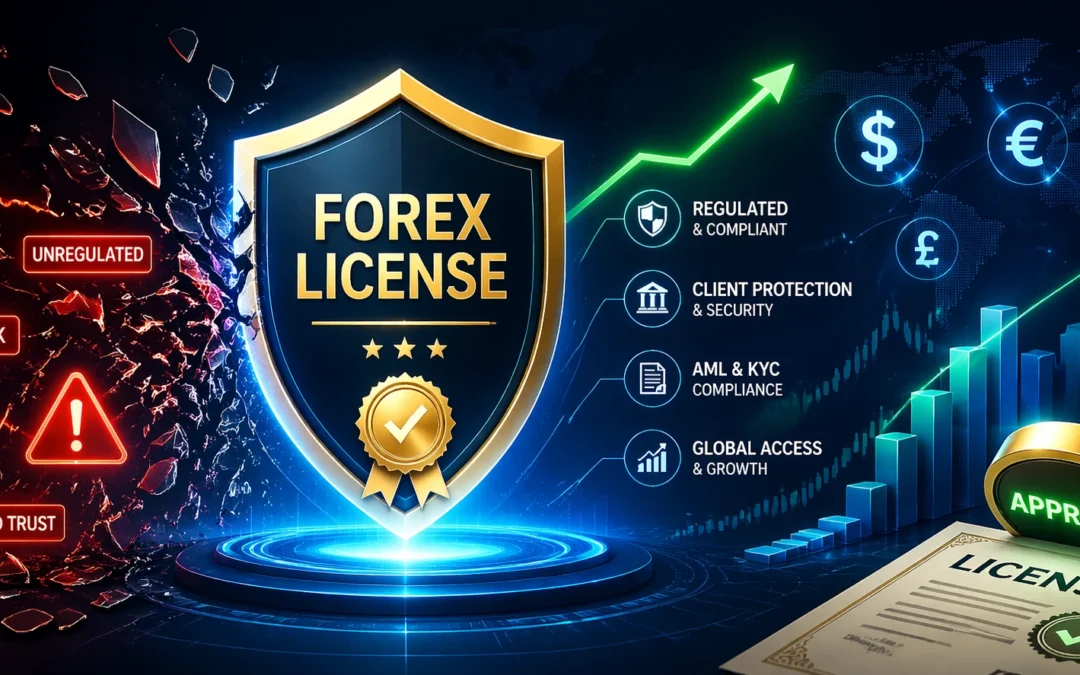
Launching a forex brokerage requires more than just a trading platform and marketing strategy.
Regulation is the foundation of the entire business model. Without a forex license, it is almost impossible to work with reliable payment providers, establish banking relationships, or operate in international markets.
Many founders focus on product development and client acquisition but underestimate licensing. In reality, your regulatory setup determines how stable and scalable your brokerage will be.
A properly structured license allows you to build a long-term business, while the wrong approach leads to constant operational risks.
What a Forex License Really Means for Your Business
A forex license is an official authorization that allows a company to provide brokerage services under regulatory supervision. It confirms that your business complies with financial laws, risk management standards, and client protection requirements.
In practice, licensing directly affects your ability to process payments, attract clients, and partner with liquidity providers. A licensed brokerage is seen as a serious market participant, which improves both trust and conversion rates.
Key Requirements You Must Meet
Obtaining a forex license requires a fully structured business model that meets regulatory expectations. The most important requirements include:
- a registered company with a transparent ownership structure,
- sufficient capital based on jurisdiction requirements,
- a detailed business plan, including an execution model and risk management,
- AML and KYC policies aligned with international standards,
- qualified management and a compliance officer.
Regulators review not only documents but also how your business operates in practice. Any inconsistency between your structure and the declared model can lead to delays or rejection.
Costs and Timeline Considerations
The cost of obtaining a license depends on the jurisdiction, but it always includes more than just government fees. You need to account for legal support, company formation, compliance setup, and operational infrastructure.
In most cases, offshore options require less investment and shorter timelines, while regulated jurisdictions demand higher capital and longer approval periods. The timeline can range from a few months to over a year, depending on the complexity of the structure.
Planning these factors helps avoid unexpected expenses and delays during the process.
Choosing the Right Jurisdiction
Jurisdiction selection is one of the most critical decisions when applying for a license. It determines your regulatory obligations, business reputation, and growth opportunities.
The most common options include:
- offshore jurisdictions that allow faster entry and lower setup costs,
- mid-tier jurisdictions that offer a balance between credibility and flexibility,
- top-tier regulators that provide a strong reputation but require significant investment.
Choosing the right jurisdiction should be based on your target markets, payment solutions, and long-term strategy rather than just initial cost.
What Happens After Licensing
Obtaining a license is only the beginning. Brokerage companies must maintain ongoing compliance and meet regulatory obligations to keep their status active.
This includes regular reporting, maintaining capital requirements, passing audits, and ensuring proper AML procedures. Failure to meet these conditions can result in fines or license suspension.
Understanding post-licensing responsibilities is essential for building a stable and sustainable brokerage.
Professional Support and Strategic Approach
The licensing process involves multiple stages that require both legal and operational expertise. Working with an experienced partner significantly reduces risks and speeds up the process.
Prifinance provides comprehensive support for companies that want to obtain a forex license and build a compliant brokerage structure. Their team helps align your business model with regulatory expectations, prepares documentation, and manages communication with authorities.
This approach allows you to focus on business development while ensuring that your licensing process is handled correctly.
Build It Right from Day One
A forex brokerage without proper licensing is always operating under pressure. Payment issues, limited partnerships, and low client trust eventually slow down growth.
A licensed structure changes everything. It gives you stability, access to global infrastructure, and the ability to scale without constant risks.
If you are serious about entering the market, licensing should be treated as a strategic foundation, not just a formal step.
Working with an experienced partner like Prifinance helps you obtain a forex license faster and build your brokerage on a structure that is ready for long-term growth.
