
Synopsis:- Barely three months into FY27, a public sector lender has already blown past several of the growth targets it set for the full year, and it is now turning to GIFT City for its next phase of expansion. The bank’s Q1 numbers show advances growing at nearly double the pace of its own guidance, alongside falling bad loans and rising profitability, while its new IFSC Banking Unit adds a cross-border dimension to what has largely been a domestic turnaround story.
Shares of a Mumbai-headquartered public sector bank came into focus after its Q1 FY27 results showed the lender running well ahead of the growth targets it laid out for the year. Business growth, advances, and net interest margin all cleared their respective FY27 guidance bands in the very first quarter, even as the bank pointed to its recently launched GIFT City unit as the platform for the next leg of expansion.

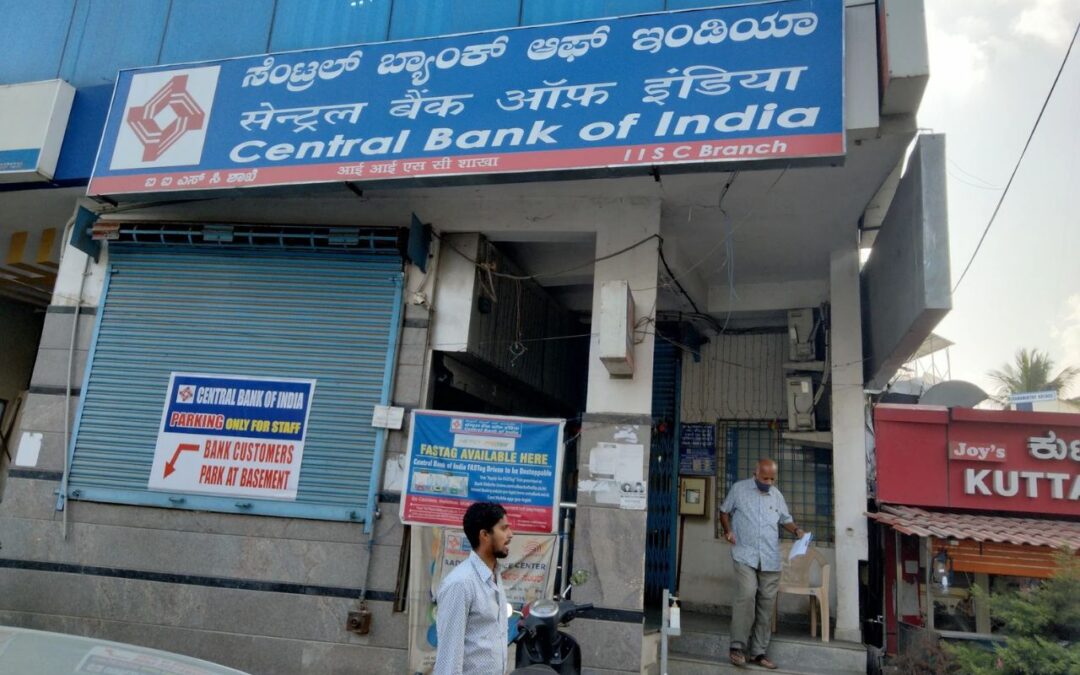
With a market capitalization of Rs. 28,692 crore, the shares of Central Bank of India opened on Monday at Rs. 32 apiece, down marginally from its previous closing price of Rs. 32.05. It is trading at a P/E of 6.30.
Growth Running Well Ahead Of Guidance
The bank had guided for total business growth of 14-15 percent for FY27. In the June quarter alone, global business rose 18.29 percent year-on-year to Rs. 8,33,320 crore, already clear of the upper end of that band. Advances told a sharper story: against a 14-16 percent growth target for the full year, global advances grew 28.58 percent to Rs. 3,54,348 crore, nearly double the top of the guided range. Corporate advances led the charge, up 46.52 percent, while the retail-agriculture-MSME (RAM) segment grew a more measured 21.38 percent, pulling the RAM-to-corporate mix to 68:32 from 72:28 a year earlier.

Net interest margin held at 3.06 percent, just above the bank’s “above 3 percent” guidance, even as yield on advances compressed 69 basis points year-on-year to 7.89 percent on the back of repo-linked lending and softer rates.
Deposit growth of 11.68 percent sat within the 10-12 percent guided range, though CASA ratio slipped to 46.61 percent from 46.88 percent a year earlier, falling just short of the bank’s 48 percent (+/- 1 percent) target.

The bank will need to watch this closely, since a lower CASA share alongside a cost of deposits that fell 33 basis points to 4.60 percent suggests some of the deposit mix improvement is coming from repricing rather than fresh low-cost accumulation.
Asset Quality Improves, Though Not Every Metric Cleared The Bar
Gross NPA fell 53 basis points year-on-year to 2.60 percent, and net NPA held flat at 0.49 percent even as the loan book expanded by nearly a third. Annualised credit cost dropped to 0.40 percent from 0.68 percent a year ago, comfortably inside the bank’s “up to 0.75 percent” guidance, while return on assets touched 1.00 percent, meeting the FY27 target exactly. Cost-to-income ratio came in at 55.40 percent against a sub-56 percent guidance.
Not every asset-quality metric cleared its own bar, though. Gross NPA at 2.60 percent sits above the bank’s “below 2.50 percent” target, provision coverage ratio at 95.86 percent is a touch below the 96-98 percent band, and the slippage ratio of 0.29 percent for the quarter exceeded the sub-0.25 percent guidance. None of these misses are large, but they are worth flagging against a headline growth story that otherwise reads as a clean beat.

GIFT City: The Next Leg Of The Growth Story
Having cleared its domestic targets early, the bank is now leaning on its International Financial Services Centre (IFSC) Banking Unit in GIFT City, which began operations in June 2026 after receiving its IFSCA licence in April. The unit currently holds USD 20 million in capital, a USD 50 million treasury book, and USD 50 million in sanctioned advances routed through external commercial borrowings, and posted a profit of USD 0.49 million in its first quarter of operations.
Management’s five-year target for the unit is USD 200 million in deposits and a USD 500 million credit book, built around external commercial borrowings, syndicated lending, buyer’s credit, trade finance, and derivatives and hedging solutions. The bank also plans to use the platform to build an NRI deposit base, service FPI banking needs, and support overseas Indian corporates, areas that sit outside its traditional domestic lending franchise.
This is a meaningful shift in emphasis. For a bank whose growth story over the past few years has largely been about cleaning up a legacy bad-loan book and rebuilding profitability, a GIFT City unit chasing fee income and cross-border lending signals an attempt to diversify earnings beyond the conventional PSU banking model. Whether that USD 500 million credit book target is achievable within five years will depend on how quickly the bank can build out relationships with overseas corporates and NRI depositors, a client base it has had limited exposure to historically.
What Investors Should Watch
The near-term signal to track is whether CASA can recover toward the bank’s 48 percent guidance, since a growing reliance on term deposits at a time of falling rates could pressure margins faster than expected.
Slippage ratio and provision coverage, both currently outside their guided bands, are worth monitoring over the next couple of quarters to see if the June quarter miss was seasonal or the start of a trend.
On GIFT City, the numbers so far are small relative to the balance sheet, so the real test will be whether deposit and credit book growth there stays on pace with the five-year targets management has laid out.
Disclaimer: The views and investment tips expressed by investment experts/broking houses/rating agencies on tradebrains.in are their own, and not that of the website or its management. Investing in equities poses a risk of financial losses. Investors must therefore exercise due caution while investing or trading in stocks. Trade Brains Technologies Private Limited or the author are not liable for any losses caused as a result of the decision based on this article. Please consult your investment advisor before investing.