Synopsis: The Election Commission’s Special Intensive Revision (SIR) In Karnataka requires voters to submit various documents depending on their date of birth. This article sets out the four types of documents, supporting documents that will be accepted, the revised SIR timeline and important information for all-electors before the final electoral roll is published.
Special Intensive Revision (SIR) is the thorough verification of electoral roll (EMV) carried out by the Election Commission of India (ECI) to keep only eligible Indian citizens on the electoral roll. The current SIR in Karnataka started on 30 June 2026, and it stands for almost 5.54 crore electors in the state. This is the first major revision of the electoral rolls of Karnataka in almost 24 years since the last revision was done in 2002, according to ECI.
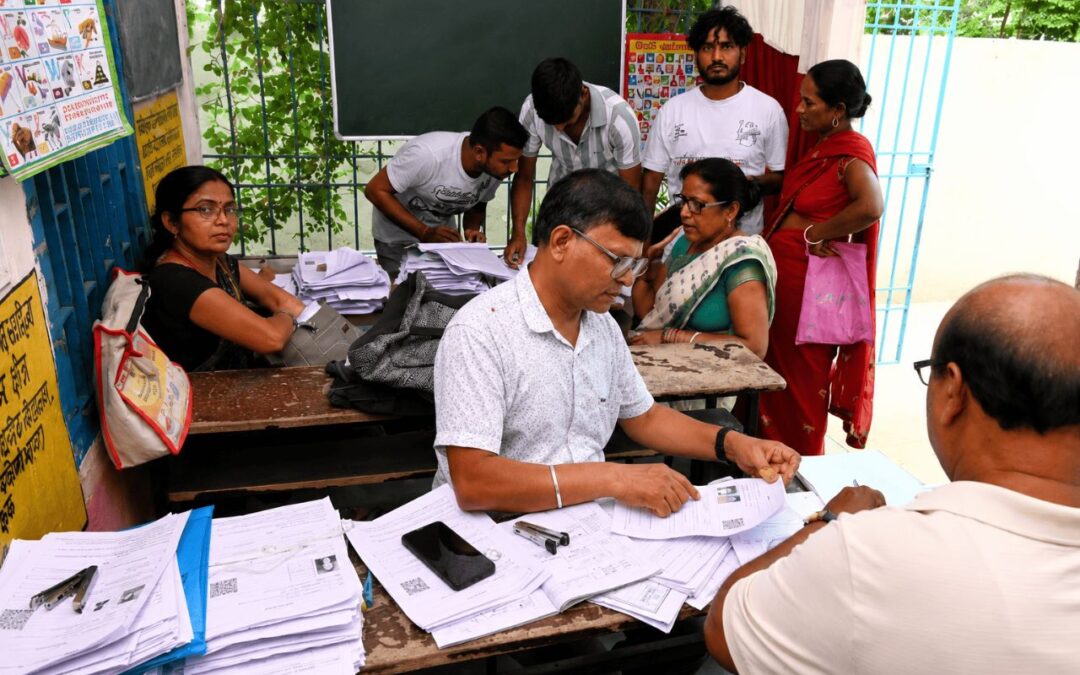
In the course of the exercise, Booth Level Officers (BLOs) are conducting door-to-door verification, filling in enumeration forms and verifying voter information prior to the updating of the electoral roll. The Commission has also further extended the time frame for the SIR process, allowing voters to complete the verification process before the draft electoral roll is published.
Documents required for SIR
Documents needed under the Special Intensive Revision (SIR) follow the time of the elector’s birth. The Election Commission has divided voters into four groups, each needing a different piece of evidence of citizenship and voter eligibility.
Category 1: Born before 1 July 1987
The elector has to submit any document, for Self, from the list given below, establishing the date of birth and/or place of birth. Parents’ documents are not required.
Category 2: Born between 1 July 1987 and 2 December 2004
The elector should present: One document to establish his or her own date and place of birth/citizenship and one document of either father or mother establishing their place of birth/eligibility.
Category 3: Born on or after 2 December 2004
- The elector must submit: One document to establish his or her own date and/or place of birth.
- Documents of both father and mother establishing their citizenship/eligibility.
- If any parent is not Indian, provide a copy of his/her valid passport & visa at the time of your birth.
Category 4: If born outside India
- The elector must submit: Proof of birth registration issued by the Indian Mission abroad
- If acquired Indian citizenship by Registration/Naturalisation (attach Certificate of Registration of Citizenship)
Category 5: Existing Electors (People on the 2002 Intensive Revision Electoral Roll)
Persons whose names were already listed on the Intensive Revision electoral roll (2002) do not need to provide documentation. They are required to only fill out the Enumeration Form unless the Electoral Registration Officer (ERO) requests further verification.
Accepted Supporting Documents
- The Election Commission has provided the following indicative (not exhaustive) list of acceptable documents if the elector is asked to provide proof in the SIR process:
- An Identity Card/Pension Payment Order issued to regular employees or pensioners of Central Government, State Government or Public Sector Undertaking (PSU).
- Any Identity Card or Certificate or Document issued before 1st July 1987 by Government, local authorities, banks, post offices, LIC or PSUs in India.
- Birth Certificate issued by the competent authority.
- Passport
- Matriculation or Educational Certificate from a recognised board/ University.
- Permanent Residence (Domicile) Certificate Issued by the competent State authority
- Forest Rights Certificate.
- OBC/SC/ST or any Caste Certificate issued by competent authority.
- National Register of Citizens (NRC) (if applicable).
- Family Register (prepared by the State Government or local authorities).
- Land or House Allotment Certificate provided by the Government.
Note: Aadhar is not included as one of the primary supporting documents for establishing citizenship. It may only be used as an identity document in accordance with Election Commission’s guidelines and does not by itself establish eligibility for electoral roll.
SIR Timeline: Important Dates
Important things to remember:
- The requirements for documents vary by birth date. Before submitting your Enumeration Form, determine which type you are before you begin.
- Before sending the documents to the Booth Level Officer (BLO) or Electoral Registration Officer (ERO) , self-attest all supporting documents.
- Aadhaar is not a document of citizenship and cannot be used for SIR verification only.
- Existing voters will also have to produce documents when the ERO requires them to do so during verification.
- If your name has been omitted, inserted or altered in the draft roll, you have a 30-day period from the date the draft roll is published to make a claim or object.
- Keep a copy of the Enumeration Form and supporting documents for future reference.
- If any voter has any questions about the verification procedure or the necessary documents, they can ask for help from their BLO, ERO or the office of the Chief Electoral Officer.
Conclusion
The SIR is designed to establish an accurate and up-to-date electoral register, by checking the eligibility of all voters. The roll should be drawn up with the deadline extended and eligible electors must ensure that they submit the necessary documents in time and that all the information on the draft roll is accurate before the final roll is published.